Showing posts with label tat. Show all posts

Monday, 10 January 2022

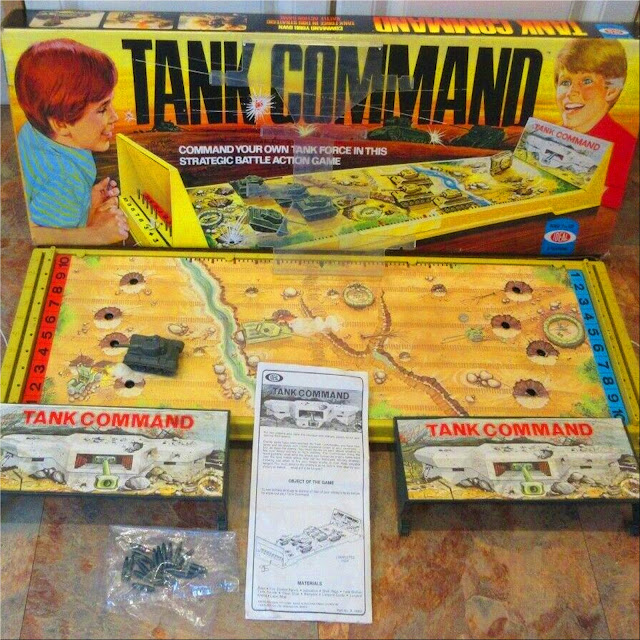
MICROGORIA 106 - The Terror of Tank Command


In an unscheduled excursion down the dodgier end of Memory Lane, we pay a visit to the 'Orrible 'Ouse of Terrible Old Tat and unearth one of the most disappointing board games of the 1970s - the infamous Tank Command from Ideal!

DIRECT DOWNLOAD - MICROGORIA 106 - The Terror of Tank Command

 
Find all the podcasts in the HYPNOGORIA family here -

HYPNOGORIA HOME DOMAIN - Full archive, RSS feed and other useful links


HYPNOGORIA on TUNE IN

HYPNOGORIA ON GOOGLE PLAY PODCASTS


Wednesday, 31 July 2019

THE 'ORRIBLE 'OUSE OF TERRIBLE OLD TAT - The Rise and fall of the Fiendish Feet Part II


Welcome back dear fiends to another rummage in the 'Orrible 'Ouse of Terrible Old Tat! Last time we recounted the glorious ascent of the Fiendish Feet, an early '90s spooky snack that rose to dominate the world! Well, the chiller cabinets of your local Asda anyhow... However all empires fall, and despite being seemingly unstoppable, time was running out for the Fiendish Feet...

For three glorious years, the Feets marched on, an unstoppable force of horror and bad puns. But of course things were to come to an abrupt end in 1992. And what finished the Foots wasn't the rise of some rival product, but an enemy within. Freaky faces and painful punning names aside, the real draw of the Fiendish Feet were, well, their feet! People liked this funny yogurt pots that totter on two little legs, and so what did St. Ivel do in the black year of AD 1992? That's right, they ditched the charming pot with legs design. Yes, St. Ivel had became St. Evil, and committed the cardinal sin of changing a successful format.

In November 1991, they had launched yet another spin-off range, this time jumping on the  then very fashionable fromage frais bandwagon. Basically dairy firms had realised they could sell less yogurt, in smaller pots, and for the pretty much the same price, and therefore maximise profits from the gullible public who didn't realise that it was just a thicker yogurt and not the proper cheese derived French dish at all. And so, we got Fiendish Feet Fromage Frais - little mini-pots, weighing in at only 50g, and sold in packs of three not four. This diminutive trio consisted of Tiddly Wink (raspberry), Masked Menace (apricot*), and Sneaky Beaky (strawberry). Now thanks to their smaller size, these pots didn;t have the well loved, and indeed well moulded, pair of legs and feet. Instead the lower half of the pots were contoured to give the impression of two legs. And frankly it just wasn't the same.


However St. Evil, I mean, St. Ivel thought differently. Perhaps the pots were cheaper to make this way. Anyhow they pushed ahead with this new format in 1992, and introduced the pretend leg contoured pots to the main range. However some one had an inkling that this change wasn't going to play well with the Feet Faithful, and hence the final two rangers were rebranded as Fiendish Faces. Firstly we has the "Real Fruit Yoghurt" range - which saw the original foursome reborn. And then later there was a range of Fiendish Faces Freezable Mousses in August 1992. But this was to be the final end for the Fiendish Feet. 

For not only had their raison d'etre, their legs and foots, gone, but this final range couldn't be bothered to do a range of flavours. Yes, we had four new characters - Snow Joke, Freddy Frostbite, Drip Dastardly and Eski Moan - but the trouble was they were all strawberry flavour. And hence unsurprisingly the range came to an end. After all, what is the big deal about being able to freeze a mousse anyway? It might be handy for parents doing the once a month big shop, but hardly a selling point for their spawn. 

But that wasn't quite the end, the Fiendish Faces once again reappeared  in the late 1990s. However this return was to be short -lived, as they returned in their smaller fake leg contour pots, again losing their own fiendish USP. Likewise these made a similar error in pitching to grown-up rather than kids. These were "bio pots" - now that might be a big magic buzz word for the kind of people who wanted "and this was made with fruits that agreed to be the dessert in the first place" assurances all over the packaging, not cartoon monsters and bad joke names. They are generally of the opinion food just have lots of sciency sounding words on it, and picture something natural like a picture of a twig on it. Meanwhile the only things bio that might excite the average kid are bionics and biological warfare. And with that double fail the revived Fiendish Faces vanished rather quickly.

However if they'd brought back the pots with proper legs and feet... Well, that could be a different story....


For the full history of Fiendish Feet, do visit http://www.radiofeeds.co.uk/fiendish/  which has pictures of all the characters and lots of the merchandise! You'll believe a bumbag can have fiendish feet!


Wednesday, 24 July 2019

THE 'ORRIBLE 'OUSE OF TERRIBLE OLD TAT - The Rise and Fall of the Fiendish Feet Part I


Welcome back dear fiends to the 'Orrible 'Ouse of Terrible Old Tat! Now then when scholars of the scary gather together and talk of horror themed tat aimed at kids, generally the 1970s and early 1980s steal the limelight. Conversations revolve around spooky snacks such as Horror Bags crisps, Mummies sweets, and Haunted House lollies. However in 1989, several strange creatures waddled into our fridges and would haunt chiller cabinets throughout the '90s - the dreaded Fiendish Feet! 

No one really knows where these bizarre creations came from - were they the result of some cheap charlie fuelled meltdown in a marketing office kitchen? Did some bright spark reckon they could create the dairy equivalent of the popular and long-running snack Monster Munch? Or were they merely the product of some boffin announcing that plastic moulding had advanced to a point where you could make yogurt pots with feet? Who knows! Perhaps it's a mystery best left unsolved. However what we can confirm was that the Fiendish Feet range were made by leading purveyor of dairy and dessert products St. Ivel. 

As we have mentioned in other explorations of assorted novelty themed snacks, in the '90s there was a distinct shift in the casual eating market. While in previous decades assorted sweets, snacks and munchies had been designed to appeal to kids, in the late '80s some one, probably a hideous yuppie, had the revelation that the pocket money market wasn't where the big bucks were. After all, kids had very little money - they were paupers and povs when you thought about it! They'd didn't even have a filofax, nevermind a ten grand performance bonus burning a hole in their pockets! And so increasingly the snack market set its sights on the grown-ups, and one resulting boom area was posh ice creams for grown ups, and supposedly healthier snacks in the shape of assorted low fat yogurts and mousses. 


So then in this context, it is all the more bizarre that in November 1989 a quartet of weird beings appeared in stores. Sold in multi-packs of four, the Fiendish Feet had arrived. The original four flavours were Spooky Wooky (banana flavour), Fangs a Lot (strawberry flavour), Frank 'n' Stein (raspberry flavour), and Rattle 'n' Roll (chocolate flavour). Weighing in at 125g per pot, they were a decent sized yogurt, no health food thimble servings here, and despite being low-fat, they sported some classic tasty flavours.

Despite their somewhat bizarre concept and appearance, Fiendish Feet quickly became a huge hit. And more bizarre two legged horrors were soon scuttling into fridges across the land. Firstly poor old Fangs Alot would often be given some time off, and have some seasonal substitutes taking his place in the multipacks - a snowman themed beastie called Ivor Cold Toe (strawberry) at Christmas, and the self explanatory Hot Cross Bunny (also strawberry) taking over his spot at Easter.

A second range soon followed too. Called "Dairy Desserts" this was a second multipack featuring new characters - Howling Wilf (banana), Horrible Herman (strawberry), and Pharaoh Nuff (chocolate flavour). Meanwhile Dooya Finkisaurus brought us a new flavour - toffee apple. Oddly Pharoah Nuff was later replaced by a character called Slurpy Burpy, and no one is sure why. Possibly because they'd misspelled "pharaoh" and feared the ire of the nation's teachers. That's not a fact, but I'm going with it...

In July 1990, a third wave of Fiendish Feet saw St. Ivel changing tack slightly, for this new additional quartet were sold separately, rather than in multipacks of four. This range was dubbed "Monster Mousse" - perhaps the clearest clue we'll ever get that the origin of the Feet was indeed a dairy copy of Monster Munch crisps. Anyhow, this range brought us Tongue Twister on old favourite strawberry flavour, and a return of Pharaoh Nuff, back on toffee duties. But the remaining two of the Monster Mousse quartet were offering brand new flavours - Snortilla the Grunt gave us black currant and Melting Marvin delivered orange.


The following year St. Ivel shook the range up again - this time literally! This new foursome of Fiendish Feet were the Tremblers, which were descripted as "yogurt jelly with sauce". Basically the yogurt came with a fruity syrup sat on the top and the idea was that you gave the pots a good shake to mix the two together before opening. Why they weren't called something more fitting like "Spooky Shakers" I'll never know, but then again I don't like cocaine enough, or indeed at all, to work in a 1990s marketing agency. Anyhow, the Tremblers were - Trembling Trev (strawberry), Flossie Flame  (banana and toffee), Moaning Mummy (orange), and Mesma Eyes  (redcurrant and raspberry).

There was no doubt about it, the Feets were a smash hit and kicking all competition to the kerb. And like many novelty snacks of yesteryear, there were various offers to get assorted Fiendish Feet tat in the usual collect tokens from the packets deals. There were mugs, fridge magnets, bumbags, and storybooks. And at one point, probably drunk on the success of the Feets, some bright spark tried to expand the range into savoury spreads with the creation of Cheesey Wheesey. Sadly the cheese-based variety didn't catch on, leaving poor old Cheesy Wheesey as the only one of his kind.

There was seemingly no stopping the march of the pint-sized fiends. However it was not to last! In the shadows, an enemy lurked, a fearsome foe that would bring down the empire of the Feets...

NEXT TIME - Discover who killed the Fiendish Feet!

* where baby chimps sleep.


Wednesday, 23 January 2019

THE 'ORRIBLE 'OUSE OF TERRIBLE OLD TAT - Top Marvels! Part II


Last week we learned how in the mid '70s, there were two hot crazes gripping the playgrounds of the UK - Top Trumps cards and Marvel comics. And it was perhaps inevitable that these two titans would not only meet, but be fused together by colossal cosmic forces in a Stan Lee style plot twist!  Well, that was almost the case... For back then Top Trumps were still mainly concentrating on vehicles and military hardware and it would be several years before the brand began to produce packs that were tie-ins to fictional properties such as movies, TV shows or comics. Clearly they were missing a trick here, but in the shadows, other eyes were looking to seal a canny and timely toy licensing deal. 

Those eyes, presumably glowing with the uncanny light of comic-book radiation, or at least the prospect of big money to be made, belonged to Jotastar, a toy maker who would produce a great many tie-in toys for a variety of different kid-friendly properties, from the Mister Men and Hollie Hobby to The Real Ghostbusters and M.A.S.K. Now when it comes to games, rules mechanics are very hard to copyright, mainly because so many share commons ones i.e. roll a die and move that number of spaces, or play a card on your turn etc. Now in the case of Top Trumps, things were even murkier, as that game itself had evolved from earlier card games such as Quartets. Hence you could, quite legitimately produce a game with identical rules, and provided the magic words "Top Trumps" never appeared in the instructions, packaging or marketing there was very little to stop you.

Now while cars and motorbikes undoubtedly had an appeal for kids, Jotastar couldn't help but notice that superhero comics were greatly outselling motoring magazines down the newsagents. And so, in 1977, the Marvel Superheroes Card Game was launched, and news soon spread that there was now a marvel Top Trumps. Of course, that last two words in that sentence very carefully did not appear anywhere in the rulesor marketing, but kids everywhere instantly knew who to play this game - indeed the rules included could have been written in ancient runes of Latvaria and the game would still have sold shed-loads.


The pack itself consisted of forty cards, two a card detailing the rules and another listing all the character in the deck. The pack was divided into two halves, twenty heroes, and twenty villains -  

SUPER-HEROES
Black Bolt
Captain America
Captain Britain
Daredevil
Ghost Rider
Goliath

Invisible Girl
Iron Man

Mr Fantastic
Spider-Man

The Black Panther
The Hulk
The Human Torch
The Mighty Thor
The Silver Surfer
The Sub-Mariner
The Thing
The Vision

The Wasp

VILLAINS
Absorbing Man
Dr Doom
Dr Octopus
Dr Strange
Galactus
Hammerhead
Loki
Mephisto
Morbius
Tarantula
The Abomination
The Dread Dormammu
The Green Goblin
The Gremlin
The Grizzly
The Human Top
The Jackal
The Red Skull
The Rhino
The Vulture
Tiger Shark


The rules of the game suggest dividing the pack into heroes and villains and for two players to have at it. An alternative is also suggested under the banner of GAME TWO - basically a brief couple of lines saying just shuffle the pack and divide it among the players and use the rules for GAME ONE.
However of course many kids came up with their own variant, such as pitting a small team of heroes, like for example all the Fantastic Four and seeing how they fared against an army of villains, or if they could take down their fellow heroes.

Indeed using the stats given on these cards - Physical Strength, Special Powers and Weapons - many a geek argument was settled. And fact-fans, in case you wondering how Civil War would play out in this deck, well it was no contest really - with Iron Man out-gunning Cap in all categories: Physical Strength - 8 vs 7, Special Powers - 5 vs 3, and Weapons 6 vs 5. Yep, Shell-Head wins every time! Now you may argue that these stats were just pulled from the air by some desk jockey at Jotastar, but these cards were OFFICIAL Marvel merch right? They even advertised in the pages of Marvel's flagship comics in the UK, The Mighty World of Marvel as seen below (which even cheekily included the word "Trump" just to ensure everyone knew what they were getting). And what's more you could even send off from a pack from the advert too in case your local toy emporium didn't stock it. 


And hence as they were not only advertised but sold in the pages of Marvel UK comics, this game felt like pretty definitive. Indeed even the rules sound like Stan the Man himself, complete with unnecessary capitals - "a game for challenge for two players in which those Mighty Marvel Super Heroes battle the most awesome array of Vicious Villains ever assembled!". Of course now we may question the actual selection of characters - Grizzly and the Gremlin but no X-persons - but it is a fascinating snapshot of the Marvel Universe as it was back then, an era before the likes of Wolverine, the Punisher and Venom became mega-favourites with the fans.

Back in the 1970s however, in an age before Wikipedia, and lavish coffee-table books on comics lore and history, this card game was more than just a fun pastime - it was a secret encyclopaedia of the Marvel universe. Remember that cheesy old song about how a soldier gets out of trouble for having a deck of cards by spinning an elaborate explanation of how the cards all remind him of something in the Bible? Well, that was close to how we felt about the Marvel Super Heroes Card Game, except we really sincere (unlike that soldier in the song who I suspect if he were a Top Trumps card would have stats such as BARE-FACED CHEEK 8 and BULLSHITTING SUPERIORS 9). And this was even more true I think for UK kids, who had only recently discovered this universe thanks to Marvel UK opening as few years earlier. Of course, even back then we knew there omissions - what no Nick Fury or Man-Thing? However this was a close to a guide book to the comics as you were going to get back in the mid-'70s. And hence that what it was to many of us - an encyclopedia with shufflable pages! 

Interesting around the same time, Jotastar would produce a very similar Doctor Who themed deck... But that's a story for another day...


Wednesday, 16 January 2019

THE 'ORRIBLE 'OUSE OF TERRIBLE OLD TAT - Top Marvels! Part I


Welcome back dear fiends to the 'Orrible 'Ouse of Terrible Old Tat! While a new year may well be beckoning, rest assured that all of the crew here at the 'Orrible Old'Ouse have our eyes firmly looking to the past, where things may not have been better but certainly on many occasions were more amusing! Now on this blog, several years ago, we ran a lengthy series on the infamous Horror Top Trumps sets (which may well be resurrected in a new form at some point this year), however they weren't the only cultish decks available. And today we're going to have a look at another must-have pack! 

Now in case you don't know, Top Trumps is an enduringly popular species of card game, and the basics are as follows. Every deck has a theme, such as cars, tanks, animals, and each card features an particular item complete with a picture, sometimes a bit of text, but always with a list of statistics. To play the game, players pick one of these stats from the top card in their hand and compares it with the other players' card. Whoever has the highest or best stat wins that round, with the winner collecting the vanquished cards and adding them to his hand. The game ends when one player has got all the cards (or some one has a massive strop). It's a very easy game to learn, quick to play, and the game has been adapted to many themes over the years, ensuring that no matter what floats your boat, at some point there's been a Top Trumps deck to suit your interests. And yes, there have been adults only naughty decks produced over the years! 

However while the leading brand and game generally goes under the name of Top Trumps, thanks to the way the game evolved - namely being spawned by earlier card games such as Quartets and Ace Trumps (a history which is explained here) - no one company or individual own the copyright. Hence many different companies have produced Top Trumps-a-like games. In fact, even in 1977, the year Dubrec launched Top Trumps in the UK, within months rival companies had started producing their own Trumps-a-like games. And as it happens, one of the coolest decks to own back in the first flowering of Top Trumps mania, and one of the most fondly remembered, wasn't an official Top Trumps deck. 


But to set the scene, we first have to step out of the toy shop, carefully step over that hazardous pile of white dog poo, and pop in the newsagent next door. Just as in America, Britain had a flourishing comics industry entertaining the nation's kids, and just as the market in the US was dominated by two titans, Marvel and DC, weirdly enough,  it was the same state of affairs in the UK, with another DC - DC Thomson, publishers of venerable heavyweight titles such as The Dandy and The Beano, fighting it out with arch rivals IPC for dominance of the British comics market.  However in the 1972 the titanic twosome's fortunes were threatened by the sense-shattering arrival of a bold new outfit. Can you guess who that was true believers? 

Now American comic books had been finding their way to this septic isle for many decades beforehand. Famously in the war-years, US comic books were packed into the crates as padding. However thanks to the vagaries of shipping and having no proper national distribution network, while you could find copies of US comics featuring the likes of Batman and Spider-man in UK shops, it was somewhat a haphazard affair, and the mighty superheroes of Marvel and DC were better known through reprints by UK publishers such as Odhams Press or Alan Class Comics. However these reprint deals had petered out at the end of the 1960s, and hence in the early 1970s, Stan Lee decided it was high time to bring Marvel back to British shores. 

He realised that aside from the expense of shipping comic books to the UK, and lacking a proper means of distribution in Blighty, there was another tricky problem. And that was that UK comics were very different to their US cousins. Rather than been published monthly, British comics appeared weekly. They were twice the size, and rather than featuring the adventures of one character each issue, British comics were anthologies running several strips in every week. With characteristic insight, Stan realised that for Marvel to break the British market, they needed to radically rethink their comics. Like the Skrulls they would have to shapeshift to infiltrate the UK comics scene. And so, Marvel UK was born, an outfit based in that London, but taking orders from the Big Apple, with a remit to publish classic tales from the House of Ideas, but in a format that blended in with the home-grown British titles. Hence in early 1972, a new weekly comic appeared in newsagents up and down the land, The Mighty World of Marvel, which served up adventures featuring The Hulk, Spider-man and The Fantastic Four. 

It was soon joined by Spider-man Comics Weekly later in 1972, with more titles being added to the roster over the next few years. Pete Parker got a second title all to himself, The Amazing Spider-Man, The Superheroes featured tales of the X-Men and the Silver Surfer while The Titans brough British kids the adventures of Captain America, the Sub-mariner, Captain Marvel and the Inhumans. Outside the land of the spandex brigade, Marvel UK also thrilled kids with a Planet of the Apes tie-in comic and more exciting still, delivered spooky action with Dracula Lives that featured a selection from theer horror lines. In 1975 a young chap called Neil Tennant was put in charge - yes, the same Neil Tennant who is now half of the Pet Shop Boys - and his two year reign saw Marvel UK begin to produce their own UK-grown material for the Marvel Universe with the debut of Captain Britain in 1976. 

So then by 1977, the year Top Trumps was released, nay, unleashed upon the nation's kiddiewinks, Marvel UK had a thriving stable of titles and were giving IPC and DC Thomson a run for their money. Plus they had given Britain its very own Marvel superhero to boot! Marvel was no more an exotic import, but was now well and truly part of British pop culture. Now the initial decks in the Top Trumps range were very much vehicle obsessed, with packs themed around cars, motorbikes, tanks and planes. However some bright spark in a rival company noted how these card games were selling like hot cakes and had the smart idea of producing a game that might appeal to something other than the petrolhead market... 


NEXT TIME! Discover how kids in the '70s could play their own version of Civil War decades before Marvel had come up with that epic storyline! 


Wednesday, 18 July 2018

THE 'ORRIBLE 'OUSE OF TERRIBLE OLD TAT - Taste the Lolly of Dracula!


Hello dear fiends and welcome once again to the 'Orrible 'Ouse of Terrible Old Tat! In our past few trips in the chilly archives of the 'Orrible Old 'Ouse we've been looking at the weird world of 1970s ice lollies. Last week we saw how one of the twin titans of the British ice lolly market had struck gold with some spooky themed offerings, in particular the Haunted House lolly. But what were arch rivals Walls up to? Well, naturally they had something to also bring an extra chill to the freezer cabinet...

Now kids have always loved monsters and spooky stuff, but in the 1970s there seemed to be a multitude of scary things for kids (as documented in the marvellous book Scarred For Life that I reviewed here). Now Lyons Maid tapped into this horror boom firstly with the Jelly Terror and Haunted Houses lollies, and later with the Daleks Death Ray, Dinosaurs and King Kong lollies. And so they had pretty much covered all the usual scary fare bases - monsters, ghosts, aliens, and robots. However Walls did manage to fight back by resurrecting from the grave one of the most famous monsters of all-time - Count Dracula!  


Now back in the early '1970s, the immortal vampire was riding high in pop culture. His then current cinematic biographers Hammer, had recently rebooted their movie series by bringing the Count to the present day in Dracula AD 1972 (1972) and The Satanic Rites of Dracula (1973), while Marvel Comics had done something similar in 1972 too with their monthly title Tomb of Dracula. And in 1974, this particular comic was to be reprinted in Britain as a weekly title called Dracula Lives by Marvel UK, something I'm sure was on the radar of the marketing department of Walls, for one of the prime places they advertised lollies was in the pages of comics. 

So then, as no one technically owned the rights to the character of the Count, Walls were free to raise the old vampire from his grave once more to sell ice lollies. Retailing at 3p, Count Dracula's Deadly Secret (later shortened to just Count Dracula's Secret) was a lolly of "midnight black" according to the advertising blurb, which entombed blood red jelly and an ice cream centre. Quite what was so secret about it, no one is entirely sure - was it that the Count was secretly an ice cream man? Sadly we will probably never know... However this enigma didn't hurt the sales of the lolly at all, for Count Dracula's Deadly Secret was a huge hit and haunted the chiller cabinets for many years. 


While most of the lollies we have discussed ultimately only lasted a summer or two, in 1976 Count Dracula's Deadly Secret was still going strong, and even got a new gimmick to keep the kids interested. Now while most lollies came on the traditional wooden stake, sorry, I mean wooden stick, over the years there were several experiments with plastic sticks moulded into assorted novel shapes. Hence in 1976, Count Dracula's Deadly Secret was now boasting it came on a Trace-A-Face stick - essentially a plastic stick that had shapes cut into it to make a stencil. The shapes in question were assorted eyes, mouths and noses so kids could make their own monster mugshots in a crude identikit fashion. Now to be honest, looking back the shapes weren't either very detailed or particularly scary, looking more like a moron's idea of Egyptian hieroglyphics than terrifying facial features from beyond the grave. But back in the day, it all seemed terribly exciting, especially as the adverts proclaimed that the Trace-A-Face sticks were in limited supply. 


Meanwhile in the wider world of pop culture we had the BBC producing a memorable version of Bram Stoker's horror classic entitled Count Dracula for Christmas 1977, while in 1979 John Badham's all-star version of Dracula, with Frank Lagella as the Count and Sir Lawrence Olivier as Van Helsing, flapped onto the big screen. And also on the small screen, in 1980 Hanna-Barbera introduced us to a modern relative of the Count in The Drak Pack. And so with the Count being still big business, in 1981 Walls released a second version of their long-standing favourite.


Taking advantage of new breakthroughs in lolly technology, the new Walls Dracula was an ice lolly actually moulded into the shape of the Count himself! Although it now came only with one flavour, strawberry, this new vampiric snack did carry on the noble tradition that had been begun with Count Dracula's Deadly Secret of staining your lips red. Sadly however this icy incarnation of the Count did not last so long. 


However, as we all know, you can't keep a good man down, for in recent years Count Dracula has been spotted once again in freezers, now with a new cartoony look. In 2013, Unilever who now own Walls, responded to popular demand and resurrected Count Dracula's Deadly Secret, although now just under the banner of "Dracula Lollies". Yes, the Count will always rise up from the grave, and apparently that's true even in the world of ice lollies too...


Wednesday, 11 July 2018

THE 'ORRIBLE 'OUSE OF TERRIBLE OLD TAT - The Blob from the Haunted House


Welcome once again my dears to the 'Orrible 'Ouse of Terrible Old Tat! Incredibly in this septic isle it is actually still summer - yes, I know, a summer that has lasted more than a fortnight! Unprecedented! Well, possibly not, but certainly for such a heatwave one probably has to go back to the 1970s, which coincidentally, is exactly what we are doing once again this week! Don't fret though, while there may be lions, and tigers and flares (oh my!),  there will at least be ice cream! 

Now ice cream itself goes back to the Ancient Greeks, and the ice lolly has been knocking about since the 1920s. However it wasn't until the 1960s that the great icy snack wars began, and these frozen treats were marketed in a host of flavours, with a legion of gimmicks (as we have previously charted in these dubious missives). Now in previous weeks we have looked at how in the early 1970s, lolly makers had hit on the idea of creating characters and mascots that tied to distinct themes to flog their wares to kids. However also around this time, the very way these chilly snacks were being made was changing. And although lollies were in rude health at the time, with a market supporting dozens of competing items, all the same, to paraphrase Oscar Goldman, they could rebuild them, they had the technology, and they could make them better than they were! Better, stronger, and even more gimmicky! 

Now makers of lollies had been fusing different flavours together, and even making lollies in different shapes for quite a while. A recent breakthrough had been creating lollies with an ice cream centre and this would lead to the next leap forward - lollies made completely of ice cream and moulded in amusing shapes! An early hit in this new breed of lolly was the Brr Blobs from Lyons Maid. As the name suggests, the technology wasn't really up to creating a terribly exciting shape other than a roughly humanoid blob with an in-set smiley face, and they only came in ice cream flavour, but they were excitingly different.


More ambitious moulded lollies were to come however, with Lyons Maid launching Dinosaurs in 1974. Priced 8p, these were formed from two pieces of ice cream, one chocolate and one vanilla, and as you might have guessed, were moulded into the shape of a mighty prehistorical saurian. Ok, the moulding wasn't exactly super-detailed, and in fairness they looked more like generic lizardy shapes, as seen by Mr Magoo sans spectacles. But on the upside, the wrappers came with exciting dino-facts on the back, making an attractive series to scoff and collect.


Arch rivals Walls it seems came late to the moulded ice cream lolly game. Possibly the technology wasn't quite good yet, for even Lyons Maid don't appear to have attempted another shaped ice cream lolly in the rest of the '70s. However when Walls did venture into the moulded ice cream arena, they did knock it out of the park. Launching in the early 1980s, the Funny Feet lolly was a deceptively simple and silly idea - an ice cream lolly shaped like a cartoon foot. And this combination of flavour and absurdity proved to be extremely popular, and when all other lollies aimed at kids had passed away, Funny Feet still endured.

However, back in the 1970s, another ice cream lolly is perhaps the most fondly remembered. In July 1973, Lyons Maid launched a lolly destined to live long in the freezer and indeed in our hearts. It didn't have a fancy moulded shape, although it did come with badges. But this lolly did have another trick up its monstrous sleeve. For this lolly was the fondly remembered and much missed Haunted House!  


Now flavour-wise, Haunted House was nothing to write home about - it was just basically milky ice cream frozen onto a stick. But what made this lolly somewhat legendary was the fact each one had a picture of some horror stenciled on the ice cream in edible inks! Drawn in pink, orange, red, green and blue, there were different pictures on the lollies, with the marketing hook being that you wouldn't know which one was on until you unpeeled the wrapper. The full range was as follows - a ghost, a skellington, some bats, a spider in a web, Frankenstein's monster, a witch and something resembling a close relative of the Jelly Terror! Oh yes, Haunted House delivered a lot of fun for the 4p asking price!

And indeed, while its launch mates such as Captain Cody, Freakout and Freckles were forgotten in a summer or two, Haunted House still lived on, and indeed the memory of its simple but spooky fun is still cherished to this day. However Walls had noticed that the kids loved a monster too, and they would produce a rival icy horror... a lolly that came with a stick through its heart...


Thursday, 5 July 2018

THE 'ORRIBLE 'OUSE OF TERRIBLE OLD TAT - Captain Rainbow vs the Green Demon!


Welcome once again dear fiends to the 'Orrible 'Ouse of Terrible Old Tat! Well, the temperatures are still rising, wearing shorts has become a full-time occupation, and the fridge can't make ice fast enough... I really must repair that stuck thermostat in here! Anyhow, it's rather warm and sunny outside too, and during this heatwave we've been exploring the world of the vintage ice lolly. Now then, last time we went back the early 1970s and discovered how leading British lolly merchants Lyons Maid struck gold, or at least a rich vein of pocket money, by inventing assorted cartoony characters for their lollies.

Breaking with the tradition that the name told you the flavour, lollies launched in 1973 such as Captain Cody, Jelly Terror and Freckles sold mostly on the little characters on the wrappers. And after the initial wave, more were to follow. Clearly Lyons Maid were onto something for other companies began to follow in their footsteps. One of their big rivals had been Midland Counties, an ice cream maker who had been going since 1898, but in the early '70s got taken over by Lyons Maid. However the company continued to compete with its new owners in the chiller cabinets for several years after. But of course, Lyons Maid's real rivals, Walls, were picking up on the character concept too. Unsurprisingly perhaps, both companies too launched a range of lollies based on home-spun characters.


Now Midland Counties clearly had clocked that the youth market liked their music, and hence we had two lollies aimed at the Top of the Pops crowd, with Pop Stick appearing to be the lolly for '70s teenboppers everywhere. This move was countered by Walls with the Superstar lolly, which seems to be aimed at the older crowd with a more glam rock feel to it. Likewise Billion Dollar Lolly and Cavalier seemed to be competing on an aspirational tip - with the former appealing to basic notions of wealth, with its gangster-like American tycoon being almost a satire on vulgar commercialism. Whereas the Cavalier proudly recalls our own history, appealing to romantic notions of aristocracy. Although quite what pineapple has to do with the Royalist cause I'm not sure. Possibly the pineapple  still had a lingering reputation as something exotic and for rich folks back in the early '70s.

Lyons Maid's Red Devil got not just one but two competitors, in the shape of the Green Demon from Midland Counties and the Little Imp from Walls. Well, imitation is the sincerest form of flattery! And further characters were to follow too in the next few years. Midland Counties' Chocopotamus continued a long line of food products having animal mascots, although it has to be said few were as nattily dressed and quite as prone to outbreaks of jazz hands. Certainly he made Jelly Jumbo from Walls look positively dour. But on the other non-jazz hand, the Ice Warrior lolly took the cheeky move of nicking the name of one of the telly Timelord's recurring foes and creating a new monster around it. Perhaps they were aiming for a slice of the Doctor Who market so successfully exploited by Walls' Daleks Death Ray. Certainly Midland Counties had form for this type of caper - they had launched a lolly called Rocket which was a carbon copy of Walls' Skyray. Although in fairness, Lyons Maid also did a Skyray-alike called Zoom. The Great Ice Lolly Wars were often fought dirty...


Meanwhile back at Lyons Maid HQ, in 1975 they were refining the concept, and they were clearly now looking at things that appealed directly to kids. Now in 1974, ITV had decided to air the third season of the 1960s Batman TV series - which so far had not been aired at all in the UK - and the result was a new wave of Bat-mania. Also after a humble beginning in 1972, by the mid-70s Marvel UK was in full flow, reprinting the adventures of Spiderman, the Hulk and the Avengers on a weekly basis. Therefore it was perhaps unsurprising that one of the first new lollies for 1975 had a superhero theme. This icy treat was called Captain Rainbow, and yes, I appreciate how camp he sounds now. Launching in March 1975, for the price of 6p the Captain offered lemonade and strawberry ice, with banana kreem and a choc dip. Sadly the Captain didn't fly for long, whether this was down to having an unusual cocktail of flavours or being three colours short of spectrum we do not know... 

Also big in Britain in the early 1970s were a legion of imported US cop shows, such as Cannon and McCloud, with Kojak in particular (which began aired in the UK in 1974) becoming a hit with the kids due to his penchant of eating lollies (but sadly just the regular non-iced versions) and being bald. And so, deftly spotting a bandwagon gathering speed, in September 1975 Lyons Maid launched Crime Squad, half blackcurrant and half mixed fruits flavour ice on the usual stick. Crime Squad also had an added gimmick too. Now back then nearly all lollies came on wooden sticks, and often had jokes printed on them. However Crime Squad had a rare plastic stick which had a stencil on it which revealed a secret code. Which was just as well, as survivors from the 1970s report that flavour of the lolly itself was less than impressive. Arch rival Walls did something similar, but instead tried to tap into the hip world of international espionage with the Superspy lolly. Whether the juices in it were shaken or stirred, history does not record, but declassified documents suggest it didn't have a fancy code breaking stick gimmick. 
However plastic sticks were not the only advances being made in cold snack technology, and new gimmicks and branding concepts were just around the corner. A particularly spooky corner in fact, as kids love nothing better than monsters do they?

NEXT TIME - Taste the lolly of Dracula! 


Thursday, 28 June 2018

THE 'ORRIBLE 'OUSE OF TERRIBLE OLD TAT - Freak Out! It's the Jelly Terror!


Welcome back dear fiends to the 'Orrible 'Ouse of Terrible Old Tat! Well, summer is well and truly here with dear old Blighty sweltering in a heatwave and tabloid editors wondering if they can run that "COR WOTTA SCORCHER! " headline again yet. Well then chums, we are going to be keeping our cool with another visit to the cryogenic vaults of the 'Orrible Old 'Ouse and exploring once again the wonderful world of ice lollies... 

Now previously we have seen how in the 60s, 70s and 80s, purveyors of ice cold snackage successful prised pocket money from the nation's children by firstly linking their lollies to well known characters from film and TV. Later on, this marketing gimmick would blossom into branded icy treats, a wild world where characters as diverse as  the Daleks, King Kong, Bananaman, and the Mister Men would get their own lines of ice lollies. However these kind of tie-in deals cost money and could be something of a risky proposition, for the favour and fashions of the playground are fickle and hence while the Daleks conquered the chiller cabinets for several years, and during many of which they didn't cross paths with the Doctor on the telly mark you, no one was particularly rushing out to buy the Black Hole lolly when Disney's answer to Star Wars died a death at the box office. 

However, and let's be honest here, as makers of all kinds of tat have realised down the years, kids are bloody morons. If you can make something that is bright, colourful and sounds cool, even if it is a truly bloody awful product, you can create a playground sensation. Back in the '60s and '70s, no one had coined the term "viral marketing", but the concept that some products could magically capture the public's imagination was already well understood. And in the world of the ice lolly, if you could create a playground craze for your frozen wares, you were quids in. And hence many makers of lollies and assorted sweeties discovered that the right wrapper and the right name could outsell the biggest branded tie-ins.


Now, at first many lollies had just had names derived from their flavours - the all-time classics being the Orange Maid and the Mini Milk - but soon lollies with more inventive names started to appear such as Wiz, Rev, Woppa, and Mivvi. And this was a major breakthrough, as such names gave no clue to their flavours but still sold well because they sounded hip and cool. After all, what self-respecting junior hepcat wants a boring old Lemonade Fizz when you could discover what a Kinky tasted like? 

However while this advance in lolly nomenclature was a seismic shift in the way icy treats were sold, the novelty of giving lollies trendy and abstract names soon became normalised. And hence in the early 1970s, lolly branding was to evolve again, and various characters started appeared in the chiller cabinets that didn't exist anywhere else. Given the hazy and ephemeral nature of ice lolly history, I am not entirely sure who first made this next breakthrough, but a good contender is probably Lyons Maid who launched the Red Devil in April 1973. A regular in the freezers for many years, the Red Devil was a lolly comprising of an ice cream centre encased in fruity red ice. Some of us who remember this lolly may well be inclined to think that perhaps the name came from the fact that it was indeed a bit of a devil to eat, as all too often often the crimson ice you fall away from the ice cream and seek out brand new tops to stain and ruin.

However despite this lolly's propensity for getting kids in trouble with Mum, I suspect it was simply a case of the marketing chaps casting about for a suitable name that was a bit trendy and sounded cool without mentioning a flavour. But the real stroke of genius came when the graphics department designed a wrapper with a little cartoon imp on it. And in a stroke the concept of a brand name and an image coalesced into the idea of creating brand characters, for looking at Lyon Maid's production history, the Red Devil was closely followed by a range of lollies that crystallize this moment in marketing.


Now all of these lollies were united by the fact they they appeared at the same time but also were accompanied by a series of button badges to collect. A vanilla ice cream bar with chocolate chips was named Freckles, which clearly was the name of the cute cartoon spotted dog on its wrapper. Then there was Captain Cody, a old school cartoon hunter who lolly was cream soda flavour with a "raspberry kreem centre" apparently. However typifying the fact that lolly branding was a tipping point, the range also included Freak Out, a strawberry and lemon ice cream whirled together to allegedly "form a psychedelic pattern on a stick", whose badge featured a trippy vision of a long haired singer of indeterminate gender and sanity radiating acid drenched colours. However my favourite of this bunch was the brilliantly designed Jelly Terror.  The lolly itself comprised of a creamy vanilla shell, topped with chocolate, and entombing a strawberry jelly centre, but despite this generous combo of flavours the real draw was the titular Jelly Terror, a marvelous monster with fangs, swirling eyes and a great many legs/arms/tentacles/whatever they are.

Part of the success of this bunch which were launched back in April 1973 was down to the nature of the graphics themselves. Quite cleverly, Lyons Maid had opted for a style that was very kid-friendly. It was individual, energetic and lo-fi, but perhaps most importantly of all, generally the characters looked like something that a kid - admittedly a talented kid - had drawn on a school exercise book. Clearly they were on to something here, for the following year, they even launched a rival to their own Orange Maid, in the form of the Orange Dragon lolly, with a mythical fire-breather rendered in the same style. And in 1974 some new lines sporting more freshly dreamed up characters would appear too. And naturally other companies soon followed suit...


NEXT TIME - we round up more of these forgotten characters from the chiller cabinets and discovered the spookiest lolly of the early 1970s! 


Wednesday, 13 June 2018

THE 'ORRIBLE 'OUSE OF TERRIBLE OLD TAT - The Great Ice Lolly Wars


Welcome once again dear fiends to the 'Orrible 'Ouse of Terrible Old Tat! Well then, since we last spoke a remarkable thing has occurred! For in the possibly ironically named Great Britain, the first signs of something resembling summer have manifested! Something rare and wonderful indeed! Furthermore forecasters are predicting a long hot summer and newspaper editors are I understand already dusting "Cor wotta scorcher!" headline layouts. Of course, it's probably all tosh but while there's still some sunshine knocking about, it's time to return to the cryogenic vaults of the 'Orrible Old 'Ouse and discover some curious relics from the chiller cabinets of days gone by... 

Now last summer, we had an extensive look-back at the history of ice lollies down the ages. We charted the rise and fall of these chilly summer treats, and discovered how various strategies were used to flog variously mixes of flavoured liquids and ice cream frozen onto sticks. And along the way we met a great many icons from pop culture and cult fiction who were pressing into service in the Great Ice Lolly Wars! However we didn't cover quite everything... But before we embark on a freshly thawed chapter, here's the original series of posts all collected together for your reading pleasure! 


Part 1 - It Came From Beyond the Chiller Cabinet! Welcome to the Ice Lolly Wars! 


Part 2 - Sky Ray the Space Age lolly! 


Part 3 - Doctor Who and the Sky Rays!


Part 4 - Exterminate! How the Daleks became ice lolly salesmen! 


Part 5 - The No Strings Attached Years - Gerry Anderson themed lollies!  


Part 6 - We Can Refreeze Him - 1970s cult TV tie-ins 


Part 7 - Monkey Business - King Kong, the Emperor of Ice Cream 


Part 8 - A long time ago in Chiller Cabinet Far Far Away - The age of the blockbuster tie-ins!