In this festive special, we take a look at The Box of Delights - The Roleplaying Game from ACE Gamebooks, by Jonathan Green and Tony Hough. We trace its beginnings back to the gamebook, 'TWAS - The Krampus Night Before Christmas (2019) and the following roleplaying game 'TWAS - The Roleplaying Game Before Christmas before exploring roleplaying in the winter wonderland of John Masefield's Christmas Classic.
Showing posts with label RPG. Show all posts
Sunday, 7 December 2025
HYPNOGORIA 296 - Gaming with The Box of Delights
Sunday, 1 September 2024
MICROGORIA 121 - Casting the Runes RPG
We take at a look at Casting the Runes, a table top horror roleplaying game exploring the worlds of MR James!
Sunday, 4 June 2023
HYPNOGORIA 243 - Valhalla, I am Loading!!!
In this podcast we revisit two ground-breaking computer rpg games from the early 1980s, the era of the home micro, when the ZX Spectrum and Commodore 64 were king - The Hobbit from Beam Software and Valhalla from Legend
Find all the podcasts in the HYPNOGORIA family here plus more articles on the weird and wonderful here-
Labels:
1980s,
Commodore 64,
computer games,
micro,
podcast,
retrogaming,
RPG,
Spectrum,
The Hobbit,
Valhalla
Sunday, 17 July 2022
HYPNOGORIA SUMMER SPECIAL 003 - Death by the Sea
In this summer special, we have the third part of Mr Jim's playthrough of classic 1980s Fighting Fantasy gamebook City of Thieves by Ian Livingstone.
Find all the podcasts in the HYPNOGORIA family here -
HYPNOGORIA HOME DOMAIN - Full archive, RSS feed and other useful links
Sunday, 10 July 2022
HYPNOGORIA SUMMER SPECIAL 002 - Into the City of Thieves
We continue our exploration of the most dangerous seaside resort in the world - the dreaded Port Blacksand! The second part of Mr Jim's playthrough of classic 1980s Fighting Fantasy gamebook City of Thieves.
Find all the podcasts in the HYPNOGORIA family here -
HYPNOGORIA HOME DOMAIN - Full archive, RSS feed and other useful links
Monday, 4 July 2022
HYPNOGORIA SUMMER SPECIAL 001 - Welcome to Port Blacksand
In the first of a series of summer specials, Mr Jim opens up the Patreon vaults to bring you an audio exploration of a classic 1980s Fighting Fantasy Gamebook - City of Thieves by Ian Livingstone!
Find all the podcasts in the HYPNOGORIA family here -
Sunday, 3 March 2019
HYPNOGORIA 110 - Answering the Call of Cthulhu
For more on Call of Cthulhu, visit The Chaosium
As for the podcasts referred to in the show, here's the links - The Grognard Files and Save for Half
DIRECT DOWNLOAD - Answering the Call of Cthulhu
Find all the podcasts in the HYPNOGORIA family here -
HYPNOGORIA HOME DOMAIN - Full archive, RSS feed and other useful links
CLICK HERE FOR DETAILS
Thursday, 11 October 2018
Inktober 2018 - Week 1
Well, it's that time of the year once again, so here are my collected scribbles for #inktober! This year, I thought it would be fun challenge to produce drawings every day using the official list of prompt words pictured above. And so far, it's working out rather well! Whether I stick with it, remains to be seen... Tune in next week to find out! Anyway, here's the first week's results!
Day 1 - "Poisonous" - fairly straight-forward this one!
DAY 2 - "Tranquil" - This is my Mum's dear old little dog Penny, who went to her permanent rest aged 17 not long ago
DAY 3 - "Roasted" - I went for something with an old school RPG vibe for this one!
DAY 4 "Spell" - I stuck with the white on back and D&D flavours for this one too
Day 5 - "Chicken" - Toughest word so far... And I couldn't bring myself to do some doodle of an ordinary fowl so went for intergalactic space-bastard, the cyborg kaiju Gigan... who looks a little bit like a chicken...
Day 6 "Drooling" - I stuck with the big monsters vibe, and created this chap who may be a distant relation of 2000 AD's Satanus!
Day 7 "Exhausted" - Another tough one, but I thought I'd even up the odds with this one...
Sunday, 1 July 2018
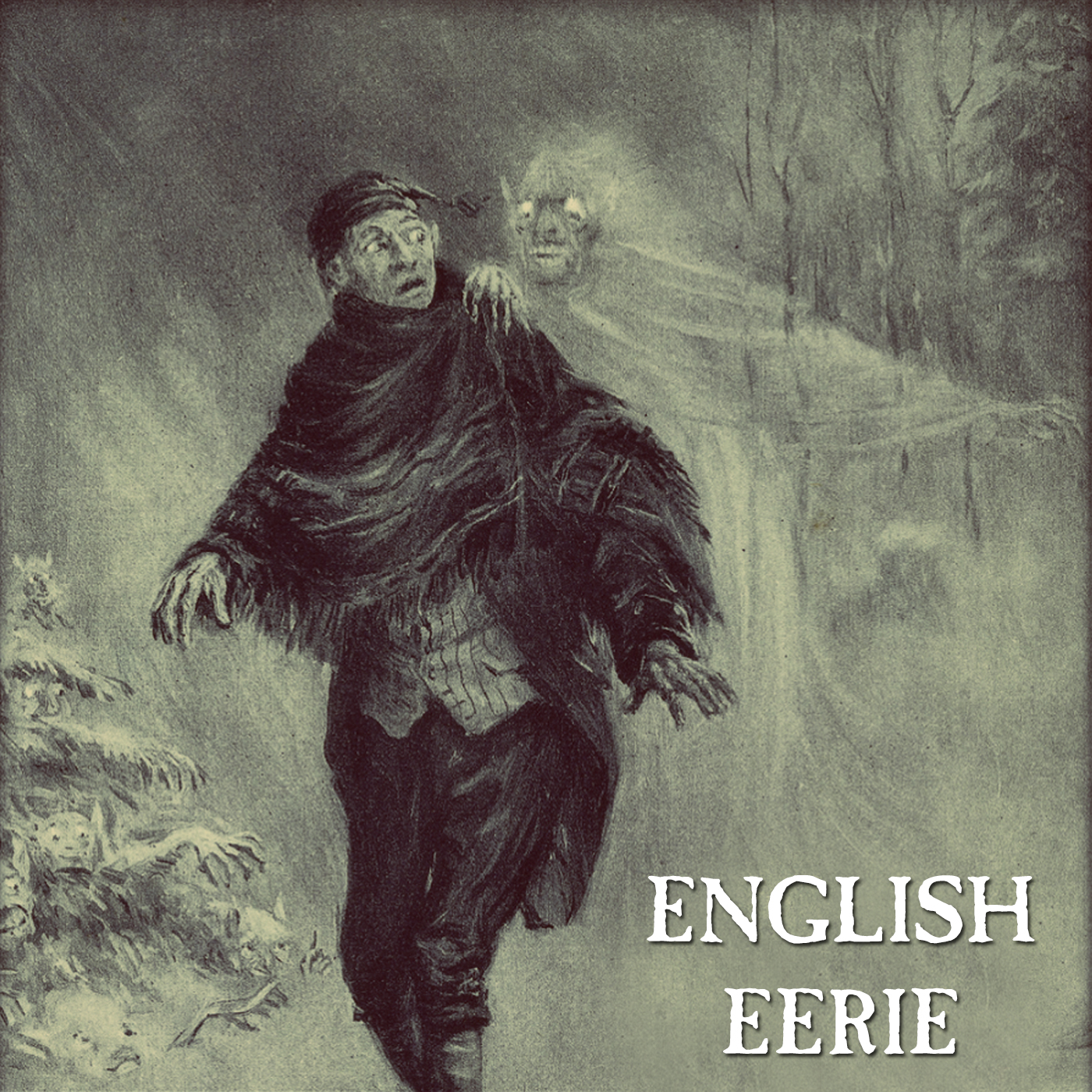
MICROGORIA 58 - English Eerie
You can get English Eerie here
DIRECT DOWNLOAD - MICROGORIA 58 - English Eerie
Find all the podcasts in the HYPNOGORIA family here -
HYPNOGORIA HOME DOMAIN - Full archive, RSS feed and other useful links
HYPNOGORIA on iTunes
HYPNOGORIA on STITCHER
![]() |
CLICK HERE FOR DETAILS |
Wednesday, 16 May 2018
THE 'ORRIBLE 'OUSE OF TERRIBLE OLD TAT - Odin, Thor and Mary?
Welcome once more dear fiends to the 'Orrible 'Ouse of Terrible Old Tat! Or rather welcome back to Asgard and the world of Valhalla! Published in 1983 for the ZX Spectrum and ported to the Commodore 64 in 1985, Valhalla was, as we have previously discussed, a ground-breaking and ambitious game. It was worlds away from the legions of Jet Set Willy clones which were clogging up game shelves back then. But was the game itself any good?
It certainly sounded like it was going to be amazing - hanging out in a world of Norse gods and monsters, undertaking epic quests, and generally being allowed to do what the hell you liked. Well, provided you could get the bugger to load that is - for the first drawback to Valhalla was a long loading time, which greatly increased the chances of it crashing. However, once you had listened to the five or so minutes of electronic screeching - surely a formative influence on a generation of kids who would grow up to invent acid house, techno and jungle a decade or so later - the first thing to strike you is the scale of the world.
The game plays out in three distinct realms from old Norse cosmology, Asgard (the world of the gods), Midgard (the land of humans) and Hell (realm of the dead). Traditionally in Norse legends there were nine worlds, with additional realms for giants, elves, dwarves and so forth, but here three worlds work well enough. And just like in the old sagas, brave heroes could physically travel between the worlds. Now in the game, these worlds of possibly exciting adventures comprised of some 81 different screens, each one a separate location - as can be seen here on the map of Valhalla. Now travel between the locations was accomplished in the usual text adventure fashion i.e. typing into "go north", "go south-east" etcetera. And there were some short-cuts available too - some screens/locations had hidden "ringways" - magic portals that teleported you to another location if you possessed a magic ring.
But there were two downsides to all of this. Firstly you really needed to make some kind of map if you wanted to avoid becoming hopelessly confused and lost. But more importantly, travelling to another location meant the game had to draw another scene. Now the Movisoft engine did so by drawing in layers - first the background, then the midground, foreground, buildings, people and any items there. Hence travelling was a bit on the slow side as it tended to take about half a minute or so to render everything. Now playing Valhalla now, this kind of thing makes the game very slow and tedious indeed, however in fairness back in the day people didn't expect things to happen super quickly quite as much, and this kind of waiting for the computer to render a new screen wasn't exactly uncommon in the early adventure games. Plus it's easy to forget now how impressive the graphics were back then, for it was only a couple of years earlier than game graphics had consisted of basic shapes such as rectangles and squares moving about. And of course there was a novelty value to watching the computer draw in each scene layer by layer too.
Now as for doing the quests, while the instructions which came with the game were good, it took so long to travel anywhere or get anything done, many players soon got distracted and started just having fights for the hell it and generally running amuck. Which is arguably closer to how real Vikings might have behaved... Well, that was my excuse anyway. But anyhow, historical accuracy aside, the game itself had a certain sense of mischief to it anyway. To begin with you could spend many happy hours egging on various gods and monsters to fight each other, but Valhalla had some mischief of its own up its sleeve too.
Firstly as the program had a limit on how many items could be in any one location. There could only ever be eight items in one place, whether on the ground, in a chest, or in a cupboard. And if this limit was exceeded, the game had a novel and amusing solution. For the very second a ninth item was dropped, a character cheekily named Klepto appeared and stole one!
Which item got pilfered by Klepto was entirely random, and hence it was very possible he could take one of the much sought magic items you'd been questing for if you weren't careful. Of course, should this calamity befall you, you may very well ended up typing in "Klepto is a little shit" into the game... Although in fairness, given the freedom offered by Valhalla, and bearing in mind the general character of kids, if you were playing this back in the day, you'd no doubt already been typing in every rude word you could think of.
However this would reveal another of Valhalla's little jokes. For swearing elicited the cryptic response - "Mary is not amused". And a small figure would march on the screen and come and give your character a slap! Now if you are thinking "hang on, I don't remember a Mary in Norse mythology!" you'd be quite right. For this character was named after a very familiar and often hated figure in 1980s Britain - the self-appointed moral guardian Mary Whitehouse.
For many years Mrs Whitehouse campaigned relentlessly and fearlessly against swearing, sex and violence in our media, and as a result was seen by many as being more terrible than all the monsters and demons of Valhalla, mainly of course by kids who were mad keen to see all that swearing, sex and violence. Ironically, many of us only learned about the existence of some erotic TV series or violent movie in the first place thanks to Mrs Whitehouse protesting about it. Naturally when playing Valhalla, it was great fun to just bait Mary, albeit in a pixelated form. And of course, a new unintended subgame emerged - and that was trying to discover exactly how many and which swear words the game's text parser recognised!
Now of course, it would have been child's play to have the game's text parser not to recognise any swearing at all, but a generation of kids are very glad that they did. After all, anyone who played The Hobbit really wanted to the game to recognise the command "Tell Thorin to shut the fuck up about gold". Quite clearly, the programming team behind Valhalla had played more than a few adventures and what's more understood the mindset of their target audience. Hence Mary was a fun way to allow you to swear within the game, but, and this is the clever bit, in such a way so that boring grown-ups, who had a massive downer on computer games anyway, couldn't kick off about it. Now that's real genius!

Wednesday, 9 May 2018
THE 'ORRIBLE 'OUSE OF TERRIBLE OLD TAT - Valhalla I Am Loading!
Now Legend, a spin-off company from business software outfit Microl, were not a fly-by-night (or should that be type-by-night) games publisher. Unlike dozen of other software houses that sprang up around the same time - for there wuz gold in tham thar gamin' hills - Legend didn't release hundreds of titles which very often looked suspiciously similar to other hit games. Rather they released a handful of high quality titles, with their first offering Valhalla setting the bar rather high.
Written for the ZX Spectrum, and later ported to the Commodore 64, Valhalla was a game that came in a big box that screamed "QUALITY PRODUCT", and with a price tag to match - a very very expensive for the time £14.95. Although it was re-released a few years later as a classic title, in more modest packaging and at the pocket money friendly price of £2.99. Valhalla was created by Richard Edwards, Graham Asher, Charles Goodwin, James Learmont and Andrew Owen, and was mostly written in the common language to home micro's BASIC, with the game engine being dubbed "Movisoft", which sounded very futuristic and interactive. In fact it's a very early example of a game having a named software engine.
And very impressive it was too. Like The Hobbit there was a vast world to explore, a large cast of characters to interact with and you played the game by typing instructions into the game. The downside of this ambition was that the game notoriously took bloody ages to load - well over 5 minutes to load - which a long time even in the era of the home micro when loading a game took several minutes. As one reviewer of the day quipped "I only just had enough time to load Valhalla - let alone review it". And as with many of the larger home micro games, a longer loading time meant increased chances of the game glitching and not loading properly. I know of several folks who never got the darn thing to do anything but display the loading screen. Which admittedly was rather nice, showing a digitised version of the famous 7th century Anglo-saxon helmet found at Sutton Hoo, but not exactly as thrilling as hanging out and fighting with Norse gods and giants.
So then, provided you got the game to load properly, what did Valhalla offer the player? Well, the goal of the game was to collect six magic objects - Ofnir (a key), Drapnir (a ring), Skornir (a shield), Skalir (a sword), Felstrong (an axe) and Grimnir (a helmet). These magical treasures could only be collected in order, hence to get Drapnir you had to have Ofnir first and so forth. And while the items were in particular locations, if you died, any you had would be taken from you and hidden in a random location somewhere in the game world. On the upside however, dying was not a big deal in a world of gods and monsters, for if you were slain, you found yourself in Hell. However in accordance with the old legends and sagas, the land of the dead as just one of nine worlds in the old Norse cosmology, and hence just as you could travel from the world of men (Midgard) to the realms of the gods (Asgard), if you had died, the adventure wasn't over, you could just walk out of the Hell and continue your quest.
Valhalla also had some rather clever features too. Those of you have know your Dungeons & Dragons (whether as a tabletop game, or one of the many computer RPGs that use its rulesets) will be familiar with the concept of a player's character having an alignment - that is to say, a defined trait which maps out their philosophy and morals, whether good or evil, an upholder of law or a devotee of chaos. Now in Valhalla, your character doesn't have the usual RPG style character sheet with stats and traits, but very cleverly the game does take note of how you behave in the game world. When you begin your character is neutral - that is to say he is classed by the game as neither good nor evil. However as play progresses, your actions are noted by the game engine and other characters in the world of Valhalla will react accordingly. Hence if you are helpful and friendly to characters on the side of good such as Thor or Odin, all characters on the light side of the Force as it were will be inclined to be more helpful to you in your quest. Likewise being chummy with the likes of Loki will earn you favour with the forces of darkness. A very cool bit of programming I'm sure you will agree, and very ahead of its time.
And very impressive it was too. Like The Hobbit there was a vast world to explore, a large cast of characters to interact with and you played the game by typing instructions into the game. The downside of this ambition was that the game notoriously took bloody ages to load - well over 5 minutes to load - which a long time even in the era of the home micro when loading a game took several minutes. As one reviewer of the day quipped "I only just had enough time to load Valhalla - let alone review it". And as with many of the larger home micro games, a longer loading time meant increased chances of the game glitching and not loading properly. I know of several folks who never got the darn thing to do anything but display the loading screen. Which admittedly was rather nice, showing a digitised version of the famous 7th century Anglo-saxon helmet found at Sutton Hoo, but not exactly as thrilling as hanging out and fighting with Norse gods and giants.
However Valhalla has an even bigger claim to fame, for it was one of the very first true open world games. Now The Hobbit is often hailed as being a pioneer of open world gaming as you could head off anywhere into Middle Earth, but at the end of the day if you wanted to get anywhere at all in the game you still had to follow a linear plot that mirrored the journey and adventures in the original book. Now normally in RPG games, the world waits for you to do something and then reacts, but things were not like that in Valhalla. Here the world of the game carried on regardless of what you were doing, characters would go about their business without waiting to react to you - they would travel between the world, eat, drink, and fight as they pleased. In fact, once the game started it would essentially play itself. Obviously that's not to say it would make choices for you and you could sit back and watch the game do the quests for you. But on the other hand, events in the game weren't tied in the slightest to you doing the quests, and indeed if you just wanted to explore, hang out with the gods or get into fights - i.e. generally doing what the hell you liked - you could.
Now all of this was obviously very impressive... But technical cleverness doth not a great game make. After all, there have been many titles down the years that boasted of having revolutionary concepts, ground-breaking coding and super new spanky graphics, but in terms of actual playability have sucked harder than a Hoover on overdrive! Next week, we are dusting off the old Spectrum, praying the rubber keyboard hasn't perished, and will be playing Valhalla!

Wednesday, 25 April 2018
THE 'ORRIBLE 'OUSE OF TERRIBLE OLD TAT - Shut up Thorin!
Now at the dawn of the home micro age, there was a common perception that these small and affordable computers, that didn't require a massive room filled with spinning tape wheels and an evil genius with a beard who would program it to run amuck and try and take over the world, would mainly be used for serious purposes. Such as science, education and business. And naturally as soon as the public began snapping up the likes of the Sinclair ZX81, many saw a glimmer on the technological horizon of vast empires built on writing software. And this was no mirage - indeed there was a new frontier opening based on computer publishing...
But the gleaming city which was built on software didn't turn out to be based on accounting programs. Nor was it built on rock and roll as predicted by Starship. For despite the efforts of pioneers and gadget gurus to educate the public on the power and potential of the mighty micro, what actually happened was that people bought them and then completely failed to get to grips with them. However, the nation's kids very quickly mastered how to load a game, and very soon the software sections in shops were expanding to contain a tidal wave of games.
Now in these early days, one of the companies formed to create and sell business software was an outfit called Microl. However at some point in 1982, Microl very cannily realised that the big money was in games, and set up a spin-off outfit solely to create gaming titles. Headed up by John and Jan Peel, this new gaming software company was called Legend. Now although there were a host of fly-by-night companies that popped up and foisted a legion of shoddy games upon us all, Legend was no quick cash-in venture and the Peels were interested and excited by the possibilities of the emerging games scene. Quite correctly, they realised that computer games weren't just a passing fad, and that the power of the home micro allowed for gaming to evolve way beyond the arcade titles of the past and become a whole new media in themselves. And from the start they were aiming for quality. In an interview with Your Spectrum magazine (see here) , the Peels claimed "We are looking for TV quality images coupled with the interactive potential of a home computer".
Now one of the most impressive games in the early days of home micros was The Hobbit created by Beam Software in 1982. In many ways, this computer game version of JRR Tolkien's classic wasn't exactly breaking new ground - it was basically a text adventure, a style of computer game which had been around since the mid 1970s. However these earlier text games had been mainly played on computers in labs and universities, and the general public still generally thought of computer games as things like Pong, Space Invaders or Pac Man. However The Hobbit really grabbed the public's attention - to begin with it came with a copy of the original book (see! computers were educational!) and as well as the usual typing in of phrases such as "Ask Gandalf to open the door" and "Ask Thorin to stop singing about gold", The Hobbit came with pictures. Yes, they were primitive and took ages to load but they were based on famous illustrations and really brought the game to life.
And to the vast majority of people who were just discovering the joys of computers, The Hobbit was a massive leap forward in game-play from running about overeating or crashing spaceships. Instead of repeating the same actions or doing the same tasks over and over again, except slightly quicker on each level, in The Hobbit you could go where you liked and do what you liked. Well, provided the program could understand the command you typed in. The text parser in The Hobbit was good, but it never understood the more frequent types of commands typed in by kids determined to mispend their youth, as seen below...
Now obviously to get anywhere in the game you had to replicate the plot line of the original book, and in fact you could complete the adventure in under ten minutes if you knew what you were doing (as can be seen in walkthrough videos like this one). However there was nothing to stop you heading off in any direction you liked, and causing mayhem in Middle Earth. And this kind of freedom in a computer game was nothing short of astounding back in the day. In fact, the lure of just wandering anywhere you liked was so great, most players never found some of the notorious bugs in some versions of the game which actually made the proper adventure unfinishable!
Now the Peels rightly recognised that The Hobbit was a real milestone in the development of computer gaming, not just in the technical sophistication of the game engine but also in the impact it had made on the public's perception of what games could be. They realised that games that let players create their own adventures, tell their own stories had the potential to be as addictive as soap operas, and thus Legend's first venture was intended to pick up where The Hobbit left off. Very astutely for their first game, they chose as their subject matter some of the very same source materials that had inspired Tolkien's famous tales, Norse mythology. And the game that resulted was Valhalla!
Next time - we voyage to the realms of Asgard, journey to Hell, and insult assorted Norse divinites!

Monday, 23 October 2017
INKTOBER WEEK #3
Day 16 - "Uninvited Guests" - another homage to old school RPG art
Day 17 - Crooked House with Mark Gatiss as the Curator
Day 18 - I think I'm calling this one "Black Goat Kaleidoscope"
Day 19 - Ghastly McNasty, Editor at Large #inktober2017
Day 20 - A regular face at the Great Library of Dreams...
Day 21 - Misty
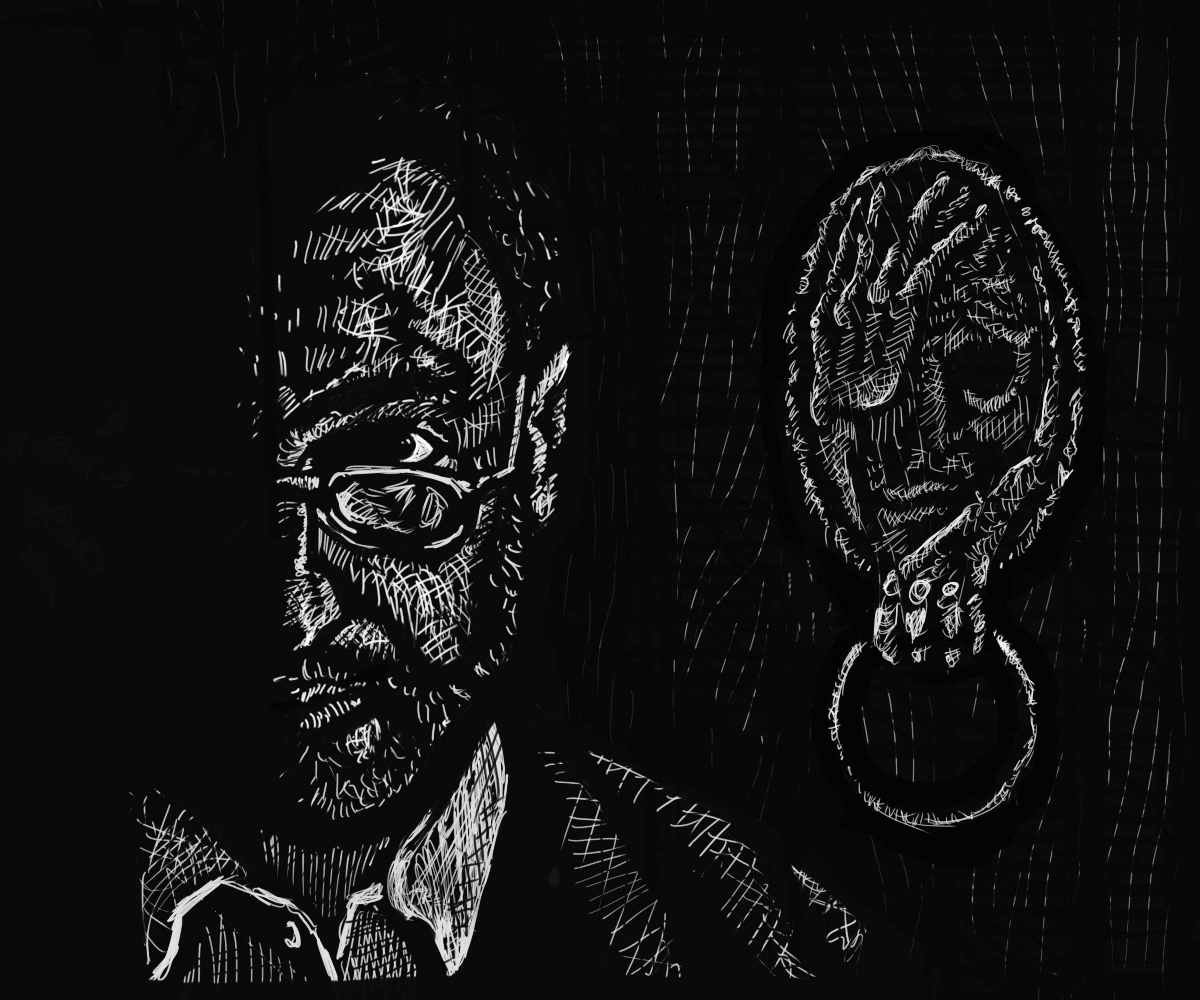
Day 22 - another piece inspired by MR James
"One thing I did notice in the carving on the well-head, which I think must have escaped you. It was a horrid, grotesque shape — perhaps more like a toad than anything else, and there was a label by it inscribed with the two words, “Depositum custodi” - "Keep that which is committed to thee"...
from The Treasure of Abbot Thomas
Day 23 - The Stain of Vampirism - this piece was very much an exercise in seeing what suggested itself from some random splashes.
Day 17 - Crooked House with Mark Gatiss as the Curator
Day 18 - I think I'm calling this one "Black Goat Kaleidoscope"
Day 19 - Ghastly McNasty, Editor at Large #inktober2017
Day 20 - A regular face at the Great Library of Dreams...
Day 21 - Misty
Day 22 - another piece inspired by MR James
"One thing I did notice in the carving on the well-head, which I think must have escaped you. It was a horrid, grotesque shape — perhaps more like a toad than anything else, and there was a label by it inscribed with the two words, “Depositum custodi” - "Keep that which is committed to thee"...
from The Treasure of Abbot Thomas
Day 23 - The Stain of Vampirism - this piece was very much an exercise in seeing what suggested itself from some random splashes.
Subscribe to:
Posts (Atom)