Showing posts with label The Tractate Middoth. Show all posts

Sunday, 8 October 2017

INKTOBER WEEK #1


Hello folks! This year I thought I would have a bash at the annual artistic malarky that is #inktober! I've meant to for a couple of years now, but as October is something of a busy month around here at the Great Library of Dreams I usually end up forgetting. However this year, I did remember, and so then here is the first week's worth of doodles and sketches! 


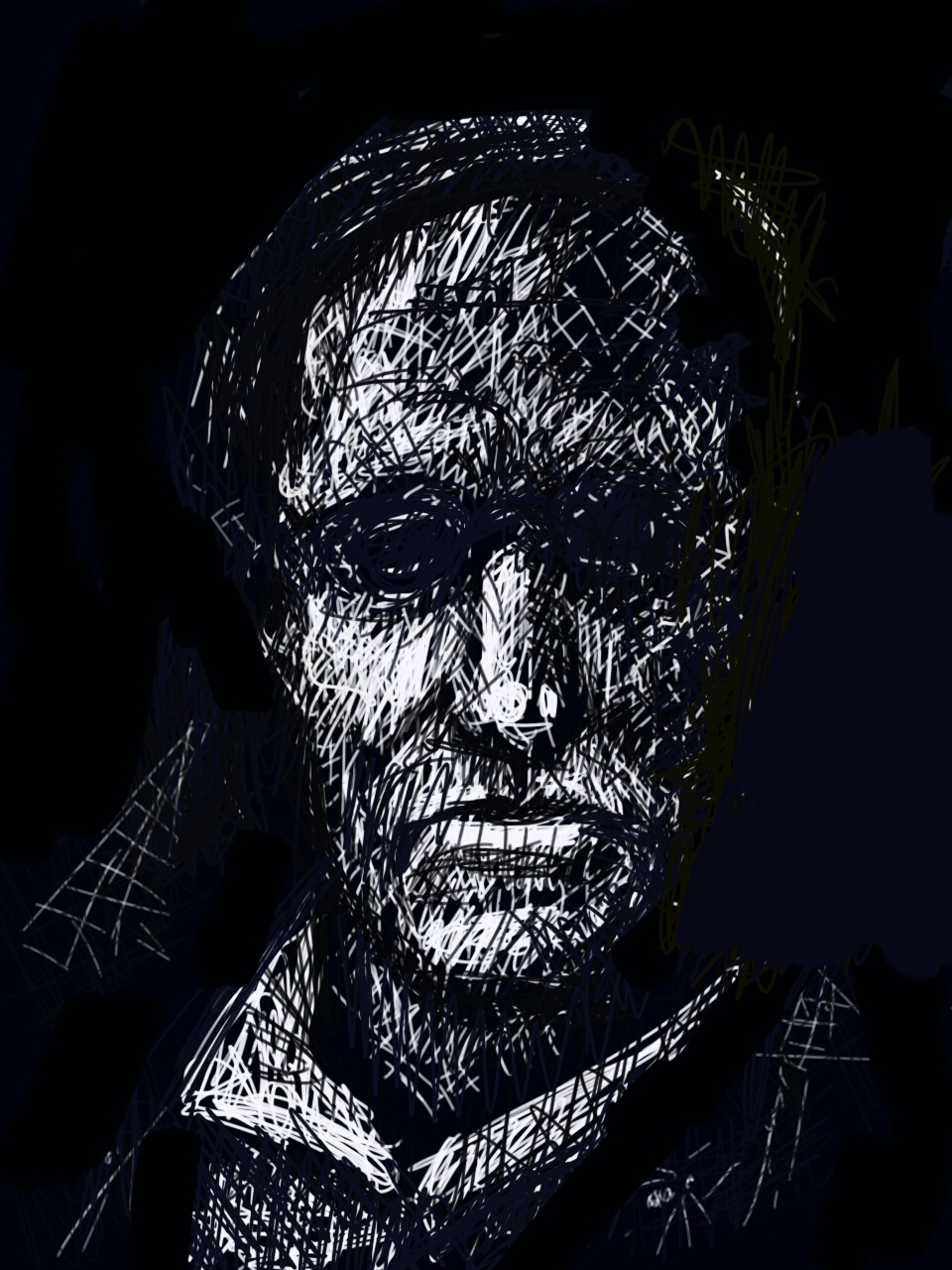
Day 1 - a little piece inspired by The Tractate Middoth by MR James


Day 2 - a little sketch I entitled "The Witch At The End of Your Bed" 


Day 3 "Late Night by the Fireside" - Thought I'd have a bash at a spooky scene like the ones Ionicus used to do for the covers of ghost stories for William Kimber books. You can see a fine selection of Ionicus cover over here at The Common Swings. On reflection I think this one came out more like Roger Hargreaves, but never mind! 


Day 4 - See the little goblins...


Day 5 "Hallowtide at Exham" - Another attempt at something in an Ionicus/Kimber style! This one was getting closer to what I wanted, and very much a homage to the Ionicus cover for Halloween Hauntings edited by the late great Peter Haining


Day 6 "Tiptoe Through the Tombstones" - another somewhat Ionicus inspired piece, with a touch of Alfred Bestall too


Day 7 - Another piece inspired by MR James - 
"The whispering in my house was more persistent tonight. I seemed not to be rid of it in my room. I have not noticed this before. A nervous man, which I am not, and hope I am not becoming, would have been much annoyed, if not alarmed, by it..." 

from The Stalls of Barchester Cathedral by MR James 


Friday, 22 April 2016

FOLKLORE ON FRIDAY - Strange Burials


Over the last few weeks we've been excavating the folklore and legends linked to William Mackenzie's tomb on Rodney Street, a striking monument often referred to as the Great Pyramid of Liverpool. We have discovered that tales that Mackenzie was buried inside, seated at a table, to cheat the Devil of his soul, and how his cloaked spirit stalks the area, appear to be very recent additions to Liverpool's ghostly lore. And last week we learned these tales may well have their inspiration in a ghost story, The Tractate Middoth, penned by the great MR James, who in turn may well have been inspired by folklore surrounding other real life weird burials. 

Last week we learned how possibly James had been inspired by tales of the burial of "Mad" Jack Fuller. However while it is often claimed that this Georgian eccentric was buried in a pyramidal moment and seated at a table in full evening dress with a roast dinner before him, similar to Mackenzie and James' Dr Rant, there doesn't appear to be any talk of his ghost walking the area or any other tales of anything sinister of spooky. So then perhaps we should look elsewhere. And certainly there are other possible sources of inspiration, for there appears to have been a fad for unusual burials from the 18th century onwards. 

The remains of John Baskerville sketeched by Thomas Underwood

Many versions of the William Mackenzie legend state that he was a vehement atheist and gambler, which is how he ended up playing cards with a sinister stranger and wagering his soul away. And while there appears to be very little evidence at all in his diaries and contemporary writings that Mackenzie was either an atheist or given to gambling, there were other strange interments and odd funeral arrangements in the final wishes of various radical thinkers and rebels. For example, Birmingham printer John Baskerville, who invented the Baskerville font we still use today, was a staunch atheist, and in particular was opposed to the notion of bodily resurrection on Judgement Day favoured by some branches of Christianity. And so, he instructed that he was to be buried, standing up, not "laid to rest", in his own garden. And indeed when he died in 1775, he was buried according to his wishes - at least until his house was demolished and Birmingham Library built on its ground. Then Baskerville's body was displayed to the public for some years, before finally being re-interred. However in Birmingham Library archives, there is a sketch of his body made by Thomas Underwood in 1829, and with it you can see a preserved piece of Baskerville's shroud, and it is said anyone who touches it will be cursed! 

Closer to the tales we have been discussing is the philosopher Jeremy Bentham, who instructed that after his death in 1747, his mortal remains were to be preserved and displayed in a glass case. It is usually thought that Bentham hoped the transformation of his mortal remains into what he referred to as an Auto-Icon would break down some of the taboos around death, in particular the religious objections of the day to doctors performing autopsies and learning from dissecting human cadavers. Although others have proposed it was merely an eccentric act or vanity or some macabre joke on Bentham's part. Either way however it is alleged that Bentham's ghost has been seen many times strolling around the University College of London where the Auto-Icon is still on display. However Bentham's shade appears to a benign presence rather than the somewhat sinister spectre of Mackenize or the down-right terrifying Dr Rant. 

The Auto Icon of Jeremy Bentham

But there is one weird burial that does seem to fit very nicely both the dread phantom of The Tractate Middoth and the spooky tales of the Rodney Street Pyramid. Not far from St Mellion, Cornwall is Pentillie Castle, a country house built by Sir James Tillie in 1693. Also in its grounds, at a location he dubbed "Mount Ararat" , Sir James erected a folly, a three storey gothic tower. On his death in 1713, Sir James will instructed that his body should be interred inside the Mount Ararat tower. And what's more his mortal remains were to be fastened to his favourite chair, dressed in his finest clothes, and surrounded by his books, fine wines and his pipe to await the resurrection. 

Whether these instructions were intended as a morbid mocking of religious beliefs, an act of bizarre piety, or merely an eccentric whim, no one is entirely sure. Possibly it was some mixture of all three, for a contemporary of Sir James, William Hals reports that his will was "atheistic in principle" but also demonstrated "an utmost submission to the will of Divine Providence". Whatever the truth of the matter however, it was not long before accounts of his eccentric burial were being embroidered. A few decades later it was being claimed that he had also instructed his servants to bring his seated body fresh wine and food every week, which the poor souls continued to do for some two years before the decayed state of the corpse made the job impossible. In these elaborate stories, it was claimed that Sir James, a self-made man, had such a high opinion of himself and his admittedly impressive rise to riches, that he believed that death could not hold him and he would resurrect himself - hence the servants bringing him fresh food every week. Furthermore over the years, Sir James often was painted as "a celebrated atheist of the last age" (William Gilpin in Some Observations on the Western Parts of England 1798) and it was said that the restless shade of this impious fellow now stalked the night, and locals avoided the folly-turned-mausoleum after dark for fear of meeting his ghost. 

Statue of Sir James Tillie at the Mount Ararat folly

Sir James Tillie's burial proved to be something of a bone of contention among antiquaries and historians in the 19th century, for the folly clearly held no body, only a statue. Some argued that the corpse had been removed and buried properly in a local church, while others held that he had been interred beneath the folly itself. The argument would continue into the last century and were only finally resolved in 2013 when renovation work uncovered a sealed vault beneath the folly containing an ancient skeleton and leather-covered pieces of wood, thought to be the remains of a chair. 

Given that Sir James' strange post mortem affairs have been so widely discussed over the years, earning a mention in many different tomes and journals, it is hard to see how as an antiquarian such as MR James would not have been familiar with the tale. And certainly the lore and legends do seem a good match for old Dr Rant. However there are clear parallels with the tales told of William Mackenzie's monument too, and indeed with the shared concept of a blasphemous burial there is arguably a closer correlation with the Mackenzie stories than with The Tractate Middoth.  And so, it might be the case that the stories that have grown up in recent years about the pyramid tomb of Liverpool were perhaps directly inspired by the legend of Sir James Tillie. 

However the talk of losing a hand of cards with the Devil does remind me of another old well-known legend... More on that next time! 

The Mount Ararat folly

Friday, 15 April 2016

FOLKLORE ON FRIDAY - Beneath the Pyramids


Last time we gathered together, we were telling tales of the Great Pyramid of Liverpool. As was recounted then, according to local lore this striking monument was the tomb of the noted engineer and railway pioneer William Mackenzie, and according to local legend, Mackenzie was interred seated within the pyramid holding a winning hand of cards. This elaborate and unusual burial was allegedly a ruse to cheat the Devil of a deal for his immortal soul, and one which apparently succeeded for Mackenzie's ghost has haunted the Rodney Street area of Liverpool ever since.

However is there any truth to the tale? Well, let us just say the evidence is not particularly strong. To begin with, and perhaps most damningly, this eye-catching tomb was not actually erected at the time of Mackenzie's death. As an inscription on the monument itself makes clear, it was put in place some sixteen years after his passing. Indeed the inscription also indicates that its creation coincided with the death of Mackenzie's second wife, and in fact the grave contains not just Mackenzie but both his first and second wives! Hence it would appear that Mackenzie was buried in the conventional fashion when he died in what was a family plot, and the pyramid only added on top much later when all intended to buried there had passed away and been interred. Given that it is highly unlikely that Mackenzie was embalmed and stored until the pyramid was erected, we can safely assume that the oft-told tale of the police discovering the tomb had been broken into and discovering a seated skeleton inside is a later embroidering of the eerie stories attached to this unusual monument. 

From combing assorted tomes and archives it would appear that the tale of Mackenzie's Devil-cheating burial appears to be a relatively recent addition of Liverpool's ghostly tales and folklore, for I can find no earlier reference to it before the 1980s. Of course this does not prove that locals weren't spinning yarns about the pyramid tomb before then, but judging from the story's appearances in print, the tale of Mackenzie being buried seated inside the tomb only became widespread and well-known in the last couple of decades. Hence it would appear to be a truly modern piece of folklore. But where did the tale originate?

Mr John Reppion, author of 800 Years of Haunted Liverpool (2008), has advanced an interesting theory that possibly tales of Mackenzie's unusual burial were perhaps inspired by one of the ghost stories of MR James. In the tale The Tractate Middoth, which appears in the second collection of James fiction, More Ghost Stories of an Antiquary (1911), we have the following passage - 

"Well, Mr Garrett," said Mrs Simpson, who had not yet resumed her work, and was looking at the fire thoughtfully, "I shall tell you the story. You will please keep it to yourself, if you don’t mind? Thank you. Now it is just this. I had an old uncle, a Dr Rant. Perhaps you may have heard of him. Not that he was a distinguished man, but from the odd way he chose to be buried."
"I rather think I have seen the name in some guidebook."
"That would be it," said Miss Simpson. "He left directions — horrid old man!— that he was to be put, sitting at a table in his ordinary clothes, in a brick room that he’d had made underground in a field near his house. Of course the country people say he’s been seen about there in his old black cloak."

Dr Rant in the 1966 adaptation in the Mystery & Imagination TV series

Now here we certainly have several intriguing parallels: not only the curious burial, but also Dr Rant's spectre being seen in the area dressed in a black cloak, in the same way the shade of William Mackenzie is reported to appear the Rodney Street area. Although thankfully Liverpool's phantom hasn't been spotted sporting eye sockets filled with cobwebs like James' Dr Rant. In recent years, Jamesian scholars (myself included) have wondered whether Dr Rant was inspired by the legend of William Mackenzie, but of course as recent research has shown, the tales around Mackenzie's tomb appear to be far more recent, making it more than likely Mr Reppion's theory that the James story influenced the Liverpool folklore,rather than vice versa,  is indeed correct. 

However The Tractate Middoth may well have been inspired by another legend featuring a pyramidal tomb. For in a quiet corner of Sussex, in the churchyard of St. Thomas à Becket, Brightling, is a strange pyramid just under eight meters in height. This weird monument is the burial place of a famous local eccentric, 'Mad' Jack Fuller. As well as being the local MP and squire of Brightling, Fuller built many follies in the area, as was the fashion among Georgian gents like himself. However his most famous construction was his pyramidal tomb, and according to local lore, he instructed that he was to be buried inside, seated in full evening dress and top hat, at a table with a roast chicken and a bottle of wine! Now the story of his unusual burial had been circulating since the early 20th century, but sadly renovations in 1982 revealed he was actually interred in the usual fashion beneath the edifice, with no sign of fine wines or roast dinners in evidence.

The stories of Mad Jack's burial seem like a good fit for the origin of Dr Rant. Interestingly Fuller had been school at Eton, and given that James himself studied and taught there, so its certainly possible that he may have heard the tales about this old boy's unusual funeral arrangements. Also as James spent many of his holidays journeying the highways and byways of England, visiting antiquarian sites such as old churches and mansions, and even penning two guidebooks based on his travels, it is also possible that he had heard the story of Mad Jack's tomb on one of these jaunts. However the problem with this theory is that earliest appearance of the tale in print comes in 1920, some years after The Tractate Middoth was written.

Of course, before the tale was set down in print in 1920, there may well have been stories circulating orally which James could have heard. However James does have the hero of the tale mention that he had heard of Dr Rant and his burial in a guidebook - which perhaps gives us a clue that he was indeed inspired by a written source. And some recent research has uncovered some other possible models for Dr Rant, which in turn also may have influenced the Liverpool legends of William Mackenzie, which we shall examine in the next instalment... 


A few years ago I performed a reading of The Tractate Middoth as the centre piece of my Jamesian Christmas special which you can hear here - Christmas Eve at Kings  Be warned though, as it is a Christmas special, it is a very festive show!