Showing posts with label Peter Haining. Show all posts

Sunday, 8 October 2017

INKTOBER WEEK #1


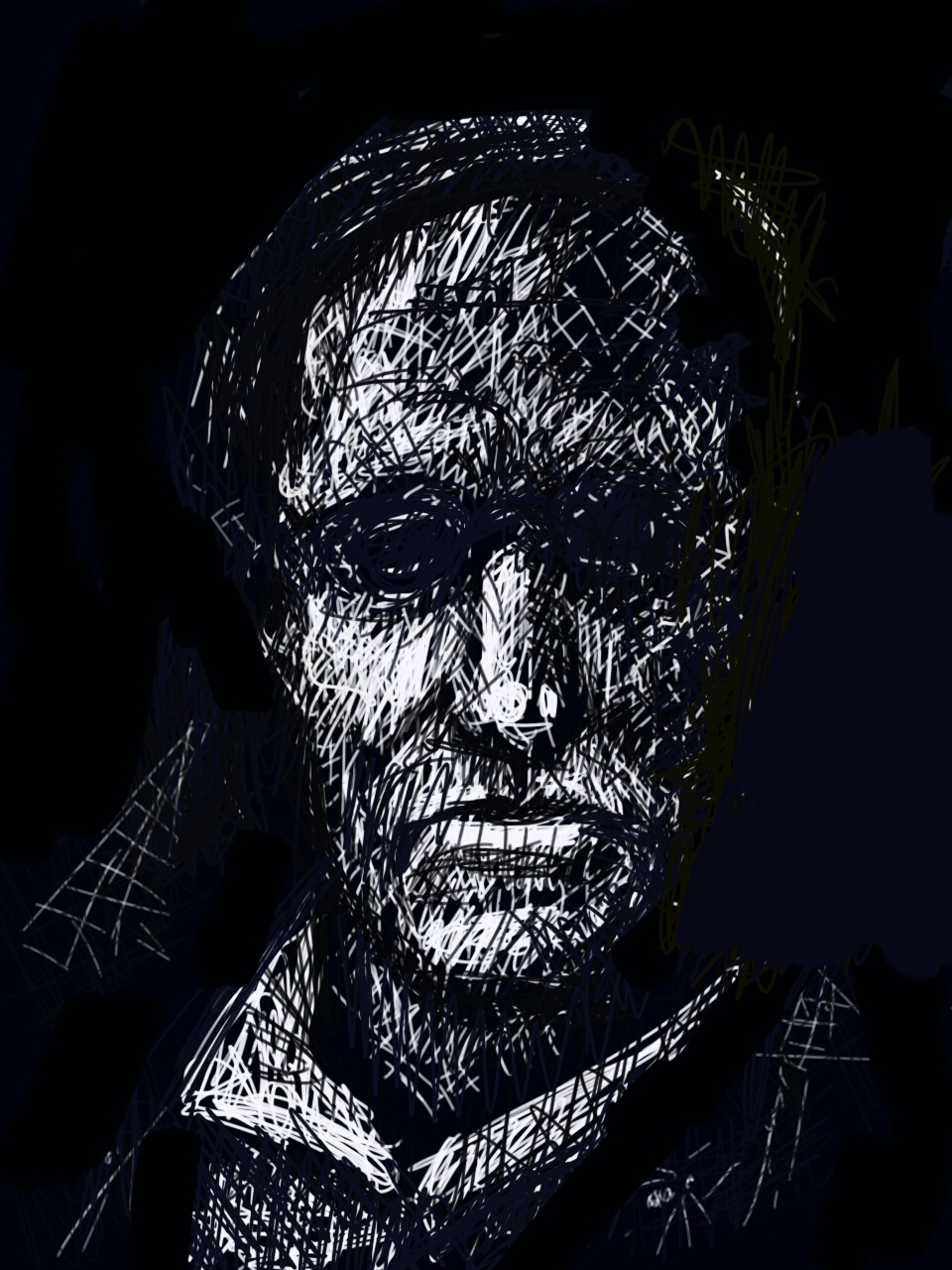
Hello folks! This year I thought I would have a bash at the annual artistic malarky that is #inktober! I've meant to for a couple of years now, but as October is something of a busy month around here at the Great Library of Dreams I usually end up forgetting. However this year, I did remember, and so then here is the first week's worth of doodles and sketches! 


Day 1 - a little piece inspired by The Tractate Middoth by MR James


Day 2 - a little sketch I entitled "The Witch At The End of Your Bed" 


Day 3 "Late Night by the Fireside" - Thought I'd have a bash at a spooky scene like the ones Ionicus used to do for the covers of ghost stories for William Kimber books. You can see a fine selection of Ionicus cover over here at The Common Swings. On reflection I think this one came out more like Roger Hargreaves, but never mind! 


Day 4 - See the little goblins...


Day 5 "Hallowtide at Exham" - Another attempt at something in an Ionicus/Kimber style! This one was getting closer to what I wanted, and very much a homage to the Ionicus cover for Halloween Hauntings edited by the late great Peter Haining


Day 6 "Tiptoe Through the Tombstones" - another somewhat Ionicus inspired piece, with a touch of Alfred Bestall too


Day 7 - Another piece inspired by MR James - 
"The whispering in my house was more persistent tonight. I seemed not to be rid of it in my room. I have not noticed this before. A nervous man, which I am not, and hope I am not becoming, would have been much annoyed, if not alarmed, by it..." 

from The Stalls of Barchester Cathedral by MR James 


Thursday, 13 August 2015

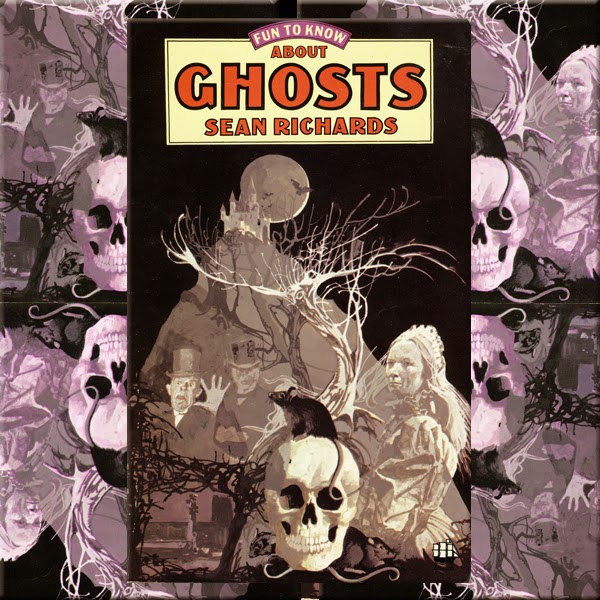
GREAT GHOSTS OF THE SHELVES #19 - Fun To Know About Ghosts


Now previously in this little series of articles, we have chatted about the wonderful world of the Armada Ghost Books (specifically both here and there), however their fondly remembered line of anthologies wasn't their only venture into the realm of the supernatural, nor was it their only series of books. For Armada had learnt some important lessons in the publishing game, ones which made them one of the top publishers of children's book in the UK for several decades. 

Firstly their paperbacks were always the classic paperback format i.e. handily pocket sized and easily slipped into a blazer pocket or a school bag. Secondly they knew kids always appreciated good cover art, and interior illustrations were a huge bonus draw too. And thirdly Armada recognised that  most children are born collectors - hence if you release a string of books as a series and sell them at pocket money prices, the completist nature of many kids will ensure that the sale of one title will lead to them picking up the rest. 

Hence Armada had many series, often releasing three or fours books on the trot to get the ball rolling. And at the close of the '70s, they launched a new non fiction range, the Fun To Know About series. Now as far as I can tell, this series only ran to four volumes, and obviously today's volume instantly caught my eye... but for the record, the other titles in the series were - 
  • Fun To Know About Dinosaurs (exciting!)
  • Fun To Know About The Mysteries of Space (colour me intrigued!) 
  • Fun To Know About Dogs (hang on, what's this doing in here?)
And although at the time, the volume on dogs very much looked the odd man out in the line-up, with hindsight (and adult eyes) I can see that the range was clearly trying to cover all bases in the market, looking to pick up readers of spooky tales, SF, science, and animals - four categories perennially popular with kids.

Naturally being obsessed with all things spectral and already hooked on the Armada Ghost books series, I snapped up Fun To Know About Ghosts as soon as I saw it. So then delights what did this tome deliver? Well, as was often the case with these kinds of non-fiction ventures for kids at the time (and indeed today) there was a mix of facts, lists, and fun activities with a sprinkling of humour. We kick off with an introduction that asks what are ghosts and discussing the kind of thing the books is going to serve up, and then get on a fun and informative A to Z of different types of ghosts, with related supernatural beings such as werewolves and ghouls creeping in too. Next we have a section on how to be ghost hunter, a piece on ghost photographs and how they were faked in the past, and a selection of ghostly encounters experienced by assorted celebrities. We then have a section on Halloween, in which we get a potted history of the spookiest holiday of the year, and in the most activity orientated part of the book, suggestions for holding a Halloween party. This includes a set of recipes for suitably eerie dishes such as pumpkin pie and  'Ghoul's Blood Tart'!


We then move into a historically themed set of items, which is where this book most overlaps with similar ghostly volumes. For we here have write-ups on the infamous Borley Rectory, the most haunted village in Kent (bonus points if you can name it), royal ghosts and haunted castles. After couple more short chapters detailing unusual and lesser known hauntings we have two long list style sections to round off the book - a round-up of interesting and odd ghostly facts, and finally another A to Z - this time of haunted houses and locations in the British Isles.  

It's a fun little book, and while there was several pieces on  things I was already familiar with (such as the aforementioned Borley Rectory and the pictured above Glamis Castle), there was more than enough new material to make this an indispensable guide to all things ghostly for my younger self. Given its grab-bag nature, this was an ideal tome to have by the bedside for some midnight study into the supernatural. 

Indeed I was so regularly consulting this book, I started looking for other tomes on the supernatural by Mr Sean Richards, but sadly to no avail. However, many years later I would discover that in fact I had already read and indeed owned many volumes by the same author - for 'Sean Richards' was in fact a pen-name of the great Peter Haining, an man we have already encountered several times in this series, and will no doubt be meeting again in the future too... 

And you can hear more about this little tome, including a few little readings, here - Microgoria 05 - Fun To Know About Ghosts


Wednesday, 15 July 2015

GREAT GHOSTS OF THE SHELVES #17 - The Midnight People ed. Peter Haining


Another collection of vampire fiction! And one which oddly enough has a cover that seems to echo the cover of a contemporary paperback anthology also devoted to tales of the vampire, The Undead edited by James Dickie. And as the two volumes surprisingly one share on tale in common - When It Was Moonlight by Manly Wade Wellman - they made a very pleasing complimentary pair on my bookshelves. 

Now The Midnight People was one of the many anthologies edited by the late great Peter Haining. First published in hardback by Leslie Frewlin in 1968, this collection of tales of blood drinkers has had several paperback editions down the years from Popular Library in 1970, Ensign in 1974, and the above incarnation from Everest Books in 1975. Furthermore it has been also published in the US as Vampires at Midnight in 1970 by Grosset & Dunlop, and more recently surfaced under the same title in 1993 from Warner Book with a new introduction by Sir Christopher Lee. 

Now the indefatigable Haining often used to arrange his anthologies by theme, and this one was part of a series of collections, each tackling a different aspect of the macabre - so while The Midnight People dealt with vampires, The Evil People (1968) served up tales of black magic and witchcraft, and The Unspeakable People (1969) purported to bring together the most horrible tales ever written. And more on those tomes another day...

...But back to The Midnight People. Much like Mr Dickie's collection which came a few years later, in his introduction Haining explains that he endeavored to create a collection of vampire fiction that didn't overlap with other volumes. And for my money, I think he succeeded admirably, with only the extract from Dracula being  and the MR James tale 'An Episode of Cathedral History' being likely to being already known to most readers. In the present age, we could add the extract from Varney the Vampire but at the time this collection was published reprints of this seminal penny dreadful were few and far between. Additionally the passing years have revealed that it is likely that James Malcolm Rymer actually penned this Victorian vampire epic rather than Thomas Preskett Prest. And while on the subject of names and titles, "Stephen Grendon" was actually a pseudonym for August Derleth, while Matheson's tale 'Drink My Blood' has also appeared under the alternative title 'Blood Son'.

The full contents are as follows -  

Fritz Haarmann ‘The Hanover Vampire’ by Montague Summers
The Vampire of Croglin Grange by Augustus Hare
The Vampyre by John Polidori
The Storm Visitor (an extract from Varney the Vampire) by Thomas Preskett Prest
Three Young Ladies (an extract from Dracula) by Bram Stoker
An Episode of Cathedral History by M. R. James
Bat’s Belfry by August Derleth
‘And No Bird Sings’ by E. F. Benson
The Believer by Sydney Horler
The Drifting Snow by Stephen Grendon
When It Was Moonlight by Manly Wade Wellman
Over the River by P. Schuyler Miller
Drink My Blood by Richard Matheson
Pillar of Fire by Ray Bradbury
Dr Porthos by Basil Copper
The Living Dead by Robert Bloch
The Girl with the Hungry Eyes by Fritz Leiber
Postcript by Montague Summers

This volume is bookend with pieces by the noted vampire scholar Montague Summers, and we open with his account of the ghoulish crimes of a real life 'vampire' killer. W then follow it up with another alleged true story - 'The Vampire of Croglin Grange'. Now oddly enough when I investigated the Croglin case, having being fascinated for many years by the account here, I discovered a strange link to Varney the Vampire, and more curious still, the every section reprinted under the title 'The Storm Visitor' in this volume! Full details of this investigation can be found in Hypnobobs  #91 and Hypnobobs #92

Anyhow we then take a more or less chronological tour through vampire fiction through the ages. And refreshingly we have a wide variety of species of vampire on show here. Yes, there are the traditional blood-drinkers such as Dr Porthos, but we have plenty of unusual takes on the familiar fiend here. The Grendon/Derleth tale brings us a snow vampire, Bloch and Leiber explore in different ways the vampiric aspects of celebrity, Manly Wellman has the great Edgar Allan Poe meeting the undead, while Bradbury and Miller tell us tales from the vampire's point of view. And stranger things await too - there is little of the suave gentleman of the night, or even of the remotely human in EF Benson's 'And No Bird Sings', while some have questioned whether the thing unleashed in James' 'An Episode of Cathedral History' is actually a vampire at all - but whatever the creature is it certain fits in well here.

This book entranced me when I first got the hardback edition out of the library as a kid, and indeed I borrowed it several times to revisit its fine selection of tales. And while it was many years later that I saw a copy for sale, I was delighted to find it and bought it instantly. It is still a superlative selection of vampire tales and one can see why it has been reprinted so many times - essential reading for all lovers of the undead. 


Sunday, 12 July 2015

MICROGORIA 15 - A Tribute to Sir Christopher Lee - the Intermission


This episode we take a little sidestep in our journey through the life and works of the late great Sir Christopher Lee.  Mr Jim Moon takes a back at the tradition of having hosts with our horror stories, and explores the various volumes of weird fiction that Sir Christopher Lee hosted and co-edited with Peter Haining and Michael Parry.


DIRECT DOWNLOAD - A Tribute to Sir Christopher Lee - the Intermission

Find all the podcasts in the HYPNOGORIA family here -

HYPNOGORIA HOME DOMAIN - Full archive, RSS feed and other useful links

HYPNOGORIA on iTunes

HYPNOGORIA on STITCHER

CLICK HERE FOR DETAILS


Friday, 10 April 2015

FOLKLORE ON FRIDAY - Live at the Witch Trials! Part I


One of the main problems for any investigator of folklore is that while assorted sages and scholars did an excellent job in the 19th century of preserving whole swathes of legend and lore from oral and local traditions, as one ventures back in time through the 18th century and beyond, there is a good deal less being written down and recorded. By its very nature, folklore thrives on the lips of people rather than in the pages of  books; it is passed down in tales told by the fireside, passed around the ale house, or spun out at bedtime. And so, as we have often discovered in this series of wanders down the leafy lanes and shadowy byways of folklore, when searching out sources dating from before the 19th century we are often left hunting for tidbits that have slipped into proper history books, and references to folk beliefs turning up in poems and plays.

Fortunately however we do have somewhere else to turn other than the jottings of antiquarians and poets. For while books and literature were the preserve of the rich and hence a limited resource in centuries past, from the 16th century onwards there was a popular press, churning out a variety of publications designed to tempt the pennies out of the pockets of ordinary working folks. There were inexpensive chapbooks and pamphlets, but cheapest, and hence the most popular, were the broadsheets and broadsides. These were single page publications which provided a whole world of entertainment: some relayed the news of the day, other retold exciting stories, and many did both in the form of popular ballads. Produced regularly and widely circulated, essentially these broadsides were the equivalent of the rolling news, movie channels, and the pop charts all rolled into one. Therefore just as modern bars have widescreen TVs to tempt customers in, so too wily landlords in ages past ensured their pubs and taverns had the latest broadsheets pinned up to attract the punters.   

Now admittedly these are perhaps not the most reliable of sources, for often fact and fiction were freely mixed up in the most sensational manner possible in order to sell as many copies as possible. Turning both popular stories and contemporary news into song form was highly popular, and these street ballads provided material that could be read for pleasure, recited as a poem or performed as music. Historically speaking they represent a fascinating time which sees the older oral traditions of storytelling, minstrelling and balladeering merging into what would become the modern newspapers, the book trade and the music business. Popular topics, whether fact or fiction, often would spawn many ballads on the same subject, while bestselling broadsides would be reprinted, re-illustrated, revised, expanded, and even pirated - proving that in the entertainment business, cover versions, sequels and remakes are not just a modern curse!   


But nevertheless there is a wealth of interesting material to be discovered here. Given that the broadside printers soon learned that the public loved a sensational story, the archives of surviving broadsheets feature a good deal of interest to folklorists. As criminal trials and accounts of gruesome murders were particularly popular with the punters who ponied up a halfpennies for ballads, it is no surprise that several ballads focused on the numerous witch trials of the 16th and 17th centuries. 

A New Ballad of the Life and Death of Three Witches Arrayned and Executed at Chelmsford 5 July 1589 was one of the earliest of these street ballads that detailed such a trial, which saw three women from Dagenham accused separately of witchcraft. Printed in London in 1589, a tattered copy eventually found its way into the hands of legendary editor Peter Haining, who restored the text and printed it in his excellent volume on the Essex witch trials The Witchcraft Papers (Robert Hale 1974) -  

A New Ballad of the Life and Death of Three Witches 
Arrayned and Executed at Chelmsford 5 July 1589
(To the tune of 'Bragandary Down', & etc)

IList Christians all unto my Song
'Twill move your Hearts to Grace,
That Dreadful Witchcraft hath been done,
Of late about this place;
But Three that cried the Devil's Name
With those who did them follow,
Now to Justice are brought home
To Swing upon our Gallow.

IIThere's scarse a Month within these Years
but Witchcraft foul is done,
And many are the weeping tears
These Satan's Fiends have rung;
Though they sought Mercy ere the rope
Soon as the Judgement's read,
Who gainsays the Devil's Hope
Is all when they are Dead?

IIIA vile long life they have run on
Regarding not their End,
Their hearts still bent to cruelty
Not minding to Amends;
Men and cattle they Bewitched
No Peace they gave the Rest,
But yet, in turn the parts were switched
By Marks upon their Breasts.

IVAs to the Story now to tell
The Truth I will Declare,
It was the Witches Children small
That they did not Beware;
For God into these Infants Hearts
Did pour the Light of Reason,
And all against their Mothers spoke
Of Witchcraft and of Treason.

VEvil were the tales of their demands
Sprung from the Depth of Hell,
And terrible the work of their Commands
As did the children tell;
Now the Judge the Sentence read
And ended in our town,
The rule of Imps and Spells and Dread
For many miles aroun'.

VISo listen Christians to my Song
The Hangman's swung his rope,
And on these Gallows hath been done
An end to Satan's Hope;
Give the News from Chelmsford Town
To all the world be spread,
A crew of Evil Witches have gone Down
Hang'd by the neck, all three are Dead
(Repeat)
As is typical of many ballads of the time, the case is recounted as a moral lesson while at the same time reveling the dark deeds of the story and details of the execution. But also, even allowing for a degree of sensationalism and poetic license, this ballad does tells us much about the times it was written in, reflecting very clearly both how common witch trials were and how widespread the fear of witchcraft was during this period. The second verse make specific reference to the regularity of reports of witchcraft, and its claim of the discovery of witchcraft being nearly a monthly event is no exaggeration for dramatic effect. For in the Essex area at this time, there were 670 men and women accused of witchcraft between the years of 1560 and 1675  (see here for the staggering full list). 

Furthermore the text also assumes that its audience possessed a certain amount of foreknowledge and familiarity with the details of witchcraft. The mention of "Imps and Spells" is no idle poetic fancy, but an allusion to a common feature of many of the trials of the period, where it was claimed that the accused witches carried out their malice through the agency of a familiar spirit or creature which they sent abroad to do their will. Secondly the third verse mentions "Marks upon their breasts" referencing the common belief that witches had bodily signs of their allegiance to their master Satan, which were said to be either scars where the Devil had touched them, or wounds or malformations where they suckled their imps and familiars with their blood.  

The text also makes clear that more generally witchcraft wasn't seen as an isolated crime, but part of the grand plan by the Devil himself to bring chaos into the world. Witchcraft was seen as a fifth column in society, a destabilizing force from an enemy power. In a worldview that held that the Earth was a battleground for the forces of Good and Evil, monarchs were believed to have been given a divine right to rule, and hence in many witchcraft trials the accused were being tried for treason as well as sorcery, for to practice black magic was not only to be against God but to be against the Crown too.  Hence the line here - "all against their mothers spoke of Witchcraft and of Treason". 

Now as stated earlier, due the sensationalist nature of broadsides and the complete lack of journalistic ethics of their writers, aside from giving us a snapshot of contemporary attitudes and beliefs, is there any historical truth to the tale recounted in this ballad? Well, luckily for us, there are court records that verify that there was indeed such a trial and execution, and furthermore there was a similarly cheap and sensational pamphlet produced in the same era that gives us a more detailed account of the crimes and trial of the three witches of Chelmsford Town! 

And the full shocking tale of witchery - featuring blood drinking, storm raising, frog assassins and killer talking ferrets! - will be examined in full next week in Part II of Live at the Witch Trials!     


Thursday, 2 April 2015

GREAT GHOSTS OF THE SHELVES #3 - Deadly Nightshade ed. Peter Haining


Peter Haining (2nd April 1940 – 19th November 2007) was one of the all-time great anthologists of weird fiction, editing dozens of collections of genre fiction. This little anthology, in a paperback edition from Beaver Books, first appeared in 1979 and was one of several collections from Mr Haining aimed at younger readers. Each tale received a short but informative introduction, telling us a little about the next story and its author. And hence the book as a whole is very much a who's who of great weird fiction authors - certainly it provided me with tasters of a whole range of writers whose works I would go on to seek out. The full contents are as follows - 

The Doll's Ghost by F. Marion Crawford 
Nurses Tale by H. R. Wakefield 
The Attic by Algernon Blackwood 
The Thing In The Cellar by David H. Keller 
The Dabblers by W. F. Harvey 
The Tortoise-Shell Cat by Greye La Spina
The Looking Glass Tree by Joan Aiken 
The Human Angle by William Tenn
Sweets To The Sweet by Robert Bloch
The Witch Of Ramoth by Mark Van Doren 
Twilight Play by August Derleth 
Silent Snow, Secret Snow by Conrad Aiken 
The October Game by Ray Bradbury

Like all good anthologies there is a good mix of famous and obscure tales in there, and the late Mr Haining was a master at such compiling selections - always enough famous stories and top draw authors to draw your attention but equally always enough unfamiliar names and titles to not overlap with other anthologies. And so, after reading this book, as well as picking up any tome with tales by authors I'd enjoyed in this volume such James, Bloch, Bradbury or Blackwood, I was also on the look out by anything edited by Peter Haining. 

Needless to say this tome was a huge influence on me as a child, and unsurprisingly perhaps I have read several of these now well-loved tales on my podcast over the years (links to the shows provided in the contents list above). 


Tuesday, 31 March 2015

COVER ART-ROCITIES #4


There they are! Right there! On the ruddy cover! I don't what it is but it's freaking me the fuck out! Kill it! Kill it with fire!!!


Celebrating the mad, bad, and dangerous to look at covers inflicted on the book world

Wednesday, 22 October 2014

MICROGORIA 05 - Fun To Know About Ghosts


Mr Jim Moon once more finds a childhood favourite lurking on the shelves in the Great Library of Dreams - a tome by one Sean Richards who turned out to be none other than legendary editor and anthologist  Peter Haining. Flipping through this vintage paperback from Armada, we indeed find much fun in knowing all about ghosts!


DIRECT DOWNLOAD - Microgoria 05: Fun To Know About Ghosts

Find all the podcasts in the HYPNOGORIA family here -

HYPNOGORIA HOME DOMAIN - Full archive, RSS feed and other useful links

HYPNOGORIA on iTunes

HYPNOGORIA on STITCHER

CLICK HERE FOR DETAILS