Showing posts with label Yorkshire. Show all posts

Saturday, 29 June 2024

Rievaulx Haiku V


A ruin maybe,

Yet within its ancient walls

Peace may still be found 


Find more writing and  podcasts on the weird and wonderful here -


Friday, 28 June 2024

Rievaulx Haiku IV


Where once was stained glass,

Now the ever-changing sky

Blesses the old altar

Find more writing and  podcasts on the weird and wonderful here -


Thursday, 27 June 2024

Rievaulx Haiku III


The monks are long gone,

But locals say after dark

Abbey bells still chime

Find more writing and  podcasts on the weird and wonderful here -


Wednesday, 26 June 2024

Rievaulx Haiku II


Long centuries have

Wandered through the empty halls,

But the walls endure

Find more writing and  podcasts on the weird and wonderful here -


Tuesday, 25 June 2024

Rievaulx Haiku I


The valley dreams of
Chants and masses, as winds sigh
Through stone and grasses

Find more writing and  podcasts on the weird and wonderful here -


Friday, 21 June 2024

Helmsley Haiku V


Old gate remembers
Warriors, sieges, swords, winters,
Stories guarding still


Find more writing and  podcasts on the weird and wonderful here -


Thursday, 20 June 2024

Helmsley Haiku IV

A swish of ghost silk,
Heralds the green lady who
Still walks the ruins 


Find more writing and  podcasts on the weird and wonderful here -


Wednesday, 19 June 2024

Helmsley Haiku III


A Tudor mansion

The castle's heart, now only

Haunted halls remain


Find more writing and  podcasts on the weird and wonderful here -


Tuesday, 18 June 2024

Helmsley Haiku II


Stronghold of green hills,

Mansion for the dales, but now

The ruins rest, dream


Find more writing and podcasts on the weird and wonderful here -


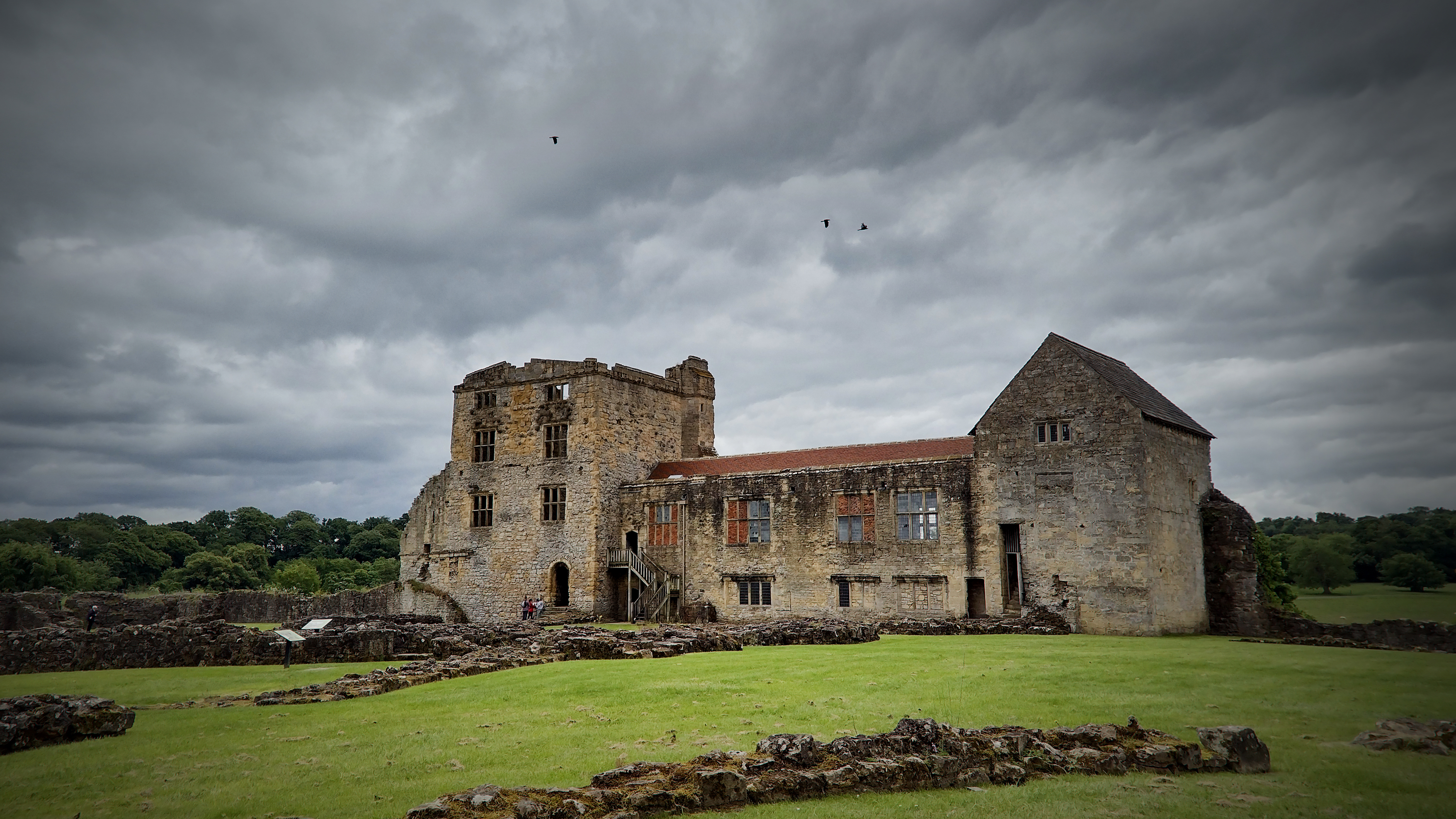
Helmsley Haiku I


Old stones crown the hill,

Castle bones whisper

Tales of the dales


Find more writing and  podcasts on the weird and wonderful here -


Saturday, 24 December 2022

THE OLDTIME YULETIDE ADVENT CALENDAR - Day 24


Welcome dear friends back to the Hypnogoria Old-time Yuletide Advent Calendar! So then, dear friends, we reach the final door of our Advent Calendar! Behind which hides two final letters! 

Now then, next up we have the letter Y. Now I did consider allocating this letter to the Yule or the Yule Log, but we have already talked of both, and so I have opted for the more obscure, but much tastier and intriguing Yorkshire Christmas Pie. 

Of course, we are all familiar with the concept of Christmas pies, whether the one Jack Horner in the corner was tucking into, or those tempting festive favourites, the mince pie. However the Yorkshire Christmas Pie was perhaps the pinnacle of festive baking, fusing together several generations of Christmas dining in one delicious pastry case. 

Now this dish had its heyday in the 18th and 19th centuries and sometimes was known as a celebration pie, a trunk pie or a stand pie. And the Yorkshire Christmas pie gained these sobriquets because it was a very special pie, baked just to celebrate Christmas and it was indeed the size of a large piece of luggage. In fact, they were baked to be absolutely air-tight so they could be shipped all around the country for Yuletide. 

And what was special about these Yorkshire Christmas pies was that they contained basically a super roast dinner inside, in which the centrepiece was several different birds stuffed and roasted one inside the other. Here’s an original recipe published in The Art of Cookery, Made Plain and Easy by Hannah Glasse, in 1747 

First make a good standing crust, let the wall and bottom be very thick; bone a turkey, a goose, a fowl, a partridge, and a pigeon, Season them all very well, take half an ounce of mace, half an ounce of nutmegs, a quarter of an ounce of cloves, and half an ounce of black-pepper, all beat fine together, two large spoonfuls of salt, and then mix them together. Open the fowls all down the back, and bone them; first the pigeon, then the partridge; cover them; then the fowls then the goose, and then the turkey, which must be large; season them all well first, and lay them in the crust, so as it, will look only like a whole turkey; then have a hare ready cased, and wiped with a clean cloth. Cut it to pieces, that is, joint it; season it, and lay it as close as you can on one side; on the other side woodcocks, moor game, and what sort of wild-fowl you can get. Season them well, and lay them close; put at least four pounds of butter into the pie, then lay on your lid, which must be a very thick one, and let it be well baked. It must have a very hot oven, and will take at least four hours. This crust will take a bushel of flour. These pies are often sent to London in a box, as presents; therefore, the walls must be well built.

Sadly there is no vegetarian option. And given the amount of wildlife in that pie, I am reconsidering my own dietary choices, to be honest! There’s a small aviary in that pie! However, I think we may all take comfort in the fact that no matter how much we over indulge this Christmas, our excesses will seem poultry, I mean, paltry compared to the gargantuan gluttony of a Yorkshire Christmas Pie! 


So then, to our final letter, and perhaps the most challenging of all, Z. So what could Z stand for? Well, there is the German festive decoration the Zwetschgenmännle, little figures made from prunes sold in German Christmas markets. The Zwetschgenmännle come in many different designs, gnomes ,devils, angels, sweeps, lovers, and are said to bring good luck, echoing an old German saying “if you have plums in the house, you will never run out of money”. 

However they are perhaps a little obscure! So then, instead I shall say Z stands for “zzz” that classic comic-book noise for sleeping. For tonight is Christmas Eve, when we should all be tucked in bed early so Father Christmas can come and drop off the presents. Of course, the ironic fact is few of us will be either in bed or asleep early tonight! 

As children, it is almost impossible to sleep knowing that Santa is on the way, and many a child will be up very late, ears straining for the sound of sleigh bells or hooves on the roof. However for us grown-ups, we are often up way too late too, for despite our best intentions there always seems to be one more little job to do for the Christmas Day preparations. All too often somehow there always one present still to wrap up,  or some prep work for Christmas dinner that needs to be done just before bed. 

However this year, I hope that all goes well and all will be done in time to sit and unwind and enjoy the magic of Christmas Eve. And indeed I hope you all have a wonderful Christmas and I hope this little advent calendar has brought a little more magic to your Yuletide festivities. And so on that note, I wish a merry Christmas to all and to all a goodnight! 


DIRECT DOWNLOAD THE OLDTIME YULETIDE ADVENT CALENDAR - Day 24


Find all the podcasts in the HYPNOGORIA family here plus more articles on the weird and wonderful here -


Friday, 31 August 2018

FOLKLORE ON FRIDAY - Dying for a Sit Down


Last week we learnt the strange tale of the cursed bottles in a pub in Alnwick, however they are not the only seemingly innocent but actually very sinister items to be found lurking in a British bar-room. Take for example the Busby Stoop Inn  in North Yorkshire, a pub whose very name is steeped in death!

In 1702, Thomas Busby murdered his father-in-law Daniel Auty. However this was no ordinary family squabble, for Busby and Auty ran a small criminal empire between them, whose main operation was coining - that is the forging of currency. They were based in the small North Yorkshire village of Kirby Wiske, and it said they had disagreed over Busby's relationship with Auty's daughter. He was arrested, tried and condemned to death by hanging. After his execution his corpse was suspended in chains from a gibbet erected at the lonely crossroads at the Sandhutton crossroads. This notorious criminal and his execution were long remembered. In 1859, the English antiquarian and poet, Yorkshire historian, William Grainge wrote:
The bones of the poor wretch who had committed murder were hung to fester in the sunshine and blow in the tempest until they fell piecemeal to earth and tradition yet tells tales of night wanderers being terrified when passing this dreaded spot.
Now by the crossroads, which now forms a junction of the A61 and A167, was an inn. According to one version of the legend, it was here that Busby was arrested, while another variant proposed that he was taken into the inn for a final drink before his execution. It has long been said that Busby's ghost haunts the place. However there is a more famous, and more sinister, legend. For it is said that Busby had sat in a particular chair in that inn and consequently a terrible curse was laid upon it. In the version where Busby was allowed a final tipple, legend claims he proclaimed "May sudden death come to anyone who dare sit in my chair". And indeed it is said that anyone who sits in this particular chair will suffer the same fate as Busby i.e. a sudden and untimely death shortly afterwards. The legend of the death chair became so famous that the pub eventually took the name The Busby Stoop Inn - a stoop being the post the gibbet hung from.


And indeed the chair appears to have been rather lethal. For there are many tales told about those who have dared to sit in the chair and paid a terrible price. In 1894, a chimney sweep who sat in the chair was said to have been found the following morning hanging beside Busby's gibbet post. During the Second World War, it was claimed that Canadian men from the nearby Skipton-on-Swale dared each other to sit on the chair, and those that did never returned from the missions they were sent on. 

In 1967, two Royal Air Force pilots sat in the chair, and then when driving home from the pub, crashed into a tree and were killed. A handful of years later, a builder was dared to to sit in the infamous chair, and just hours later, he fell to his death from a roof. Around the same time it is claimed that a cleaner had accidentally sat down upon the cursed chair after stumbling into it while mopping the floor. This time death came in the form of a brain tumour.

Eventually in 1978, the current landlord Tony Earnshaw decided enough was enough and moved the chair out of the public's way and placed it in the cellar. However a delivery man was curious as to why a chair was among the beer barrels and sat in it. He was killed minutes later in a crash a few miles down the road. And so the chair was donated to the Thirsk Museum where it remains to this very day. But the chair is now suspended from the ceiling to prevent any more incautious folks from trying to sit in it. 

However experts have cast doubt on the legend of the chair, for when it was examined by historian Dr Adam Bowett, he found something peculiar about it. Apparently its spindles were machine-turned, whereas in the 17th century, chair spindles were made usually with a pole lathe. Therefore he concluded the chair was probably made after 1840, at least 138 years after Busby's death. However as the stories related above all come from after 1840, while we could discount a link to Thomas Busby, we perhaps should not be so quick to discount the curse. Certainly no one has proposed taking the chair gone again so folks can sit in it again. Perhaps it is best to err on the side of caution...


Friday, 19 September 2014

FOLKLORE ON FRIDAY - The Screaming Skull of Agnes Burton Hall


Burton Agnes Hall is a beautiful Elizabethan manor house near Driffield in the East Riding of Yorkshire. It was built between the years 1601 and 1610 by Sir Henry Griffith, as a grand replacement for the previous family home there, a manor house built in Norman times.

However according to legend whilst the house was been constructed, a terrible tragedy befell the Griffith family. Sir Henry had three daughters, and while they were walking in the park, they were waylaid by cut-throats. The youngest daughter, Anne, was gravely wounded in the attack. She did survived the assault, but unfortunately she fell into a fever. Fearing that she would never recover, Anne made her sisters promise that should she die, they would take her head to the new hall once it was completed. Anne did indeed die, however her wishes were not honoured....

Soon after the family moved into the new manor house, strange noises and eerie groans echoed around the place. This was just the beginning of a violent and noisy haunting. And eventually they could stand it no longer, and at last they decided to exhume Anne. When they opened the grave, they discovered her head was already separated from her body and the skull stripped of all flesh. And so they brought Anne's skull to the hall, and the strange sounds and disturbances ceased.

But whenever anyone attempted to remove the skull, 'Owd Nance' as Anne's restless spirit was known, would grow angry and the troubles would begin again. Peace would only be restored when her skull was returned to the hall. In the end to prevent any further troubles, Owd Nance's skull was bricked up into the walls of the hall so no one could disturb her rest again. And there it has remained to this very day. Although no one is entirely sure where in the house Anne's skull now resides...