Showing posts with label regenerations. Show all posts

Saturday, 19 June 2010

THE REGENERATION GAME (Round 3) - Bohemian Cricket!


Nice to see Who, to see Who nice!

This round of the Regeneration Game is going to split into two parts – mainly due to the fact that the Tom Baker era covers a lot of ground. Fans of the Fifth Doctor don’t despair! Part II will be along in the next couple of days…

THE FOURTH DOCTOR


In December 1974, the public were introduced to a brand new Doctor, Tom Baker. And Baker would stay the role until 1980; by far the longest serving Time Lord in the TARDIS, and for many the Fourth Doctor is the incarnation that first springs to mind when Doctor Who is mentioned. The Fourth Doctor has proved to be enduringly popular, with the Baker Man still regularly topping fan polls for favourite Doctor, and it is only recently he had any serious competition thanks to the immense appeal of David Tennant.

However, back in ’74, the general reaction wasn’t one of instant love. As I recalled in my review of The Eleventh Hour, a common response to the new Doctor was that he was too young. And additionally, initially many felt that his behaviour was far too silly and the costume, in particular the long scarf and floppy hat, that are now so iconic, made our Time Lord hero look a berk.

Now to contextualise this reaction, you have to remember that in the previous year, The Three Doctors had been broadcast and for many younger viewers this was their first exposure to the fact that there had been other Doctors before the white haired chap in the smoking jacket we enjoyed so much on a Saturday tea-time between Basil Brush and The Generation Game.

And we were hungry to learn more. Fortunately for us, a few months later the Radio Times published a Doctor Who special to celebrate tenth anniversary of the show. This magazine format tome was the first fandom bible, containing interviews with key cast and crew members from down the years, a Terry Nation short story, and even blueprints for building your very own Dalek. But the bulk of the page count was an episode guide, detailing every serial of all ten seasons to date. Now we had the full history of our hero’s adventures and very quickly playgrounds across the land were full of self-styled experts.

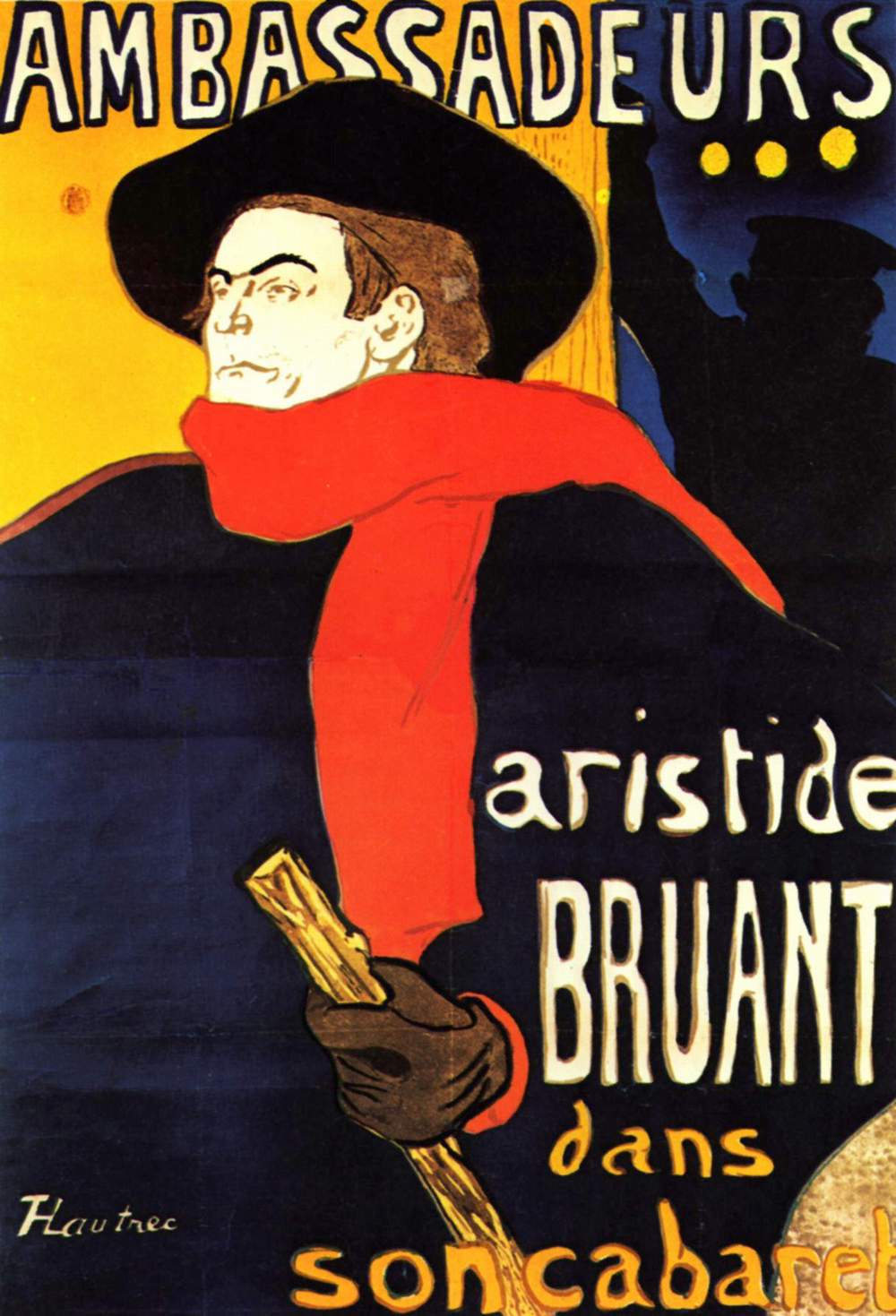
Now if we look at the marvellous stills from the Three Doctors and this hallowed volume which show all three incarnations together (here's one), you can begin to understand the mixed reception the Fourth Doctor received. Hartnell, Troughton and Pertwee are all of a comparable age and share a similarly Edwardian look; Hartnell may appear staid and stolid in his dress sense, Troughton scruffy and Pertwee dandified but their wardrobe is rooted in the same basic style. Hence Baker’s age and his outfit, inspired by a Toulouse Lautrec poster incidentally, seemed a very radical break with tradition at the time. Equally after the dashing but patriarchal scientist of Pertwee, Baker’s anarchic antics and clowning was something of a shock to the system.

However his first season saw the return of the Daleks, the Cybermen and the Sontarans, introduced an iconic new villain Davros, and delved into proto Alien sci-fi body horror territory with the Wirrn in The Ark in Space; a feast of horrors to test the mettle of any Doctor, and Baker quickly proved his worth. With Phillip Hinchcliffe in the producer’s chair and Robert Holmes in charge of scripts, this new series of Doctor Who was almost another soft reboot. In the wake of the energy crisis, British government teetering close to collapse, and Watergate and Vietnam across the pond, it no longer seemed appropriate for a television hero to be in the pocket of the powers that be and working for the military. And so the cosy UNIT set up was quickly phased out. After Baker's debut story Robot, the show returned to travelling in time and among the stars; no more would England be invaded by any passing intergalactic chancers every other month; the days of tea and biscuits with the Brig and Benton were over.

With Hinchcliffe and Holmes at the reins, the new stories were pitched at an older audience. Although the Pertwee days had delivered many frightening moments and memorable monsters, the Holmes/Hinchcliffe union brought harder story lines, packed with darkness and violence. In contrast the pop art psychedelic action sci-fi backdrop of the Third Doctor’s adventures, the first three seasons of Baker’s run saw the Fourth Doctor roaming a gothic universe, with stories like The Brain of Morbius and The Pyramids of Mars riffing on horror classics. And in this milieu, the anarchic quips and general Tom-foolery fitted in perfectly; the monsters and villains may have had us behind the sofa but you knew the Fourth Doctor would be offering them jelly babies in the next scene.

But there was more to Tom Baker’s Doctor than just tripping over his own scarf; the Fourth incarnation of our favourite Time Lord also showed himself to possess the same scientific brilliance and moral vigour of his predecessors. He may have used his wit to prick the pomposity of his adversaries (sample quote - “That’s the empty rhetoric of a defeated dictator… And I don’t like your face either!”), but he was also given to fiercely debating with the villains, poetically musing aloud and delivering stirring speeches.

Looking at the Doctor’s various regenerations, it is tempting to speculate that the transformative process does not just randomly assemble a new personality and physique but at some level, possibly only subconsciously, each new incarnation is shaped by the circumstance of the previous one. Hence when the First morphed into the Second, Troughton was younger and better suited to the adventuring life, with a greater capacity for enjoying his travels. When the Time Lords forcible regenerate him at the close of The War Games, they choose the look of his new incarnation – and being a staid and steady ancient race they naturally pick a distinguished elder statesman appearance with a matching conservative attitude for his exile to earth. However when the Doctor has earned his freedom and regenerates into the Fourth, it is almost as if the metamorphosis has deliberately gone for a younger model complete with a bohemian attitude that borders on the Byronic. This Doctor loves his freedom to travel, loves liberty, and espouses a Romantic philosophy of experiencing knowledge rather dusty book learning.

However he is also the most alien of the Doctors so far: unpredictable in his reactions and showing a far greater range of emotions, moods, and responses than his preceding incarnations. And while he may have jettisoned the slightly patronising airs of the Third, he retains the same openly Time Lord attitude, capable of being as very bit the stern authoritarian as Pertwee when the circumstances dictate. It is very telling that his major competitor for the title of most beloved Doctor, Tennant’s Tenth, has a similar personality spectrum – shifting quickly and easily from joviality and playful humour to portentous rhetoric and righteous ire. And that’s not the only parallel with the Tenth Doctor as we shall see later on.

While the return to wandering the cosmos is the show returning to its original set-up, the Doctor himself is significantly different. Now we know he is a Time Lord, and he acts accordingly. Although Pertwee pioneered the portrayal of the Doctor as a Time Lord rather than a mysterious old chap, it was Tom Baker’s performance that defined him as an alien, with his quirks and eccentricities being part of his otherness. And from now on, strange personality traits will be de rigueur for every following Doctor.

It was also in the Tom Baker era that the format of the Doctor travelling with a female companion became firmly cemented in the public consciousness. While it is true that this trope first appeared in the days of the Third Doctor with Jo Grant, there was usually the Brigadier, Sgt. Benton, Captain Yates and all the soldier boys from Pippin Fort, sorry UNIT HQ, were part of the regular supporting cast. Indeed in the Fourth Doctor’s first series, he has Harry Sullivan (played by Ian Marter) in tow as well as Sarah Jane.

Now the role of Harry was created before they had cast the Fourth Doctor; the reasoning being that the series might need a young actor like Ian Marter for the physical action scenes if an older thespian inherited the TARDIS. However at the same time, having multiple and mixed sex companions was just as much a return to the show’s original format as travelling all space and time. The first Doctor regularly had three assistants with him, and by the time Patrick Troughton took control of the TARDIS, the production team had found that having a dashing chap and a pretty girl was the optimum number of characters for scripts.

But with the casting of a younger Doctor, sadly Harry was deemed surplus to requirements as Baker was more than capable of wrestling Dalek embryos and the occasional bit of fisticuffs. Hence we have a string of single white females in the TARDIS – Sarah Jane, Leela and two Romanas. And no, K9 doesn’t count – he was essentially talking prop rather than a dramatic foil and often left behind in the TARDIS due to the behind the scenes nightmares getting him to work properly caused (particularly in stories heavy on location shooting, far away from smooth studio floors). As for Adric who turns up in Tom Baker’s final season, we will carp about, sorry, explore in more detail when we get to the Fifth Doctor.

But back to the tin dog. The inclusion of K9 is a fitting symbol of the changing taking place in the production office at the time. Although the Holmes and Hinchcliffe era is now regarded as a run of classic stories, and the show saw record audience figures, the darker material did cause problems for the mandarins at Broadcasting House. BBC bosses came under increasing fire from self appointed TV watchdog Mary Whitehouse, who frequently had cause to complain over the levels of violence, gore and general horrific tone of serials such as Genesis of the Daleks and The Seeds of Doom.

Now Mrs Whitehouse was something of a constant thorn in the side of the BBC; frequently complaining about sex, violence and swearing on the small screen (and I’d recommend interested readers to Filth: The Mary Whitehouse Story, a quality drama starring Julie Walters which documents her tussles with Auntie Beeb). However while often the BBC respectfully shrugged off most of her criticisms, her complaints over the cliff-hanger of Episode 3 of The Deadly Assassin were picked up by several national newspapers and the question of whether Doctor Who was now going too far for a Saturday evening show could not be ignored.

And so despite receiving massive ratings not seen since the early days of the show when Dalekmania was in full swing and not seen again until the modern reincarnation, Hinchcliffe was quietly moved on. Graham Williams stepped in as producer and Robert Holmes was replaced as script editor soon after. And Williams came to the wheel with strict orders from on high to lighten the show. And although the fourth series in the reign of the Baker Man saw Image of the Fendahl and The Horror of Fang Rock still playing with the classic horror styles – stories developed under Hinchcliffe – the series was moving a new direction.

William’s second serial The Invisible Enemy which introduces K9, encapsulates this shift. This adventure begins with astronauts in the far future becoming infected and possessed by a mysterious alien force, but the Nigel Kneale style Quatermass sci-fi horror the story starts out with soon gives way to outright science fantasy. Hence in teh second half, we have a robot dog and miniaturised clones of the Doctor and Leela beginning injected into the infected Doctor’s brain Fantastic Voyage style.

And perhaps it was a timely change; switching the emphasis to space ships and alien planets, adding more mythological touches to the stories, and including a robot character that the little ‘uns loved all proved very fortuitous. As Williams was taking over in 1977 – the year of Star Wars; Lucas’ space opera changed the way the public perceived sci-fi and the retooled Doctor Who almost by accident had moved in sync with the change in trends. And the Doctor was changing too.

After Bob Holmes has stepped down, Anthony Read took over as script editor for the second half of that series. However the other two Williams produced seasons saw Douglas Adams taking over the role. And naturally with the man who would later bring us The Hitchhikers Guide To The Galaxy” in charge of scripts, as well as more fantasy-orientated adventures, we got a Doctor who was a lot more given to pithy quips and comedy asides.

However as well an increased propensity for witty banter and a tendency to talk to himself that verges on breaking the fourth wall (“Not even the sonic screwdriver can get me out of this one!” in The Invasion of Time), the Fourth Doctor under Williams and Adams becomes much more of superman than previous incarnations. Like the Tennant’s Tenth, this later Fourth Doctor is prone to pulling unmentioned special abilities out of the hat, but more importantly he now knows it all. Pertwee may have been ready to patronise at the drop of a ruffled shirt, but Baker’s becomes positively arrogant after Hinchcliffe and Holmes leave.

And while the Doctor should be intellectually brilliant, he really shouldn’t become nearly all knowing, as this instantly diminishes the level of threat in any situation he finds himself in. And while it’s fun to see the Fourth Doctor blithely opposing ultra powerful beings such as the Black Guardian, the knowledge and intelligence he displays in this part of his career come dangerously close to making him as invulnerable as Superman. And this problem was compounded by the introduction of both K9 and Romana. With a Time Lady companion and a mobile super computer, we now had three geniuses in the TARDIS with enough combined intellect to easily stitch up any monsters and villains the scripts could muster. And combined with the directive not to upset Mrs Whitehouse, his adversaries don’t even provide the fright factor for the audience.

Needless to say, things had to change, and change they would when Jon Nathan-Turner took the producer’s seat for Tom Baker’s final season. And as he would hold the position until the show’s cancellation in 1989, we’ll be hearing a lot more about him and his influence on the show in the Fifth Doctor section and future instalments of these articles.

The last Fourth Doctor series felt like a huge shake-up. For a start there was a new titles sequence – a gleaming star field rather than the familiar Time Vortex tunnel – and horror of horrors, a new arrangement of the theme. The iconic Delia Derbyshire version was scrapped and replaced with a very ‘80s synth rendition from Peter Howell. And the show’s scheduling changed as well, it was moved from its traditional Saturday evening slot to weekday nights. But the stories too reflected a radical change in styles, and the first outing The Leisure Hive is a good example of things to come, showing a shift from science fantasy to a much more nuts-and-bolts hard sci-fi. New script editor Christopher Bidmead was very keen to get the science in the fiction accurate and now cutting edge physics - like the concept of tachyons in this outing - were the inspirations for the plotting.

The Doctor’s character, as ever, moves with the changing times. There’s less reliance on convenient new abilities, markedly less comedy and he is vulnerable again – seeing the previously breezy in the face of danger Doctor aged into his dotage in The Leisure Hive was something of a shock. However by this point, the Doctor is becoming more distant and something of a colder character than previously. Partly this was due to the tonal shift – stories brimming with hard science like Warriors Gate didn’t leave the character much room for either fun or moral crusading. But equally after seven series Tom Baker was growing tired and bored of the role, and the increasing friction with directors and the new producer are clearly colouring his performance. In short, it was time to go…

During the Fourth Doctor’s reign, the show’s mythos was significantly expanded in many ways. Aside from the occasional titbits about the Doctor himself, such as he scored poorly in his Time Lord exams, and that his nickname in those days was Theta Sigma, we also learn a lot more about the Time Lords. We hear of Rassilion, the founder of Time Lord society, and that despite putting the Doctor on trial for interfering in other races affairs, the Time Lords do surreptitiously meddle with the fabric of history to suit their own ends. Several times they deliberately have the Doctor intervene on their behalf, and the first shot in The Last Great Time War is the mission they give him in Genesis of the Daleks - to stop the creation of the race that eventually make exterminate the rest of creation.

We also discover in The Deadly Assassin that Time Lords may only regenerate twelve times. This means that there can be only ever be thirteen incarnations of the Doctor, and brings us conveniently to totting up how this era has affected our running totals of how many incarnations of the Doctor are there, and how many actors have essayed the role. Now the causal reader may well be thinking this is just a simple case of adding one to both scores on the doors… Oh if only it were that simple!

For a start, there is an alternative Fourth Doctor. In December 1974, two weeks before Baker donned the scarf, Seven Keys To Doomsday opened at the Adelphi Theatre in London. This stage play was originally written by veteran Who scribe Terrance Dicks for Jon Pertwee’s Third Doctor, but due to various scheduling problems the part of everybody’s favourite Time Lord went to one Trevor Martin. Hence the production’s opening shows Pertwee regenerating into Martin.

Now although other actors have portrayed the Doctor in various stage plays over the years, I’m counting Trevor Martin in our tally on the grounds that many years later Big Finish adapted the this theatre production into an audio adventure. So as he has appeared as the Doctor in officially licensed and BBC rubber stamped broadcast media, he has earned a place next to Peter Cushing in the ranks of apocryphal Doctors.

And speaking of Big Finish, in The Kingmaker the voice of the fourth Doctor appears. However the distinctive tones we are do not belong to Tom Baker! Although recently his Bakerness has relented and returned to the role in the audio medium, at the time The Kingmaker was recorded he was still rebuffing all advances from the Big Finish folk. But he did give permission for his Doctor to appear and recommended they hire impressionist John Culshaw, whose impersonations of the Fourth Doctor were a regular feature odf the Dead Ringers comedy show. Now does this count? Well, it's a BBC licensed production and Culshaw has the approval of the Baker Man himself, so clearly we have a third thespian in the role of the Fourth Doctor.

However, where things get REALLY complicated is The Brain of Morbius. In this Holmes & Hinchcliffe outing, a classic slice of their patent space gothic which riffs on both Donovan’s Brain and Frankenstein, the Doctor find himself going toe to toe with Time Lord criminal Morbius. The story culminates with our hero challenging Morbius to the Gallifreyan equivalent of a duel – the dangerous mind bending contest, a species of mental combat where the opponents try and overpower each others minds.


Now this psychic duel as we see it in Episode 4, has the Doctor and Morbius hooked up to some technological gizmo and on its view screen we see faces of their incarnations appearing. And here lies the controversy – at first the screen switches from showing Morbius to the Doctor, but the villain gains the upper hand. “How far Doctor? How long have you lived?” gloats Morbius as we see previous incarnations of the Doctor appearing; Pertwee, then Troughton and right back to Hartnell. And then … WHO THE HELL IS THAT!

Eight, repeat eight, other faces appear after what we thought was the ‘First’ Doctor…

Now this strange cavalcade of strangers (see here for pictures and details of who they actually were) surely can’t be hitherto unknown incarnations of the Doctor, can they? In The Three Doctors the Time Lords clearly state there are but three version of him running about in history at that point. So then are these odd fellows previous incarnations of Morbius?

Now this is the easy explanation that banishes the continuity demons back to the Howling Halls once more. But for some, including myself, this simply won’t do, as it just doesn’t tally with what we actually see. The Doctor is clearly losing; indeed he only wins because Morbius’ brain case overheats. More importantly, as the mystery faces are appearing, Morbius is gloating “Your puny mind is powerless against the strength of Morbius! Back…back to your beginnings!”

Another theory which has been mooted is that these faces represent future incarnations of the Doctor. However it makes no logical sense for incarnations that have yet to occurred to appear prior to Hartnell. Plus we have no indications that Time Lords know in advance what form their future regenerations will take. And again the above quotes from Morbius fairly definitely rule this theory out.

Now it is possible the Time Lords’ records aren’t perhaps as complete as they assume. In The Deadly Assassin we find that they have no records of the Master despite the fact that previously an emissary from Gallifrey had warned the Third Doctor of his escape from prison in Terror of the Autons. However it is later revealed that since then the Master had tampered with their data banks, expunging all mentions of himself in order to execute his schemes in this adventure. Therefore you could assume that their files on the Doctor have also been meddled with.

But the problem with this is that in Mawdryn Undead the current Doctor clearly states he is the fifth, and in The Five Doctors the First Doctor (Hurndall model) is very emphatic that he is “the original”. And subsequent Doctors and the show itself has referenced their number of regenerations, in Time And The Rani Sylvester McCoy proclaims himself as the seventh incarnation and both The Next Doctor and The Eleventh Hour show us a complete run of Doctors with no strange chaps with beards appearing. And most recently in The Lodger Matt Smith states he is the eleventh version of the Doctor.

So with the evidence to hand, another explanation could be that the Doctor was faking an endless stream of previous incarnations in order to fry Morbius’ brain. Now although this is an appealingly neat solution to the problem of the Morbius Doctors, producer Philip Hinchcliffe has stated for the record that the faces on the screen ARE meant to be earlier versions of the Doctor.

Additionally during Hinchcliffe's tenure as producer, the familiar white control room disappeared when the Doctor decided to use the secondary control room for a while. As well as being more suitably in tune with the gothic sensibilities of the show at the time, all wooden panels and HG Wells steampunk controls, there is also a old costume lying around that clearly didn’t belong to Hartnell, Troughton or Pertwee, which supports the idea that Hartnell wasn’t the first.

Is there an answer to all of these mysteries? Well possibly, but you’ll have to wait until we get the Seventh Doctor to find out more…

Coming very soon…
Part II - THE FIFTH DOCTOR

Saturday, 22 May 2010

THE REGENERATION GAME (Round 2) - Of Clowns & Dandies


Right folks, it’s the start of another two parter this week, and as I’m sticking with my policy of not reviewing multi episode stories until they are complete, that can only mean one thing… Yes, it’s time for… THE REGENERATION GAME – Round Two

Now then, where were we? Ah, yes – in our attempt to catalogue the many faces of the Doctor, last time we had ascertained that the First Doctor’s era yields up three actors in the role and confusingly two incarnations (see Round One for details on that apparent paradox). So then, let's travel back to the dying moments of The Tenth Planet, and just imagine the the original viewers' shock and surprise when dear old William Hartnell’s features began to shift and blur, transforming into…


THE SECOND DOCTOR


Played by Patrick Troughton, the second incarnation of our favourite Time Lord was a younger man, though still no spring chicken. Now this Doctor is far more like his later versions – the slightly dotty sometimes grumpy grandfather figure has been replaced with an impish fellow whose clowning masks a ferocious intellect and a crusading morality.

The First Doctor was a very traditional sort of hero; a wise old man figure who wouldn’t be out of place next to Victorian heroes like Professor Challenger. But the Second Doctor, whether through accident or design, turned out to be cut from more contemporary cloth. With his Beatles moptop hair and scruffy clothes, Troughton’s Doctor would have blended in well with the beatniks and proto-hippies of 1966. And his delight in causing chaos for authority figures, his constant ribbing of the pompous and powerful, and his love of freedom show that this Doctor was reflecting the social revolutions that were in the air at the time as well as the clouds of pot smoke and incense.

And in the production office, change was also afoot; the Second Doctor’s era sees the show refine its core elements, bringing the format closer to the show as we now know it. The team dynamic the series started with has now receded, and the stories are firmly focused on the Doctor as the hero proper. The subgenre of historical stories comes to an end in Troughton’s early adventures with The Highlanders and monsters become the order of the day. Indeed it is in the three Troughton series, with their moody shadows and the establishment of the ‘base under siege’ trope, that Doctor Who first gained its reputation as a terrifyier of children; earning the repuation of being the show you watched from behind the sofa. And finally, it is during Troughton’s reign that the sonic screwdriver first makes an appearance.

And Troughton’s portrayal of the Doctor has been equally influential; new boy Matt Smith cites the Second Doctor as a big influence on his conception of the role, and he's not the first. Indeed, Troughton would appear to be the actors’ favourite Doctor and it is easy to see why. His version of the Doctor masterfully blends together all the elements we have come to expect from our Time Lord hero – the eccentric humour, the warm heart, the scientific genius and the passionate righting of wrongs. It’s just a shame that many of his performances we can only hear now.

For those of you who don’t know, unfortunately many episodes of the First and Doctor’s stories are now missing, and probably lost forever. In the ‘60s and ‘70s, many programs in the BBC archives were wiped so the tapes could be reused, and to cut storage costs. Much was lost, and infamously among the culls were many episodes from early Doctor Who. In some cases, whole stories vanished and others were left missing a several parts.

Needless to say that many have seen this as terrible short-sightedness on the part of the BBC, but in fairness you have to remember that at the time, it was quite rare to programs to be repeated. I know that sounds astonishing now, but it is only in the early ’80s that repeating shows became common practice as a cheap means of filling airtime - previously programs were only usually repeated if they were remarkably popular. And it was only into the latter half of the ‘80s that the closely entwined trends of nostalgia and cult emerged as cultural forces.

Plus, back when they were wiping the tapes, no one had foreseen the rise of the home video recorder, let alone the future market of people buying their own copies of television shows and films. So as maddening as it is, we shouldn’t judge the BBC too harshly – yes, it was a horrendous mistake but at the time when the decisions were made they were not simply being stupid.

However, the BBC did retain complete recordings of all the audio track of all the episodes and numerous telesnaps - photos printed from the video. So at least we can listen to the missing adventures, which the BBC has released on CD with added narration, usually supplied by one of the cast, to fill in details the audio is missing. Also using the telesnaps and various publicity stills, fans have reconstructed missing episodes on video. For the DVD releases, the BBC has released a three disc set Lost in Time which collects together all remaining episodes of the missing stories plus any other surviving clips. And for the release of Cybermen classic The Invasion, the BBC hired Cosgrove Hall to create animated versions of that story’s missing two installments. It was an experiment which actually worked out very well but sadly doesn’t look likely to be repeated due to the expense *sigh*.

But enough of this lamenting Video Tapes Past and back to the Second Doctor. Interestingly, the term ‘regeneration’ is not used at any point in the switch over between Hartnell and Troughton. The new Doctor also doesn’t state that this is an ability of his people, he simply says it’s a process related to the TARDIS leaving us still rather in the dark. Remember at this stage, we don’t know he is a Time Lord and the script doesn’t deliver any rationale other than the change is somehow related to the Doctor being an alien. It’s only much later in the show’s history that the words ‘regeneration’ and ‘incarnation’ enter the lore.

On screen, the transforming process is dubbed ‘a renewal’, and this omission of the usual ‘r’ word has led to an interesting theory - as this isn’t called regeneration formally, perhaps this is not actually a new incarnation of the Doctor but a younger version of Hartnell. Yes, I know there are significant physical differences between the two men, but as the new Doctor is markedly more youthful, the audience of the day could well have interpreted the change as a rejuvenation rather than a metamorphosis. Remember that back then they wouldn’t necessarily expect two actors playing the same role at different ages to closely resemble each other as much has we do, mainly due to the huge advances in make-up between now and then.

Now it’s an intriguing notion that what we consider to be the Second Doctor is actually a younger version of the original, First Doctor 1.2 (or 1.3 counting Cushing)as it were. But in the light of what we now know, and more tellingly the interaction between the First and Second Doctors in the team-up stories of The Three Doctors and The Five Doctors it seems clear that this is not the case, despite what it may have looked like at the time.

As for the Doctor’s secrecy on the process, we can easily rationalise in the context of the character’s history. When we get to The War Games, Troughton’s finale, we finally learn something of his background. We discover he is a Time Lord, and more to the point he’s been on the run from them after ‘borrowing’ his TARDIS. Furthermore we discover that he began his travels to escape the boredom of Time Lord society and consequently when he feels he must contact them to sort out the temporal mess caused by the War Lords, he is put on trial for breaking their cardinal laws of not inferring in history or the affairs of other races.

Hence throughout his First and Second incarnations, he never even dares mention them because he is well aware of he is breaking these laws. Being almost omnipotent beings whose society revolves around observing and recording all time, you can see that it would be a big threat to the Doctor’s continued freedom if people throughout time and space were chattering about that funny Time Lord and his blue box who turned up and sorted everything out.

So naturally he wouldn’t explain his ability to regenerate for the same reasons. And also we can rationalise the fact that he gives his companions Ben and Polly no hint that he is going to regenerate as he isn’t sure himself he can while away from his home world. Hence his remark about the TARDIS being part of the process – and apparently it does play a significant part in the regeneration, as most Doctor’s on their last legs try to make it back to the console room, but more on this later.

Quick Theory Time - the First Doctor sported a blue stoned ring, which he valued highly and seemed to possess some mysterious powers. However the Second Doctor quickly ditches it without a second thought. So possibly, was the ring a reservoir of some kind of Time Lord power – either the artron energy that drives the TARDIS or the bio-energy released in the regeneration process? And so after the regeneration, the ring's reserves were completely depleted and therefore now worthless?

However the closing episodes of The War Games does clear up another element of the lore. They definitively reveal the origin of the TARIDS; contrary to the hints we recieved in the preceding six series, it turns out that he is not the inventor of the TARDIS, and in fact he *ahem* borrowed it. And so extending our line of logic a little further, it makes sense that in the past he has allowed his companions to believe he was its creator; no doubt partly so they don’t think they are travelling with a thief but mainly to avoid awkward questions about his background. (And to look behind the curtain for a moment, we should note that this story originally aired in 1969, a good three years after the last AARU big screen adaption hence in the films the Cushing Doctor is the inventor of his TARDIS.)

And all this caution and secrecy over his origins is more than justified when we consider the punishment for meddling in history the Time Lords mete out – he's stripped of his knowledge of time travel, exiled to Earth, and most seriously, forced to regenerate. Now when you remember that later stories introduced the rule that Time Lords can only regenerate twelve times, being forced to give up an incarnation prematurely is a very severe sentence.

However there is a certain fuzziness over the transformation from Troughton to Pertwee. Like The Tenth Planet, The War Games doesn’t refer to the process as regeneration. What actually happens is that when the Doctor protests being exiled to Earth, seemingly spouting the first objection that come to mind he complains that they can’t maroon him there as ‘people known me there’ and hence the Timelords rule that his appearance will be changed and there is actualy no mention of the 'r' word again.

Now from a production point of view, the Time Lords' sentence was a great device to allow the lead actor to be changed once more. But it is interesting to note that even at this stage the show’s mythology still hadn’t developed the concept of regeneration as we know it; while The Tenth Planet establishes that the Doctor can regenerate but there’s no hint that he can do this more than once. It is surprising though that when Troughton announced he wanted to leave the role, the production team didn’t leap to the logic assumption and just having him mortally injured and regenerate a second time.

Now while we could assume that the script writers simply didn't want to pull the same trick twice, we must also consider why The War Games introduces us to the Time Lords in the first place. At this handover of the sonic screwdriver, they weren’t just replacing the Doctor but essentially doing a soft reboot of the series as a whole. And the Time Lords’ sentence is the plot mechanism not just to recast the lead role but to explain the coming changes in the format…


THE THIRD DOCTOR


While the move into the Troughton era saw Doctor Who gradually developing the show’s templates, going into the Pertwee years saw the show practically regenerating like the Doctor himself. Firstly when Who returned in 1970 it was now in colour but there were further changes were in the format and style of the show. The Doctor was now earthbound, and bar the occasional off world adventure (usually a mission from the Time Lords or the Doctor briefly getting his TARDIS to work), was fending off various sci-fi threats to the world. Now working for UNIT as their scientific advisor, the show absorbed many of the tropes of the late 60s/early ‘70s spy boom, and consequently the Pertwee era closely resemebles the ITC action serials of the day.

The Doctor gains a new arch enemy, one that is a criminal mastermind rather an another aggressive alien race, the Master and it is here that the sonic screwdriver really comes into its own. During the Troughton years, it was becoming an iconic prop associated with the character like Sherlock Holmes’ magnifying glass, but in the Pertwee era it became the all singing, all dancing gadget du jour, acquiring a extra functions as and when the script required (though without ever turning into the magic wand of RTD new Who).

While still very much the same eccentric scientist, the Third Doctor also boasted a raft of new skills for the changing times and milieu. The Doctor has become a dashing man of action; the closest the character as ever got to being a two-fisted tough guy. This Doctor is handy in fight, karate chopping bad guys left, right and centre thanks to his Venusian Aikido and rather being chased down corridors he’s far more likely to be jumping onto the nearest vehicle and doing some hot pursuit of his own. Hence in this period, the show acquired its own dedicated stunt team – ‘Action by HAVOC’ as the credits proudly proclaimed.

The Third Doctor’s outfits see him more in sync with the heroes of the day too; he’s as sharp as dresser as Steed from The Avengers, Number 6 from The Prisoner and Jason King from Department S. But also his wardrobe reflects the groovy threads of the times, the frock coats and capes mirroring the Victorian and Edwardian fashions popularised by Swinging London emporiums like Granny Takes a Trip. Indeed The Third Doctor is one of the only two men on the planet who can look good in a ruffle fronted shirt – and the other is Jimi Hendrix.

Weirdly though, the Third Doctor’s hip dress sense was entirely accidental. When Jon Pertwee landed the role, some publicity shoots for the Radio Times were organised. At the first Pertwee was wearing an ordinary suit (click here to see a pic from this shoot) and had him arsing about with a Yeti, but for the second he raided the family dressing box (the Pertwees had had show biz in the blood for several generations) and assembled the now familiar frock coat, frilly shirt and cape ensemble. Now, Pertwee himself expected a slapped wrist from the production office for posing for the press in such ridiculous garb, but they actually loved it and it helped the writers shape the new incarnation’s character as a gentlemen adventurer.

This Doctor was also more forthright in character as well as action. For example, now he has no qualms about revealing his alien nature, indeed where once he never dared to breathe a word about the Time Lords now he rarely shuts up about them. Presumably now the Time Lords know where he is there is no need for the tight lipped approach of his previous incarnations. Admittedly when he speaks of them now, it’s usually to complain about them taking away his powers to travel time and space but there is also a shift in his attitudes; now he openly declares himself to belong to that race of ‘galactic ticket inspectors’ and is very quick to flaunt his advanced alien nature to the earthlings. Whereas the Second Doctor was happy to play the clown in order to disguise the fact that he was the smartest guy in the room, the Third will leave you in doubt about his vast intellect and superior knowledge.

And the Doctor is now more biologically alien too – it is in his first outing (Spearhead From Space) that we first learn that Time Lords possess two hearts. And this little titbit of lore does cause a bit of a continuity problem as previously the First was subject to medical examinations that didn’t turn up an unexpected second heart. Fan speculation has suggested that Time Lords gain a second heart during their first regeneration, but as the Second was also been subject to doctor’s tests which also didn’t reveal anything non-human in his physiognomy, this cannot be the case.

Now the best explanation for this anomaly I’ve found comes from the excellent About Time series of episode guides by Tat Wood and Lawrence Miles – which I heartily endorse tracking down if you are enjoying these rambles on the show. In Volume 2, which covers the Second Doctor’s era, there is an essay which explores this conundrum and the learned gentlemen conclude that logically the Doctor gets his second heart in the post-trial forced regeneration. Furthermore they theorise from what is said in later stories that all Time Lords are in fact born with two hearts and the Doctor’s atrophied and/or stopped working when he fled Gallifrey. The basis for this coming from material in the novel ranges that suggest that a Time Lord’s second heart serves as a link to their home world, and so the second heart stopped functioning when he fled Gallifrey in the same way that his telepathic link with the Time Lords was severed (as mentioned in the Tom Baker story The Invisible Enemy). Hence it is only after he is reunited with his people and the second heart has been renewed that we get to hear about it.

Now while still on the continuity tip, the Third Doctor’s run introduces some other key elements. Although we had met the Time Lords in The War Games and heard much about them from the Third Doctor, it is not until his last series, in The Time Warrior, that we actually learn their planet is called Gallifrey - which is somewhat unusual as we’d had a return trip to the Time Lord’s home world in the previous season’s The Three Doctors.

However the really major additions to the lore come in Pertwee’s swansong Planet of the Spiders. For it is here that we finally get a change of Doctors that is clearly and explicitly labelled regeneration – thank Rassilion! It’s incredible really that it took the show a whopping ELEVEN series to get here. However even here, although the script tels us that regeneration is one of the extraordinary abilities of the Time Lords, it isn't clear whether this is a natural ability or a proces they have created as the dying Third Doctor needs the psychic help of his fellow Time Lord (and former mentor) Kanpo to get the cooking started.

So then regarding the questions we started this series of articles with - the number of Doctors who have appeared on screen and how many actors have played him – these next two television Doctors are fairly clear cut compared the multiple bodied First. Arguably you could claim that there is another actor in the Pertwee role, as being the man of action he often was being played by a stunt double, usually Terry Walsh of Havoc. However stunt doubles don’t really count in my book.

So let’s have a look at the scores on the doors…

So far we have 4 versions of the Doctor, comprising of 3 incarnations and one alternate universe Doc, and are now up to a whopping 5 actors in the role.

Next time on THE REGENERATION GAME - What do you mean? Hartnell wasn't the first?!?

Didn't he do well!

Saturday, 1 May 2010

THE REGENERATION GAME Part I


Nice to see Who, to see Who nice!

By 1966, William Hartnell was becoming too ill to keep working on Doctor Who. Back then, then the show was running for a massive forty two weeks a year, and although the main cast had regular breaks worked into the stories, the work load was clearly becoming too much for Hartnell. And Rather than continue the series, without the main character Taggart style - the decision was made to recast the role.

Obviously introducing a new actor in the lead role was a huge risk, but as history shows, the gamble paid off. However no one could have foreseen the effect of recasting the lead would have had. For a start, rather than breaking the show, it actually strengthened it and ensured longevity not just for the titular Time Lord but also for the programme itself.

The concept that the lead character could change his appearance and character due to his alien nature was incredibly inspired. Obviously from a production stand point, it is a brilliant story mechanism for bringing a new actor into the role but it would also enrich and expand the mythology of the series. However, like many things in the murky world of Doctor Who lore, nothing is quite as it seems.

The Doctor’s many regenerations unleash the two apparently easiest questions about the show - “How many incarnations of the Doctor has there been?” and “How many actors have played him?”. Now at first sight, this brace of queries appear to be the simplest questions about the Doctor, but in actual fact these twin dilemmas lead to some highly complex and perplexing areas.

And if you think the answer both questions is the same, and that said shared answer is eleven, then you are way off course. Yes there will be lots of continuity porn! Yes, there will lots of spurious fan theories! But looking at the various regenerations of the Doctor reveals a lot about the history of the show, with different incarnations changing to fit the times. So let’s fire up the time rotor and go back to the beginning…


THE FIRST DOCTOR

Back in 1963 the world first meet the Doctor, and this very first version of the Doctor as a very different man. To begin with he’s shown as being rather elderly , a far cry from the pin-up Time Lords of recent times. And he is presented as a very mysterious character, in fact, it isn’t entirely clear if he is a hero at all in the first few stories. He’s irritable, rude, and manipulative; quite possibly mad and given that he has essentially kidnaps his first companions Ian and Barbara and then blames them for it, potentially evil.

However as the serials unfold, his character does mellow, and although he still frequently carries on like the word ‘crotchety’ was invented just for him, it is clear that he is on the side of good and begins behaves far more like the character we all know and love. However that said, for the modern viewer, venturing back into the Hartnell years can be a disconcerting experience.

For a kick off, it’s quite a shock that the character dynamics of the show are completely different. Viewers familiar with later incarnations will be surprised by the crowded TARDIS setup - the good Doctor has three companions, rather than the usual single female. And instead of being the man of action at the adventures revolve around, the Doctor is more the brains in a team; Ian handles the physical action, Barbara provides good sense and the moral compass, and Susan is the young lead for kids to identify with, while the Doctor co-ordinates matters. Well, sometimes, he does - in this era, it is far more of an ensemble show and hence it is not a given that it will be the Doctor who comes up with the winning plan or even saves the day every week.

Indeed, that the Doctor is so often not centre stage in the stories, some viewers may well be left wondering if this is even the same show as the modern incarnation. And indeed, some will be thinking, as Lee from The Black Dog Podcast so memorably put it, “who the hell is this mad old bastard?”.

However, on the plus side, there’s not a sonic screwdriver of any description in sight and we get a lot more of the Doctor solving problems with only his ingenuity. This was a golden age when the Doctor relied on his intellect rather than gadgets. And the writers worked hard to find feasible solutions to the dangers he faced rather just inventing ad hoc magic powers to get them out of the corner they have written themselves into.

Another key difference in these early days, is that there was another genre of story in the roster. For as well as foiling aliens mucking about in the depths of history and adventures in the far future among the distant stars, these early seasons of Doctor Who featured what we now term ‘historicals’.

Now these serials were set in Earth’s past, and saw the Doctor and the TARDIS crew hobnobbing with famous figures such as Marco Polo, or turning up for major historical events like the Fall of Troy. However, in these stories there were no science fiction elements - no dastardly bug eyed monsters threatening the locals or time travellers buggering about with the threads of history. And although several of the later historicals bordered on comedy, generally the idea was that by including serials rooted in locales familiar from history classes, Doctor Who as a programme could inform as well as entertain.

Now there is often nothing more ghastly than education masquerading as entertainment, particularly when there is a younger audience in mind. Frequently it results in a swift flight to the banana republic of Patronised City where the diligent officers of El Presidente’s Secret Police will beat seven shades of fun out of you with rubber hoses and textbooks. And certainly to the modern viewer, for whom monsters are as much as part of the Who as the TARDIS and the sonic screwdriver, the prospect of watching the Doctor become a museum tour guide does not sound very appealing.

However, if you can get your head around the concept of a Doctor Who adventure without aliens, robots and all the other accoutrements of sci-fi, you will be pleasantly surprised by the stories on offer in this subgenre. Thankfully the production team never let historical detail clog the motors of adventure, and the historical genre actually delivers some of finest Hartnell stories. For example, a good starting point for anyone wanting to explore the Hartnell era is The Aztecs which raises some very interesting moral dilemmas. And after you’ve experienced several historicals, you may well end up feeling as I do, that it’s a bit of shame that modern Doctor Who doesn’t set outside the realms of the fantastic once in a while.

But perhaps most surprising element in this first age of Doctor Who, is that Susan is his grand daughter. Now over the years, some have wondered whether Susan was actually one of his biological family, mainly as we have got so used to the Doctor appearing as an asexual figure for most of his fictional life. But she clearly is as it is Susan and not the Doctor that gives us our first description of their home world with it’s orange skies and silver trees. And when she is time scooped to the Death Zone on Gallifrey in the multi-Doctor team up story The Five Doctors, she clearly knows exactly where she is.

However it should also be noted that throughout these early years, neither their home planet or their race are ever named. At first it is not even clear if they are aliens, the Doctor describes themselves as ‘exiles’ and ‘wanderers in the fourth dimension’. The serials hint at a back-story but never reveal anything substantial other than the fact that the Doctor and Susan are not from Earth. Although production notes and other behind-the-scenes apocrypha mention that the original background for the characters was that they were forced to flee their home world due to a terrible galactic war, none of these elements made it into the finished scripts. However, before you continuity junkies leap to connect this background with the more recent tales of the Time War, it must be noted that later stories sketched in a different genesis for the Doctor’s travels, but more on that later…

Plus there’s no mention of Time Lords possessing two hearts and the Doctor is frequently mistaken for human by alien scanners. Now this has lead to a school of thought, developed in the various ranges of Who novels, that Time Lords only gain a second heart after their first regeneration. However whether the Hartnell Doctor is actually the first incarnation is a matter of some debate which we will also be getting to later.


THE FIRST DOCTOR - AARU PRIME VERSION


We tend to think of television properties making the leap to the silver screen to be one of the curses of modern times. That it is only recently that Hollywood has gotten so riddled with creative bankruptcy, that it is capable of little other than pillaging TV and their own past for things to remake, reboot, reimagine and generally mess up under the banner of some buzz word beginning with ‘re’.

However, in British cinema the cinematic adaptation of a hit television show has been a staple of the industry since the ‘50s. For example, Hammer Films scored their first big success with their celluloid retelling of Nigel Kneale’s BBC serial The Quatermass Experiment and later would see record breaking returns with their two cinema spins-off of the popular ‘70s ITV sitcom On The Buses.

So when Doctor Who captured the nation’s imagination, and dalekmania swept through this green and pleasant land’s playgrounds like the Black Death, it was only a matter of time before one of the many impresarios of the British film industry would be round to Broadcasting House to secure the necessary rights to rematerialise the TARDIS on the silver screen.

And indeed, Milton Subotsky, best known as the man behind legendary Brit Horror studio Amicus, and always quick to spot a popular trend, soon had the ink drying on the dotted line. Hence AARU Productions quickly produced not one but two Who films. These were Doctor Who & The Daleks (1965) - an adaptation of the Doctor’s first televisual encounter with Skaro’s finest, and Daleks’ Invasion of Earth 2150 AD (1966) which retold their second TV appearance for the big screen.

In both movies, the role of the Doctor was played Peter Cushing, gentlemen actor extraordinaire and no stranger to donning the mantle of iconic characters. However this rendering of everyone’s favourite Time Lord is somewhat different to the television version. For a start his name is clearly ‘Doctor Who’ and now he has two granddaughters, Barbara and Susan Who. Secondly this Doctor is human rather than Gallifreyian and hails from contemporary times. And finally, rather than ‘borrowing’ the TARDIS, the Cushing Doctor actually invented and built the iconic vessel. While he retains the elderly aspects of the Hartnell version, Cushing’s take character is far softer and far less enigmatic, playing the Doctor more as an amiable mad professor than a crotchety old geezer.

Now although this pair of movies have entertained generations of children through their countless TV reruns - they are as much a regular fixture of holiday television in the UK as Ray Harryhausen flicks - they are not considered to be part of the Doctor Who universe proper. (Although there are many fan theories to link them into the canon.) However the Cushing Doctor definitely counts for both our questions.

Obviously Cushing counts as another actor in the role but he also counts as an extra incarnation. As his Doctor is human rather Time Lord, the Cushing version isn’t just another actor in the role as the First Doctor. Although he is appearing an adaptation of a First Doctor story, strictly speaking Cushing can only be The Doctor - as he is human he cannot regenerate and hence there will be no Second Doctor. So logically he should be considered a parallel universe incarnation rather than an alternate performance.

However, just to confuse matters further, the First Doctor was played by another actor other than William Hartnell…


THE FIRST DOCTOR - SLIGHT RETURN


For the show’s twentieth anniversary in 1983, it was decided that a feature length special would be made. And taking their lead from the 10th anniversary story The Three Doctors, it was decided to do another multi-Doctor adventure. However there were a couple of problems - for a start, Fourth Doctor Tom Baker wasn’t keen on returning to a role so soon after leaving, and more importantly William Hartnell had passed away.

The first problem was easily fixed with using some unused footage from the unfinished story Shada and conveniently trapping the Fourth Doctor and Romano in a time loop for most of the story. As for the second missing Time Lord, by chance producer Jon Nathan Turner ran into actor Richard Hurndall, and was struck by his similarity to Hartnell. And so it was decided to include the First Doctor in the story with Hurndall taking over the role.

Now as for Mr Hurndall’s resemblance to Hartnell, some people see it while others think it a similar situation as Ed Wood seeing Lugosi in his chiropractor. And although it’s fair to say that Hurndall only superficially resembles Hartnell in appearance, in terms of his performance he is his double. He has the First Doctor’s mannerisms and intonation down pat, and indeed several of the guest stars who had worked with Hartnell praised his performance, with Carole Ann Ford (Susan) describing it the experience as positively uncanny.

Hurndall did so well in bringing the First Doctor back to the screen, it’s a shame that they never had him return for another outing. However one appearance is enough for our tally…

Right then, to recap - so far we have 2 Doctors and 3 actors in the role - and that’s just dealing with the First Doctor… See I told you, it got complicated!

Next time on THE REGENERATION GAME - “So you’re my replacements eh? A dandy and a clown!”

Didn’t he do well ?!?