Showing posts with label games. Show all posts

Monday, 10 January 2022

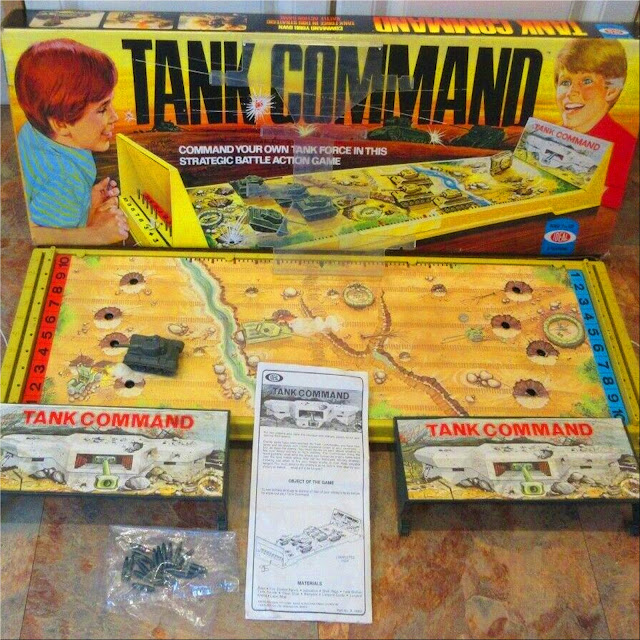
MICROGORIA 106 - The Terror of Tank Command


In an unscheduled excursion down the dodgier end of Memory Lane, we pay a visit to the 'Orrible 'Ouse of Terrible Old Tat and unearth one of the most disappointing board games of the 1970s - the infamous Tank Command from Ideal!

DIRECT DOWNLOAD - MICROGORIA 106 - The Terror of Tank Command

 
Find all the podcasts in the HYPNOGORIA family here -

HYPNOGORIA HOME DOMAIN - Full archive, RSS feed and other useful links


HYPNOGORIA on TUNE IN

HYPNOGORIA ON GOOGLE PLAY PODCASTS


Sunday, 1 July 2018

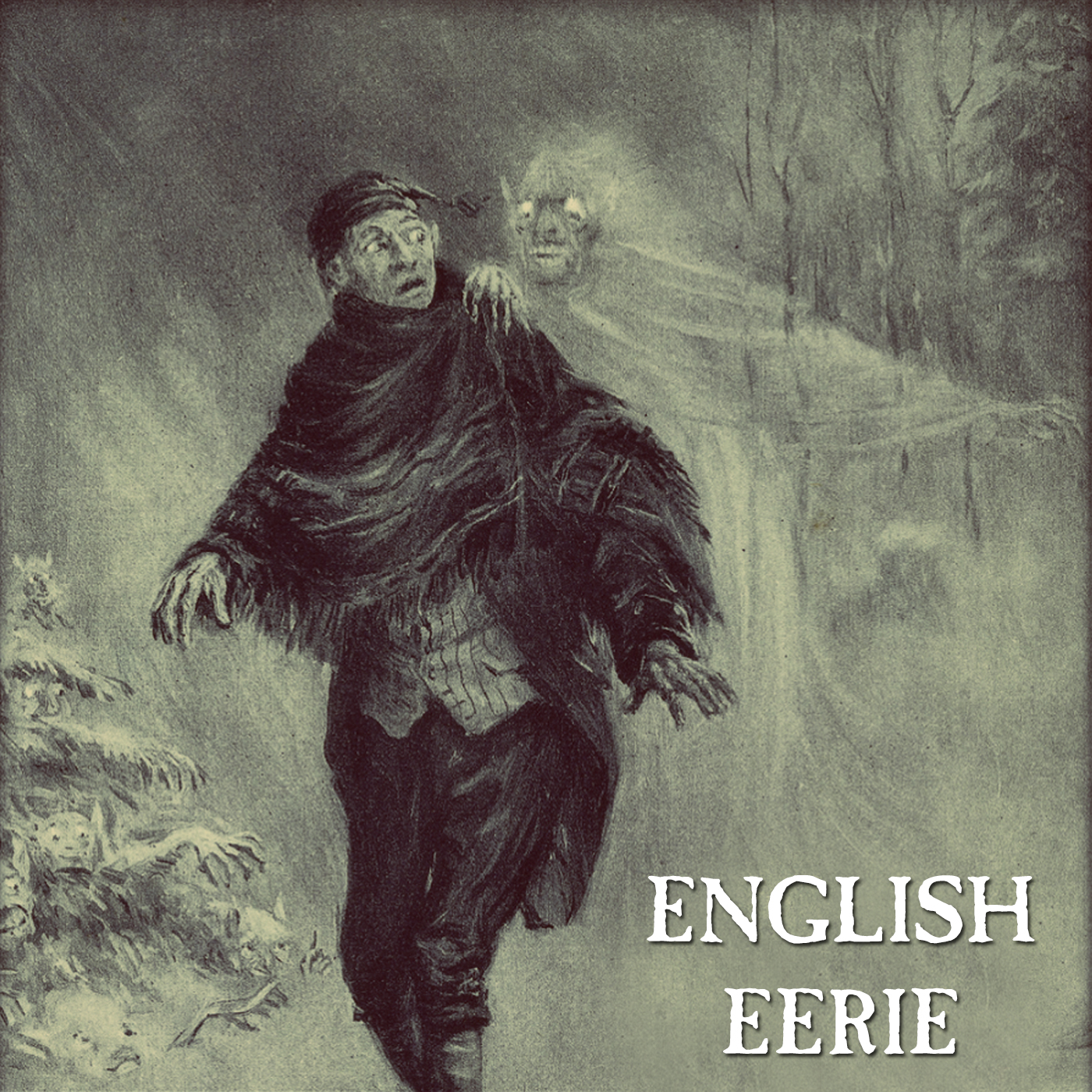
MICROGORIA 58 - English Eerie


This week Mr Jim Moon explores the world of English Eerie, a new indie role playing game for one player from Trollish Delver Games. In this game, with a pen, a journal, and a deck of cards, you too can be part of an od school ghost story or trapped in a world of folk horror!

You can get English Eerie here 


DIRECT DOWNLOAD -  MICROGORIA 58 - English Eerie

Find all the podcasts in the HYPNOGORIA family here -

HYPNOGORIA HOME DOMAIN - Full archive, RSS feed and other useful links

HYPNOGORIA on iTunes

HYPNOGORIA on STITCHER

CLICK HERE FOR DETAILS

Wednesday, 16 May 2018

THE 'ORRIBLE 'OUSE OF TERRIBLE OLD TAT - Odin, Thor and Mary?


Welcome once more dear fiends to the 'Orrible 'Ouse of Terrible Old Tat! Or rather welcome back to Asgard and the world of Valhalla! Published in 1983 for the ZX Spectrum and ported to the Commodore 64 in 1985, Valhalla was, as we have previously discussed, a ground-breaking and ambitious game. It was worlds away from the legions of Jet Set Willy clones which were clogging up game shelves back then. But was the game itself any good? 

It certainly sounded like it was going to be amazing - hanging out in a world of Norse gods and monsters, undertaking epic quests, and generally being allowed to do what the hell you liked. Well, provided you could get the bugger to load that is - for the first drawback to Valhalla was a long loading time, which greatly increased the chances of it crashing.  However, once you had listened to the five  or so minutes of electronic screeching - surely a formative influence on a generation of kids who would grow up to invent acid house, techno and jungle a decade or so later - the first thing to strike you is the scale of the world. 

The game plays out in three distinct realms from old Norse cosmology, Asgard (the world of the gods), Midgard (the land of humans) and Hell (realm of the dead). Traditionally in Norse legends there were nine worlds, with additional realms for giants, elves, dwarves and so forth, but here three worlds work well enough. And just like in the old sagas, brave heroes could physically travel between the worlds. Now in the game, these worlds of possibly exciting adventures comprised of some 81 different screens, each one a separate location - as can be seen here on the map of Valhalla. Now travel between the locations was accomplished in the usual text adventure fashion i.e. typing into "go north", "go south-east" etcetera. And there were some short-cuts available too - some screens/locations had hidden "ringways" - magic portals that teleported you to another location if you possessed a magic ring. 

But there were two downsides to all of this. Firstly you really needed to make some kind of map if you wanted to avoid becoming hopelessly confused and lost. But more importantly, travelling to another location meant the game had to draw another scene. Now the Movisoft engine did so by drawing in layers - first the background, then the midground, foreground, buildings, people and any items there. Hence travelling was a bit on the slow side as it tended to take about half a minute or so to render everything. Now playing Valhalla now, this kind of thing makes the game very slow and tedious indeed, however in fairness back in the day people didn't expect things to happen super quickly quite as much, and this kind of waiting for the computer to render a new screen wasn't exactly uncommon in the early adventure games. Plus it's easy to forget now how impressive the graphics were back then, for it was only a couple of years earlier than game graphics had consisted of basic shapes such as rectangles and squares moving about. And of course there was a novelty value to watching the computer draw in each scene layer by layer too.


Now as for doing the quests, while the instructions which came with the game were good,  it took so long to travel anywhere or get anything done, many players soon got distracted and started just having fights for the hell it and generally running amuck. Which is arguably closer to how real Vikings might have behaved... Well, that was my excuse anyway. But anyhow, historical accuracy aside, the game itself had a certain sense of mischief to it anyway. To begin with you could spend many happy hours egging on various gods and monsters to fight each other, but Valhalla had some mischief of its own up its sleeve too.


Firstly as the program had a limit on how many items could be in any one location. There could only ever be eight items in one place, whether on the ground, in a chest, or in a cupboard.  And if this limit was exceeded, the game had a novel and amusing solution. For the very second a ninth item was dropped, a character cheekily named Klepto appeared and stole one!

Which item got pilfered by Klepto was entirely random, and hence it was very possible he could take one of the much sought magic items you'd been questing for if you weren't careful. Of course, should this calamity befall you, you may very well ended up typing in "Klepto is a little shit" into the game... Although in fairness, given the freedom offered by Valhalla, and bearing in mind the general character of kids, if you were playing this back in the day, you'd no doubt already been typing in every rude word you could think of. 


However this would reveal another of Valhalla's little jokes. For swearing elicited the cryptic response - "Mary is not amused".  And a small figure would march on the screen and come and give your character a slap! Now if you are thinking "hang on, I don't remember a Mary in Norse mythology!" you'd be quite right. For this character was named after a very familiar and often hated figure in 1980s Britain - the self-appointed moral guardian Mary Whitehouse. 

For many years Mrs Whitehouse campaigned relentlessly and fearlessly against swearing, sex and violence in our media, and as a result was seen by many as being more terrible than all the monsters and demons of Valhalla, mainly of course by kids who were mad keen to see all that swearing, sex and violence. Ironically, many of us only learned about the existence of some erotic TV series or violent movie in the first place thanks to Mrs Whitehouse protesting about it. Naturally when playing Valhalla, it was great fun to just bait Mary, albeit in a pixelated form. And of course, a new unintended subgame emerged - and that was trying to discover exactly how many and which swear words the game's text parser recognised! 


Now of course, it would have been child's play to have the game's text parser not to recognise any swearing at all, but a generation of kids are very glad that they did. After all, anyone who played The Hobbit really wanted to the game to recognise the command "Tell Thorin to shut the fuck up about gold". Quite clearly, the programming team behind Valhalla had played more than a few adventures and what's more understood the mindset of their target audience. Hence Mary was a fun way to allow you to swear within the game, but, and this is the clever bit, in such a way so that boring grown-ups, who had a massive downer on computer games anyway, couldn't kick off about it. Now that's real genius! 

Wednesday, 9 May 2018

THE 'ORRIBLE 'OUSE OF TERRIBLE OLD TAT - Valhalla I Am Loading!


Hello dear fiends! Welcome once again to the 'Orrible 'Ouse of Terrible Old Tat! Now then, last time we were adventuring in the long lost lands of home micro gaming, searching for treasure, slaying dragons and wishing Thorin would stop singing about ruddy gold all the time. As we discussed at some length, the home micro version of The Hobbit back in 1982 was something of a milestone in computer gaming, and a newly formed company called Legend was very keen to pick up where Bilbo and Gandalf had left off...  

Now Legend, a spin-off company from business software outfit Microl, were not a fly-by-night (or should that be type-by-night) games publisher. Unlike dozen of other software houses that sprang up around the same time - for there wuz gold in tham thar gamin' hills - Legend didn't release hundreds of titles which very often looked suspiciously similar to other hit games. Rather they released a handful of high quality titles, with their first offering Valhalla setting the bar rather high. 

Written for the ZX Spectrum, and later ported to the Commodore 64, Valhalla was a game that came in a big box that screamed "QUALITY PRODUCT", and with a price tag to match - a very very expensive for the time £14.95. Although it was re-released a few years later as a classic title, in more modest packaging and at the pocket money friendly price of £2.99.  Valhalla was created by Richard Edwards, Graham Asher, Charles Goodwin, James Learmont and Andrew Owen, and was mostly written in the common language to home micro's BASIC, with the game engine being dubbed "Movisoft", which sounded very futuristic and interactive. In fact it's a very early example of a game having a named software engine.

And very impressive it was too. Like The Hobbit there was a vast world to explore, a large cast of characters to interact with and you played the game by typing instructions into the game. The downside of this ambition was that the game notoriously took bloody ages to load - well over 5 minutes to load - which a long time even in the era of the home micro when loading a game took several minutes. As one reviewer of the day quipped "I only just had enough time to load Valhalla - let alone review it". And as with many of the larger home micro games, a longer loading time meant increased chances of the game glitching and not loading properly. I know of several folks who never got the darn thing to do anything but display the loading screen. Which admittedly was rather nice, showing a digitised version of the famous 7th century Anglo-saxon helmet found at Sutton Hoo, but not exactly as thrilling as hanging out and fighting with Norse gods and giants. 

So then, provided you got the game to load properly, what did Valhalla offer the player? Well, the goal of the game was to collect six magic objects - Ofnir (a key), Drapnir (a ring), Skornir (a shield), Skalir (a sword), Felstrong (an axe) and Grimnir (a helmet). These magical treasures could only be collected in order, hence to get Drapnir you had to have Ofnir first and so forth. And while the items were in particular locations, if you died, any you had would be taken from you and hidden in a random location somewhere in the game world. On the upside however, dying was not a big deal in a world of gods and monsters, for if you were slain, you found yourself in Hell. However in accordance with the old legends and sagas, the land of the dead as just one of nine worlds in the old Norse cosmology, and hence just as you could travel from the world of men (Midgard) to the realms of the gods (Asgard), if you had died, the adventure wasn't over, you could just walk out of the Hell and continue your quest.


Valhalla also had some rather clever features too. Those of you have know your Dungeons & Dragons (whether as a tabletop game, or one of the many computer RPGs that use its rulesets) will be familiar with the concept of a player's character having an alignment - that is to say, a defined trait which maps out their philosophy and morals, whether good or evil, an upholder of law or a devotee of chaos. Now in Valhalla, your character doesn't have the usual RPG style character sheet with stats and traits, but very cleverly the game does take note of how you behave in the game world. When you begin your character is neutral - that is to say he is classed by the game as neither good nor evil. However as play progresses, your actions are noted by the game engine and other characters in the world of Valhalla will react accordingly. Hence if you are helpful and friendly to characters on the side of good such as Thor or Odin, all characters on the light side of the Force as it were will be inclined to be more helpful to you in your quest. Likewise being chummy with the likes of Loki will earn you favour with the forces of darkness. A very cool bit of programming I'm sure you will agree, and very ahead of its time. 

However Valhalla has an even bigger claim to fame, for it was one of the very first true open world games. Now The Hobbit is often hailed as being a pioneer of open world gaming as you could head off anywhere into Middle Earth, but at the end of the day if you wanted to get anywhere at all in the game you still had to follow a linear plot that mirrored the journey and adventures in the original book. Now normally in RPG games, the world waits for you to do something and then reacts, but things were not like that in Valhalla. Here the world of the game carried on regardless of what you were doing, characters would go about their business without waiting to react to you - they would travel between the world, eat, drink, and fight as they pleased. In fact, once the game started it would essentially play itself. Obviously that's not to say it would make choices for you and you could sit back and watch the game do the quests for you. But on the other hand, events in the game weren't tied in the slightest to you doing the quests, and indeed if you just wanted to explore, hang out with the gods or get into fights - i.e. generally doing what the hell you liked - you could.

Now all of this was obviously very impressive... But technical cleverness doth not a great game make. After all, there have been many titles down the years that boasted of having revolutionary concepts, ground-breaking coding and super new spanky graphics, but in terms of actual playability have sucked harder than a Hoover on overdrive! Next week, we are dusting off the old Spectrum, praying the rubber keyboard hasn't perished, and will be playing Valhalla! 


Wednesday, 25 April 2018

THE 'ORRIBLE 'OUSE OF TERRIBLE OLD TAT - Shut up Thorin!


Welcome once again dear fiends to the 'Orrible 'Ouse of Terrible Old Tat! This time we are continuing our explorations of the weird world of the home micro and taking a look that some games that are truly legendary. Or at least was released by a company called Legend...  

Now at the dawn of the home micro age, there was a common perception that these small and affordable computers, that didn't require a massive room filled with spinning tape wheels and an evil genius with a beard who would program it to run amuck and try and take over the world, would mainly be used for serious purposes. Such as science, education and business. And naturally as soon as the public began snapping up the likes of the Sinclair ZX81, many saw a glimmer on the technological horizon of vast empires built on writing software. And this was no mirage - indeed there was a new frontier opening based on computer publishing... 

But the gleaming city which was built on software didn't turn out to be based on accounting programs. Nor was it built on rock and roll as predicted by Starship. For despite the efforts of pioneers and gadget gurus to educate the public on the power and potential of the mighty micro, what actually happened was that people bought them and then completely failed to get to grips with them. However, the nation's kids very quickly mastered how to load a game, and very soon the software sections in shops were expanding to contain a tidal wave of games. 

Now in these early days, one of the companies formed to create and sell business software was an outfit called Microl. However at some point in 1982, Microl very cannily realised that the big money was in games, and set up a spin-off outfit solely to create gaming titles. Headed up by John and Jan Peel, this new gaming software company was called Legend. Now although there were a host of fly-by-night companies that popped up and foisted a legion of shoddy games upon us all, Legend was no quick cash-in venture and the Peels were interested and excited by the possibilities of the emerging games scene. Quite correctly, they realised that computer games weren't just a passing fad, and that the power of the home micro allowed for gaming to evolve way beyond the arcade titles of the past and become a whole new media in themselves. And from the start they were aiming for quality. In an interview with Your Spectrum magazine (see here) , the Peels claimed "We are looking for TV quality images coupled with the interactive potential of a home computer". 


Now one of the most impressive games in the early days of home micros was The Hobbit created by Beam Software in 1982. In many ways, this computer game version of JRR Tolkien's classic wasn't exactly breaking new ground - it was basically a text adventure, a style of computer game which had been around since the mid 1970s. However these earlier text games had been mainly played on computers in labs and universities, and the general public still generally thought of computer games as things like Pong, Space Invaders or Pac Man. However The Hobbit really grabbed the public's attention - to begin with it came with a copy of the original book (see! computers were educational!) and as well as the usual typing in of phrases such as "Ask Gandalf to open the door" and "Ask Thorin to stop singing about gold", The Hobbit came with pictures. Yes, they were primitive and took ages to load but they were based on famous illustrations and really brought the game to life. 

And to the vast majority of people who were just discovering the joys of computers, The Hobbit was a massive leap forward in game-play from running about overeating or crashing spaceships. Instead of repeating the same actions or doing the same tasks over and over again, except slightly quicker on each level, in The Hobbit you could go where you liked and do what you liked. Well, provided the program could understand the command you typed in. The text parser in The Hobbit was good, but it never understood the more frequent types of commands typed in by kids determined to mispend their youth, as seen below...


Now obviously to get anywhere in the game you had to replicate the plot line of the original book, and in fact you could complete the adventure in under ten minutes if you knew what you were doing (as can be seen in walkthrough videos like this one).  However there was nothing to stop you heading off in any direction you liked, and causing mayhem in Middle Earth. And this kind of freedom in a computer game was nothing short of astounding back in the day. In fact, the lure of just wandering anywhere you liked was so great, most players never found some of the notorious bugs in some versions of the game which actually made the proper adventure unfinishable! 

Now the Peels rightly recognised that The Hobbit was a real milestone in the development of computer gaming, not just in the technical sophistication of the game engine but also in the impact it had made on the public's perception of what games could be. They realised that games that let players create their own adventures, tell their own stories had the potential to be as addictive as soap operas, and thus Legend's first venture was intended to pick up where The Hobbit left off. Very astutely for their first game, they chose as their subject matter some of the very same source materials that had inspired Tolkien's famous tales, Norse mythology. And the game that resulted was Valhalla! 

Next time - we voyage to the realms of Asgard, journey to Hell, and insult assorted Norse divinites!  

Wednesday, 18 April 2018

THE 'ORRIBLE 'OUSE OF TERRIBLE OLD TAT - Apple Jammin'


Welcome once again dear fiends to the 'Orrible 'Ouse of Terrible Old Tat! Over the past few weeks we have fiddling with the volume levels on our battered old cassette tape player and delving into the world of home micro games. Now the gaming landscape of the early 1980s was initially at least mirroring the console game market, with the key difference that the games came on easily pirated tapes rather than expensive cartridges. However as programmers and designers got to grips with new and ever expanding computing power of the mighty micros, computer gaming would venturing into new and sometime rather weird territory. 

Now a perfect example of this is the output of UK based firm DK'Tronics Ltd. This company was formed by a chap called David Heelas, and began back in 1981 as a one man operation he ran in his spare time. DK'Tronics got started  with an expansion pack for one of the first home micros, Sinclair's ZX80 (which actually came in kit form and you had to assemble and build yourself).  By the time the ZX81* appeared on the scene (which thankfully didn't come in a kit), Dk'Tronics were producing keyboards for both the ZX80 and the ZX81, plus had ventured into the world of games with an early racing sim 3D Grand Prix. 

And while DK'Tronics would continue to produce hardware, including a whole range of add-ons for the ZX Spectrum, they also produced a string of well remembered and innovative games, many of which were devised by micro gaming legend Don Priestly. However before they began publishing classic titles such as Dictator, the early gaming output of DK'Tronics was very much *ahem* inspired by arcade classics - hence in 1982 and 1983 they released the likes of Munch Man (a Pac Man knock-off), Meteoroids (an Asteroids clone), Galactians (go on guess!) and Centipede (which was a clone of.. erm... Centipede). However as the market expanded, DK'Tronics set their sights higher and began producing games that no longer merely *ahem* emulated a coin-op classic. And while they would deliver some innovative and well-loved titles, their first steps in that direction were a wee bit shaky. And to be frank, bloody weird! Ladles and jellyspoons, welcome to the world of Apple Jam
I swear this is a real game! 

This game which appeared in early 1984 was written by Ed Hickman, who would go on to work with Don Priestly on innovative DK'Tronic titles such as Zig Zag and Minder. However Apple Jam is something else... I guess you could call it innovative. It's certainly different. The basic premise is that you are at a factory making, you guess it, apple jam. For reasons that are unlikely to ever become clear, the sweet sticky jam drips from a spigot tap and there's also a conveyor belt which for some reason dumps apples on the floor. Your job is to run your little man from left to right and catch the falling jam and fruit. In his gob. Obviously. Just like you would in any real factory. However there is of course a catch... several catches in fact...

Ratted out!

Firstly, and I swear I'm not making this up - see the screenshots for proof - beneath where your little sprite man runs back and forth, there is a tunnel where a rat constantly runs. Now everytime you miss scoffing an apple or a blob of the jam, they fall into the tunnel and the rat gets them. And every time it eats, Ratty gets bigger. And when he gets to a certain size, he goes all James Herbert and comes to eat you! However you can avoid getting gnawed to death by legging it to the elevator on the left hand side of the screen. And if you time it right, you can splat the rat with the elevator, which leaves a nice puddle of blood under it. A puddle that gets bigger and bigger the more rats you splat. Brilliant eh!

But that's not all. For every time you pig out on apples or jam, you put on weight. So much so that it doesn't take long for your little man to start to resemble a Mega City 1 fatty. And if you get too fat - and here I quote from the actual game instructions - "you'll have a fit" and lose a "diet pill" i.e. a life. However you can fight the flab by running over to the right-hand side of the screen and popping in the sauna there, which will slim down to your original size. Of course, there is a downside to this - because while you're in the sauna, the jam is dripping and the apples are dropping... and Ratty is getting bigger and bigger again.


Lip up fatty!

And if things weren't difficult enough already, every now and again a giant hornet, presumably escaped from a Bert I Gordon movie, comes to buzz you. Sadly you can't use the elevator as a giant fly-swatter, and so you have to take refuge in the sauna, meaning Ratty gets another free lunch or two... On the upside, there is a mysterious box marked Rat Bait which allegedly drops and reduces the ravening rodent to its original size. And I say allegedly because the magic box only drops when you hit certain scores, and generally it seems most people never lived long enough to actually trigger that happening. For Apple Jam is insanely difficult - it doesn't take much troughing for you to hit morbidly obese levels, and hence most of the time you are just trying to squish the rat while dodging that twat of a hornet.


Killed by the stripey bastard again!

But in practice, I'm not entirely sure that this mattered much to the kids of the '80s. Certainly everyone I knew who had a copy of Apple Jam were not usually attempting to get a high score, but instead were trying to get the biggest river of blood possibly oozing out below the elevator! Ah, they just don't write 'em like this anymore! Sadly these days even the game's basic premises i.e. over-eating for fun and profit would be frowned upon, never mind splatting rats...

* Pointless footnote - in my school, a piece of graffiti on a desk read "God's only clever coz He's got a ZX81". By the way, the ZX81 had a  processor running a 3.5 mhz and a massive 1K of memory!

Thursday, 5 April 2018

THE 'ORRIBLE 'OUSE OF TERRIBLE OLD TAT - Load ""


So then dear fiends, welcome back once again to the 'Orrible 'Ouse of Terrible Old Tat! Now last time we were discussing the strange era that can be found at the dawn of the 1980s - the weird world of the mighty micro. And this week we are going to be making a further exploration of that land that Computing History forgot, so pull on a cable-knit jumper and prepare your best Doug McClure impression as we venture out to make battle with fearsome microsaurs! 

Now as discovered last week, the coming of the home micro promised a new exciting age of computers coming into our homes. One of the great selling points of having a home computer was that it would help kids with their school work, however in reality what had happened was that kids had managed to con their parents into buying a machine that actually would enable them to do the exact opposite i.e. help them to play Jet Set Willy instead. But why had this state of affairs come about? Why wasn't this early generation of gamers not pestering their beleaguered oldies for the latest consoles? Well dear fiends, there were a couple of good reasons for this. Firstly many of consoles doing the rounds back then were quite frankly terrible old tat (and I promise you we we will look at some at some future visit to the 'Orrible Old 'Ouse). However, more crucial (and not in an '80s Lenny Henry way) was the second reason, which we shall dub the life cycle of the console, which many kids had bitter experience swith... 

And the life cycle of the console goes like this - kid gets a console for Christmas or a birthday pressie. Said console arrives with a couple of games on cartridges. Kid never gets any more games for the console because a) they can't afford to buy another one themselves as game cartridges were so hideously expensive, b)  parents never cough up for another because they are so bloody expensive and they don't want to forever be having their wallet lightened every time a new game is required by their spawn. And there was finally c)  said console is now virtually obsolete and there are no other games in the shops anyway other than the ones the bastard thing shipped with. And so after a few months, maybe even weeks, we have a very expensive dust collector languishing in a cupboard in a tangle of wires.

"Please buy me another cartridge..."

Now bearing these grim facts in mind, how long do you think it took the kids of the early '80s to note that firstly games for micro computers came on ordinary household cassette tapes (and yes, you did need a cassette player of some sort to hookup to the computer, although the later home micros did come with cassette decks built in). Secondly, said tapes with games on cost a fraction of console cartridges - a game for a home micro could be picked up for a little as a fiver, with a more expensive title going for ten or fifteen quid. Whereas for a console cartridge you were talking a starting price of £15 a title, going up to £25 or even £30! And finally, and perhaps most important of all, we all realised that with games and software coming on ordinary cassettes - exactly the same type that we were using to tape favourite chart hits off the radio on - it was going to be a piece of piss to pirate games from hereon in.

And thus the first age of digital piracy was born! Hence after you got a home micro, it didn't take too long to end up with an extensive collection of pirate titles. Now generally most games only took up a couple of minutes of tape play time, and therefore it was quite common to acquire a long running tape, such as a C90 (which had 45 minutes of record time on each side of the cassette) and have several dozen games on one cassette. However this first wave of piracy was not without its pitfalls. In fact there were several distinct downsides to pirated game cassettes.

Firstly having a ton of games on one cassette made finding the particular title you wanted to play a bit tricky. If your cassette recorder had a counter mechanism - literally an analogue set of wheels with numbers on that turned in sequence with the tape playing - you had to make a note of when each game started on the tape and then fast forward and rewind to that position. Or you had to develop a very good ear for screechy noise of computer code and be able to recognise the end or beginning sounds of individual games. Now that might sound mental, but actually a lot of us did develop this particular wild talent and could find a game on a pirate compilation often quicker than trying to do it by a counter!

And for those of you who are too young to remember, this what happens when you loaded a game on a home micro -


Yes, back then games didn't load instantly, and the more complex the game, the longer it took. In fact some games required you to load extra bits as you went along, meaning long tedious minutes listening to more code squeaking and warbling to get to the next bit. And it was those long minutes waiting for games to load that we learned to recognise the start and end sounds of different games - for if you were addicted to playing Manic Miner, you got to hear the song of the code loading many, many times. In fact, even now, over 30 years later, I still recognise the closing few bars of the Manic Miner code...

However there were additional perils for those attempting to load a pirated game. For often there a range of variations in recording levels on different tape machines, and a similar variance in the recorded volume levels of the actual tapes. And together these variations in volume meant that you might find that some games might not be playing loud enough to load properly. Or in other cases, if you had the volume level too loud, there would be distortions in the sound that would also bugger up the loading process. To be fair, this could occur with genuine copies too but it was far rarer. However it did mean that sometimes you had to make several attempts to load a game, each time fiddling with the volume level until you hit the right one for it load. And the real pain of it was that usually it was only when the entire program had played - having to listen to minutes of electronic shrieking - that it would crash right at the end, just as the game was supposed to start. Veterans of this era often gather round campfires and tell tales of blood-chilling terror about that time they tried to get Valhalla to load...

"Get used to seeing me kid, 'cos I take AGES to load... If I load that is...."

Anyhow, once you finally got a game to load there was then another challenge for the pirate gamer. For most games back then didn't come with training levels or in-built help menus,  and so if you had a hooky copy,  you rarely had any instructions at all and hence no idea how to play the game. Now it is true that many games of this era were ports or clones of existing arcade games, but on the flipside not that many of these early games supported the use of a joystick or gamepad. And so therefore it was a process of patient trial and error... oh alright mainly frantic hammering on the keyboard to be honest, to discover what the controls actually were.

But even when you worked up what keys to move, fire, pick up stuff, or whatever, actually were  you still had the challenge of working out what the hell you were supposed to be doing. For while the first home micro games were indeed new versions of familiar arcade classics, it wasn't long before teh home micro was spreading its wings and delivering some rather sophisticated games. The aforementioned Valhalla (Legend 1983) for example was an early and highly innovative sandbox game - a huge open world set in Norse mythology and the player was free to wander where  they liked and do as they wished. However if you had a naughty copy, you were lacking all the vital background and instructions as to what you were supposed to be trying to achieve in these lands of myth. Adventures tended to not to be epics of great heroism and usually ended up as wandering about aimlessly and swearing at various gods and monsters.

However things weren't helped by the fact that once programmers of this era had grasped the concept of not simply cloning arcade favourites, they boldly set out exploring new and exciting game concepts. And while this sometimes resulted in pioneering titles like Valhalla,  many games ended up going to some very odd places indeed... And over the next few weeks we'll be having a look at some of stranger titles that were released in this era... 


Wednesday, 31 January 2018

THE 'ORRIBLE 'OUSE OF TERRIBLE OLD TAT - The Magic of Merlin


After a somewhat longer than intended Christmas break, welcome dear fiends once again to the crumbling edifice packed with shite that is the 'Orrible 'Ouse of Terrible of Tat! Now then we were last rummaging through this curious collection of pop culture empherea, we had been looking into the ancestry of modern video gaming, specifically the assorted handheld devices that called themselves "electronic games". Now these weren't pocket-sized versions of popular arcade classics - for those would come a little late - but rather in the late '70s there were gadgets using circuits and microchips to make games that could play themselves with you. 

The first superstar of this genre, so popular that it's still around today, was Simon, whose history we charted last time. However Simon wasn't the only kid on the newly built electronic block, for venerable game makers Parker Brothers also had seen the toy potential at the dawning of silicon age. And so in the run-up to Christmas 1978, Simon was locking horns with another bunch of microchips and flashing lights in a plastic case - Merlin! 

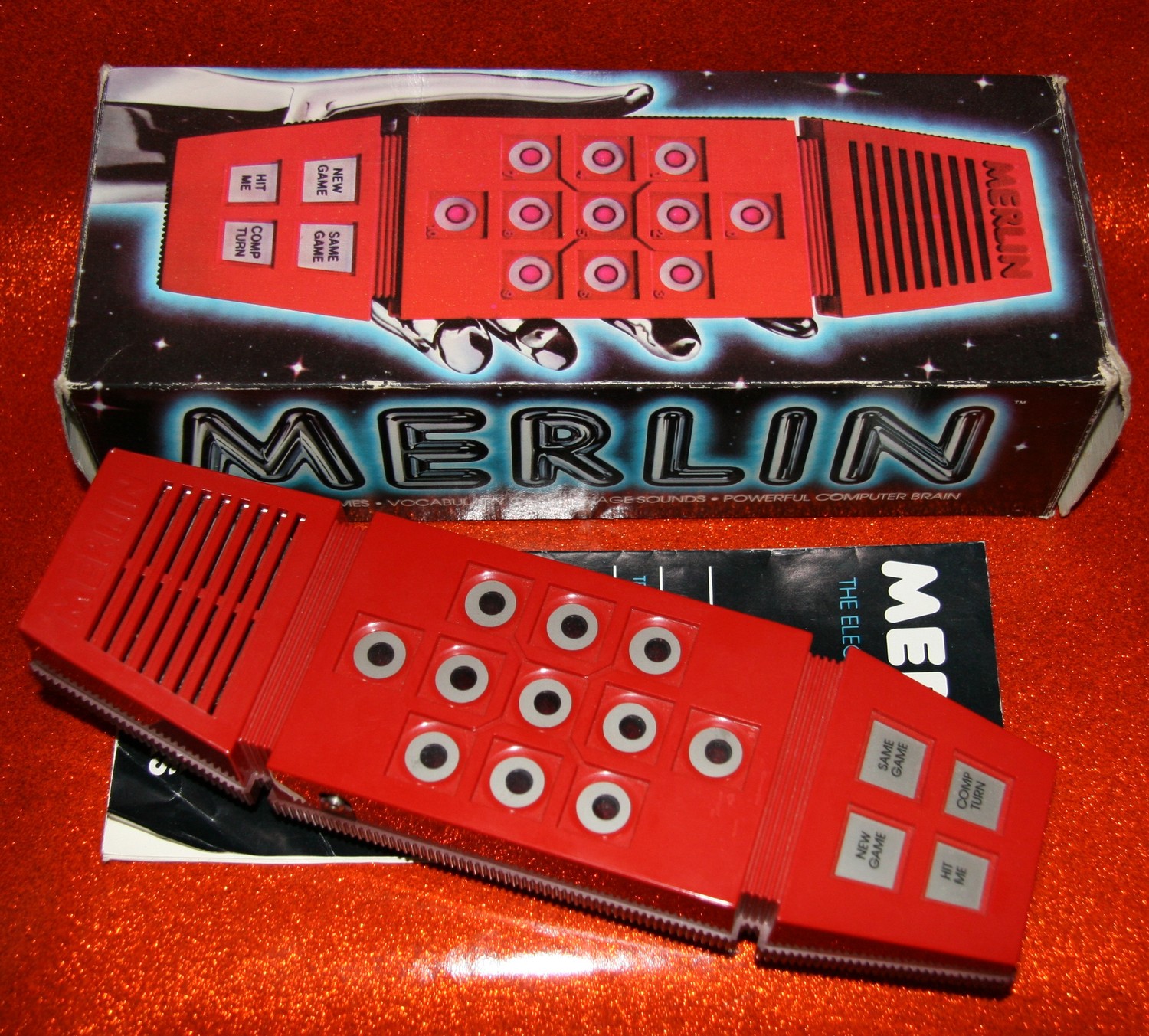
Now despite its name Merlin was not born of the Round Table or cooked up in Camelot, but rather was the brainchild of Bob Doyle, a former NASA engineer, which gives this space-age toy a truly space-age pedigree. Assisted by his wife Holly and his brother-in-law Wendl Thomas, Doyle came up with a device that looked like an over-sized red phone handset studded with eleven buttons that lit up when pressed thanks to inset LEDs. However despite not looking quite as colorful as Simon, Merlin had more than a few tricks up his electronic sleeve, and could in all fairness, quite rightly claim to be a magical marvel of microchippery. Milton Bradley's circular smart-arse might have been heavily marketed as an electronic brain that could think for itself and play against you, but despite looking like a relative of R2D2 who had been flattened in the Trash Compactor, Simon was pretty much a one trick pony. Oh yes, he might have been a clever little bastard, but when you came down to it, he only knew one game.

But Merlin could offer kids not one, not two, not even three, but a whopping SIX different games. And they really were six different games, and not just variant modes of a basic either. Indeed Merlin could convincingly claim to be a whole toybox in electronic form. And the full line-up of electronic delights conjured up by Merlin goes like this... 

1) Tic-Tac-Toe - or Noughts and Crosses as we in this septic isle more commonly call it. Yes, it is as old as the hills, but it is still a classic, and now you could play it against a computer! OK, that doesn't sound terribly thrilling now, but back at the end of the '70s playing a game against a machine was something previously only seen in the realms of SF.

2) Music Machine - Now technically speaking with wasn't a game as such, but more an activity. In this function, Merlin became a primitive synthesizer, with each key on its pad playing a different note. You could program a tune of up to 48 notes and rests - not huge scope there admittedly, but all the same pretty impressive for a toy back then. Certainly there was memory space enough for Merlin to be used as an early sequencer!  The instruction manual also came with some well-known tunes, including tunes as diverse as Beethoven's 9th and Auld Lang Syne, transcribed into ready to program number sequences.


3) Echo - Basically Merlin plays a tune that you had to replicate on the keypad. Yes, very like Simon, but accounting for the development timelines of both toys, I suspect that Doyle and co. had also seen  Atari's Touch Me and, like Simon's creators thought, they could do better.

4) Blackjack 13 - fairly self-explanatory, Merlin plays the dealer for an electronic version of  the famous card game. No gambling involved of course!

5) Magic Square - In this Merlin devised a pattern that the player must deduce from which lights come on or go off when certain keys are pressed.

6) Mindbender - In this game, Merlin ask you to decide deduce a random number - essentially it is an electronic version of the old game Cows & Bulls which earlier had inspired the creation of another best-selling 1970s game we've chatted about before, Mastermind (see here for more details). However the neat thing here, is that you had the option of setting the size of the number, choosing between 2 and 9 digits.

And for more details on all of these games, you can read the original manual online here.

Unsurprisingly "the Electronic Wizard" (as the marketing dubbed him) more than held his own against Simon and would go on to become the best selling toy in America in 1980, notching up sales of over 2 million Merlins in that year alone. Like his rotund rival, Merlin remained popular throughout the '80s, and saw  re-releases periodically over the years. Also like his electronic chum, there were some spin-off versions too, in the shape of Split Second in 1980, Master Merlin in 1981, and Merlin the 10th Quest in 1996.

Now Merlin is just a piece of gaming history, but being a very robust bit of kit, there are still plenty of working units out there. Of course, these days you can play all these games, and hundreds more, on your phone. But considering the unique and eye-catching telephonic design of Merlin, this computerised gadget wasn't just a pioneer of the computerised play, but in a weird way he was a prophecy of the future of gaming! Truly an Electronic Wizard! 


Wednesday, 29 November 2017

THE 'ORRIBLE 'OUSE OF TERRIBLE OLD TAT - Simon Says


Hello dear fiends, and welcome once again to the 'Orrible 'Ouse of Terrible Old Tat! Well then, we are in the toy cupboard once again and continuing our explorations into the strange twilight world of what were known as "electronic games". Now last time we saw how the ancestors of modern handheld video game platforms were a couple of gizmos produced at the end of the '70s.  Mattel Auto Race and Mattel Electronic Football were the first of what would become a huge wave of toys in the '80s, little plastic consoles that delivered a single video game. Yes, they were primitive but they had brought the games arcade into the home, and indeed, into the pockets of kids.

Now we will look at a few more examples of this early form of video gaming in future trips to the 'Orrible Old 'Ouse, but this week I want to look at another particular branch of this toy family. Now the Mattel duo and their descendants sought to recreate an arcade video game experience with chips and some LEDS instead of a real screen. However, around the same time, the first of a new breed of electronic game appeared that wasn't aiming to create a video game in a home or handheld format. Instead these were toys that boasted about microchip brains, games that could play themselves with you!

Our story begins at the Music Operators of America trade show in 1976, where two chaps, Ralph H Baer and Howard J Morrison saw an Atari arcade machine called Touch Me. Now this machine had already been around for a few years, first appearing in 1974, but unlike the games we normally associate with Atari, there were no spaceships, fast cars, things to gobble up or shoot. Instead Touch Me had four big black buttons and a small screen. Basically the machine flashed a sequence of lights at you while making primitive electronic rasping noises, and the player had to press the buttons to replicate the sequence. Baer and Morrison were rather unimpressed - the machine was ugly, the interface dull (all black buttons?!), and the electro-fart sound effects were less than appealing.


And these two chaps weren't just any old passing punters either. Morrison was  - even by the mid '70s - a leading light in the toy industry, working for the legendary Marvin Glass and Associates (click the link to find out why they were so legendary), while Baer had invented a primitive electronic tennis game on a computer which was the forefather of Pong. What's more, Baer had also created the world's first video game console in the shape of the Magnavox Odyssey in 1972, and hence not for nothing he is now known as the father of video games. Now while these learned gents agreed that Touch Me was rather bad, both also thought that the actual game concept - essentially an electronic variant of old playground and kids party perennial Simon Says - definitely had potential.

Hence our two heroes returned to their secret volcano base... (That's not right - Ed) Ok, returned to their workshop at the North Pole (Neither is that, try again - Ed) ... Oh right, returned to wherever it is that toy-makers do their magic, and emerged blinking in the sunlight, to the cheers of elves (Stop that! - Ed) with a round black disc, with brightly coloured panels. And thus Simon was born! Well, at least as soon as they found some batteries to go in it. They thought they had some in drawer but in accordance with one of the fundamental laws of the universe, any toy you buy will require exactly one extra battery of a type that currently you don't have... Even though you'd swear blind you bought a packet of those just the other week. And you put them in that drawer! Who's been in that drawer. eh? C'mon, own up!

Anyhow, once the necessary batteries had been fitted, they were ready to demonstrate this new electronic game. Now much like Touch Me, new boy Simon would light up his coloured panels in a sequence , while making merry beeps, and the player had to replicate them. Now you may say that perhaps this was just stealing Atari's idea, but in fairness as Atari had taken Baer's tennis game and created Pong,  and then later copied his Magnovox to create their own best-selling console, I think it's fair to say that they owed him one. However Baer and Morrison had made some significant advances of their own...


To begin with, the looks and feel of Simon was light years ahead of Touch Me. The round disc design, and brightly coloured lights looked both futuristic and pleasing echoed disco lights and illuminated jukeboxes. Hence it was both space-age and classically retro at the same time. Come to think of it, the curves, beeps and lights also chimed rather well with a certain droid who hit the big screen in 1977 too. However real innovation was perhaps more subtle - for Touch Me was an arcade machine, whereas Simon was designed for the home, and to be played in a group rather than a lone player with an excess of loose change to get rid of. That round disc design was not only visually appealing but perfect for a table or bedroom floor.

Now the marketing of Simon really played up the electronic nature of the game - this was a game you really could play with - a game that played back as it were. And while during its development this new game had been called Follow Me, the name change to Simon was another stroke of genius. Firstly the new name tipped its hat to the game's inspiration, the daddy of all follow and copy game, Simon Says, and in making that connection, people instinctively grasped what this new toy did. Secondly though, giving the toy a "proper" name gave it a personality - something the marketing played up no end. And while the actual electronic gubbins inside Simon were fairly basic, the ads really sold on the idea that this brightly coloured disc was an electronic brain. And that was another winning concept too - where most board games fall down is the fact they you need to get some other humans to play with you. But now you had a game that would happily play with you itself! Naturally a generation who had just fallen in love with R2D2 embraced Simon with open arms.

Simon released in 1978 by Milton Bradley and became the top selling toy that Christmas. Very soon there were several rivals and outright clones on the market. Even Touch Me was resurrected as what were now referred to as a handheld too, although keeping the black and yellow design and the electro farting did little to challenge the dominance of Simon. In the kingdom of the electronic games, the four colour disc was king. And while it's easy to see Simon as relic of those heady days, an iconic of late '70s/early '80s pop culture, our little round pal has continued to sell over the years, in a variety of different formats. There's even a new VR headset version of the old classic! For that design has proved to be iconic and timeless, but more importantly, the gameplay is still there. It's still a whole lot of fun for all the family, or just to play yourself against Simon himself.


Wednesday, 15 November 2017

The 'Orribe 'Ouse of Terrible Old Tat - The Mysteries of Mastermind


Welcome once again dear fiends to the 'Orrible 'Ouse of Terrible Old Tat! Now then, last time you popped over we were rummaging in the Old Board Games cupboard, and had uncovered the history of the international bestseller Mastermind - namely that this well-known game was actually an adaptation of an old pen and paper pastime called Bulls and Cows. However we didn't quite reveal all the secrets of this code-breaking game...

Bulls and Cows was a game which involve guessing a sequence of numbers, or in a popular variant, words. Now obviously any game involving numbers raises the spectre of mathematics, which for many folks is the polar opposite of fun. And therefore a key factor in Mastermind becoming a global hit was the simple but genius decision to replace the numbers with colours. To begin with this gives the game a visual appeal, but also the placing of multi-coloured pegs gives the game a pleasing tactile quality too. And it should be noted too that having a choice of six colours to create a sequence to be guessed by the other player actually cuts down the odds of guessing it correctly, hence making the game a little bit easier and more accessible for younger players. Now at this point I would to the maths to show the reduction in possibilites but you'd all stop reading. Such is the dread power of maths! 

Anyhow, instead of scoring "Bulls or "Cows", the board game used a system of black and white pegs. A correct colour in the right place gets a black peg, whereas a correct colour in the wrong spot gets a white peg. Now the board in Mastermind has a number of rows for the player to make his guesses, and each row of peg-holes has an additional quartet of slots for marking the guesses. Dr John Billingsley, who played a key role in developing the game, cunningly decided that the marking holes should be placed in a square to disrupt the tendency for players to mark each peg in sequence, thus making the game a little too easy. 


Now it was also Dr Billingsley that gave the game its name. And here lies one of the great mysteries of Mastermind. For around the same time as the board game hit the shelves, there was a hit TV show on the BBC in England which was also called Mastermind. Devised by a chap called Bill Wright, the inspiration for this quiz show was actually Wright's experiences in World War II being interrogated by the Gestapo! The show's format is both iconic and brilliantly simply - basically each episode sees four contestants face two rounds of questions. Each in  turn takes their place in a black leather chair lit only by a spotlight and faces two minutes of questions. The first round is on their chosen specialised subject, with the second round comprising of general knowledge questions. Winners of each show then go on to compete with each other until at each series's finale an overall winner is decided and awarded an ornamental glass bowl. And no, I'm not making that up! You really did only win a bowl.  

Now the TV show Mastermind has something on an interesting history in itself. It first aired in 1972 on a Sunday evening in a late night slot. Given its cerebral nature, it was thought that the show would only ever have a niche audience - for there were no flashy prizes or big cash giveaways, and the questions were of a high level of difficulty. Not your usual quiz show in other words. However in 1973, the BBC found itself in a bit of a bind. A raunchy sitcom Casanova '73 which starred Leslie "Ding Dong!" Phillips had proved to be a bit too lecherous and had drawn a flood of complaints. After three episodes, a full scale public outcry was taking place and the Beeb decided to swiftly move the sexy show to a later time slot. However this snap decision to appease shrill self-appointed voices of the probably mythical Silent Majority such as Mary Whitehouse left a gap in the schedules. And so, as a stop-gap Mastermind was given the troubled sitcom's old slot. This was of course only meant to be a temporary move, but to everyone's surprise became a huge hit. 

Now while competing to win a glass bowl by answering questions on subjects nobody at home knew a thing about might sound like the dullest thing ever, Mastermind was actually riveting television. To begin with we had that brilliantly atmospheric theme tune - a piece called "Approaching Menace" by British composer Neil Richardson - usual playing over a very simple title sequence that just showed the famous black leather chair lurking in its single spotlight. Whereas most quiz and game shows are wheeling out bright colours and the kind upbeat music produced by a surfeit of sugar and e-numbers, Mastermind could be mistaken for the opening of a dark thriller or even a horror movie! And while the original run of the show was hosted by the charismatic Magnus Magnusson, who managed to be both a genial and a somewhat sinister quiz master, the real star was always that infamous chair lurking in the dark. 


And what really made Mastermind such tense viewing was a very simple device employed by the show from the very beginning. And that was that as each contestant took their place in the ominous black chair and began their round of questions, the camera very slowly and oh-so-steadily zoomed in, so that by the time the buzzer sounded to mark the end of the round, the camera was squarely on the contestant's face. Filming the rounds in this way proved to be a stroke of genius, for it allowed to viewer to taste the rising tension of answering a barrage of relentless questions against the clock. 

The show ran every year until 1997, when it was decided that perhaps old Mastermind was a bit long in the tooth. But you can't keep a classic off the air long, and while TV execs might have thought the show old and boring, audiences still loved it. After all, there was a very good reason the show had ran for a quarter of century with the only changes to the format being tweaks to the title sequence. Hence it was revived almost immediately on radio, then on the Discovery Channel with Clive Anderson hosting. And then in 2003, it returned to its rightful place on BBC 1 with John Humphreys as the host, where it is still running to this very day. 

Now then, to get back to our original specialised subject of old tat, what has all of the above got to do with the board game? Well, that is in fact the very question that bedevilled generations of TV viewers and game players. Was there some connection between the game and the TV show? They had the same name, and given that the box showed a distinguished man in a darkened room, looking ominous, the game seemed like it was somehow related to the TV show. But that wasn't Magnus Magnusson sat in a stylish modern armchair chair! And he never had a beautiful assistant like the suave chap on the game box. Plus if the game was a tie-in to the TV show, why wasn't it effectively Trivial Pursuit a decade or so early? 

Well now, at last we can reveal the truth! And what is more, once again it is down the Dr John Billingsley. As Mastermind the TV show was just becoming a huge hit, the good doctor provisionally entitled the new board game with the same name, never thinking that it would hit the shelves with that monicker. Our genial boffin assumed that there would be all manner of legal difficulties and another name would be chosen for the game's release. However the makers of the new game Invicta loved the name and went with it, and somehow the BBC never challenged them over the use of the same title. Possibly if the game had featured questions and a quiz the BBC might have had something to say about it, but I suspect the prevailing thinking at the time was that "mastermind" was simply a term in common usage and no one, neither Invicta nor the Beeb, could lay claim to it.


However, who was that chap in the chair? Well, there's an interesting tale too. Given the name 'mastermind' and the brief that this was a code-breaking game, the marketing folks thought they'd invoke a James Bond/spy vibe, and so started looking for a suave-looking gent, a beautiful girl, and also hired a cat. The original model they had booked didn't turn up, so a local man who ran a string of hairdressing salons, Bill Woodward was suggested at short notice to fill the chair. And with his neatly trimmed beard and sharp suits, Bill certainly fit the bill. Likewise his glamorous companion was also a bit of chance casting. The mysterious lovely lady was Cecilia Fung, who at the time was studying computer science at Leicester University - a rather nice coincidence that chimed with the game's origins in a computer version called Moo! Cecilia was literally stopped in the street by folks from the modelling agency and offered the job on the spot, and being a struggling student she jumped at the chance.

And thus history was made! The iconic cover photo looked intriguing, glamorous, and stylish - with the aura of sophistication and mystery it generated, it undoubted it helped the game become the global smash it was. Bill Woodward did many promotional tours for the game, so much so that at one stage he had "Mr Mastermind" on his passport! However more than a few players over the years were perplexed to discover the game rules made no mention of this suave fellow and were left wondering who he was and what was his deal? Was he an M type of guy, giving the orders for secret missions? Or a Blofeld, plotting some nefarious scheme? In fact, they were going for a Bondian supervillain look, hence the hiring of the cat. Bill later recalled that several shots were taken of him holding the kitty in full Blofeld mode, but in the end it was decided to ditch the moggy. However unfortunately that wasn't before the cat itself had registered its own unique protest against the concept by pissing all over Bill's trousers. 

Sadly now, although you can still buy Mastermind, made by Hasbro these days, the iconic packing featuring Bill and Cecilia has now gone. And I can't help feeling that the game has lost some of its mystique and magic with this departure. However I am willing bet that if they were reinstated on the box, there would be a sharp spike in sales, for I am sure that that mysterious air of style and sophistication would once again have prospective buyers picking up the game just to find out who they were. Rumours that the cat is now lurking in a secret volcano base of its own and plotting world domination are entirely made up by me just now.