Showing posts with label faeries. Show all posts

Wednesday, 4 June 2025

HYPNOGORIA 286 - The Chime of the Bluebells


In the UK at this time of the year the woodlands are awash with a carpet of bluebells. However as beloved as these wild flowers are, they have a lot of folklore surrounding them, and links to faeries, the dead, witches and the Devil himself! 

DIRECT DOWNLOAD HYPNOGORIA 286 - The Chime of the Bluebells


Find more writing and  podcasts on the weird and wonderful here -


Thursday, 6 July 2023

FROM THE GREAT LIBRARY OF DREAMS 085 - The Faeries by William Allingham


Keeping with our midsummer theme, here is a reading of a Victorian poem rich in faery folklore, in which Irish poet William Allingham reveals the darker side of the little people...

DIRECT DOWNLOAD - The Faeries by William Allingham


Find all the podcasts in the HYPNOGORIA family here plus more articles on the weird and wonderful here-


Thursday, 21 June 2018

FOLKLORE ON FRIDAY - Midsummer Magic


Midsummer’s Day, also known as St John’s Day, is the summer solstice, the longest day of the year, and I’m sure I don’t need to remind you how this was an important day for our pagan ancestors. For example, every year we are treated to footage of assorted folks gathering at Stonehenge, so much so that that now it is part of pop culture to know than that Midsummer is a sacred day for both druids and hippies. 

However flippancy aside, as the longest day of the year, the summer solstice has been recognised and marked by a host of different cultures over the centuries. As it stands, we are not actually particularly sure what significance Midsummer had for our own pagan ancestors and the  whole business at with druids at Stonehenge and other standing stones is very much speculation constructed from what little we actually know of ancient British and Celtic cultures. However as the longest day and indeed its opposite number the winter solstice (the shortest day) are reliable markers for organising your calendar, there is no doubt it would have been significant. 

And thanks to this practical usefulness to agriculture in particular - after all it is very important to know what to be planting what -  Midsummer remained a key date in the folkloric calendar long after paganism gave way to Christianity in these isles, and hence there are many festivals and traditions associated with it. In addition however, the night before the longest day, Midsummer’s Eve was widely reported to be a significant night for all manner of folk charms and rites. Generally it was thought that it was a time when the veil between worlds grows thin and hence it was an auspicious night for magic of all kinds.


A common example of this is the assortment of love charms to practised upon Midsummer’s Eve -  there are various little rites, such as casting rose petals into water or placing special plants and herbs, such as St John’s Wort, under your pillow, which it is claimed will result in visions which reveal your future true love. Interestingly, similar folk rituals for divining your future true love are connected with several other days in the calendar. For example, while we think of Halloween as the spookiest night of the year, it was traditionally actually a night for carrying out such love charms. Midsummer is also one of the nights of the year in which church porching was conducted. This was a similar simple divinatory practice, but one with a darker purpose. For it was said that if one held a vigil at the local parish church door, or in some version at the lich gate, one would see the souls of all those who were due to die parade into the darkened church. However like the love charms, church porching was also conducted on various special nights of the year such as Christmas, Halloween and assorted Saint's days. It seems that in ages past, any significant day in the calendar was held to be a good time for attempting to divine the future. 


But there is lore that more specifically relates to Midsummer. A favourite of mine is the old folklore that claims that ferns only bloom on Midsummer’s Eve. According to these old legends, the fern produces a blue flower at the moment when the sun has finally set, and this bloom releases a seed at midnight. Now this seed was highly prized, for there were many claims about the magical powers the seed could confer upon its finder. Over the years, it has been claimed that if you could catch that elusive seed, you would be able to find hidden treasure, see the future and even gain eternal youth. Now the roots of this widespread bit of folklore undoubtedly lie in the fact that unusually ferns reproduce without producing either flowers or seeds, and clearly this presented something of a mystery to your ancestors. Hence anyone who could actually see a fern flower or catch one of its seeds was clearly some one very special. However other than the fact that in summer ferns sprout up everywhere, quite how and why ferns began associated with Midsummer in particular remains lost in the mists of time.

Other traditions advised holding all night vigils at sacred places, often the local standing stones, to gain the magical talents of a bard, although they also warn of only gaining madness, insanity and possibly being abducted by mysterious powers. For indeed many folk traditions hold that strange forces are abroad on Midsummer Eve, indeed it was widely held to be the best night of the year to see faeries. And we must remember that the faeries of folklore are not cute little Tinkerbells but capricious creatures capable of much malice and mischief. Hence folklore has lots of advice for herbs to hang up to protect your house and home from unwanted faerie visitors on Midsummer Eve, and there are numerous cautions that to be abroad on this night was to court danger and peril. For with the the barriers between our world and theirs being thinnest upon this night, being out and about was to risk being pixy-led - that is magically befuddled and hopelessly lost. Even more alarming there was the possibility that you might be whisked away forever into the realm of the fair folk, never to be seen again. So then, perhaps think twice before going church porching or hunting the elusive fern seeds!

Midsummer Eve by Edward Robert Hughes

Thursday, 6 October 2016

FOLKLORE FLASHBACK #9 Strange Denizens of the Dark


In this selection from previous Folklore on Friday articles, we are once more rounding up assorted strange creatures and denizens of the dark. We encounter a highly bizarre hominid, the Man-Monkey that haunts the Union Canal, trace the history of the Cauld Lad of Hylton, and finally plunge into the weedy depths to unravel the truth about Jenny Greenteeth... 

THE MAN-MONKEY
http://hypnogoria.blogspot.co.uk/2016/02/folklore-on-friday-monkey-business-on.html


THE CAULD LAD OF HYLTON
http://hypnogoria.blogspot.co.uk/2015/01/folklore-on-friday-cauld-lad-of-hylton.html


JENNY GREENTEETH
http://hypnogoria.blogspot.co.uk/2015/01/the-truth-about-jenny-greenteeth.html

This is also available in podcast form here -

http://hypnogoria.blogspot.co.uk/2015/01/microgoria-10-truth-about-jenny.html


Thursday, 29 September 2016

FOLKLORE FLASHBACK #8 - Of Pasties and Pixies


This week on Folklore Flashback, we are headed down to Cornwall, to sample one of the all-time great British delicacies, the Cornish pasty!

Now not only is this a delicious snack, but the Cornish pasty has a long history that is interwoven with much folklore. In particular, this great British food is closely associated with a certain species of faery, that are said to dwell in the tin mines of Cornwall, the Knockers...

Part I can be found here -
http://hypnogoria.blogspot.co.uk/2015/01/folklore-on-friday-of-piskies-and.html


And Part II lives here -
http://hypnogoria.blogspot.co.uk/2015/02/folklore-on-friday-of-pasties-and.html


Thursday, 22 September 2016

FOLKLORE FLASHBACK #7


This week on Folklore Flashback we round up some of the denizens of the supernatural world, in particular various local entities of a distinctly dangerous aspect...

First up we meet a Highland terror, the aquatic predator known as the Kelpie

http://hypnogoria.blogspot.co.uk/2014/09/folklore-on-friday-legend-of-kelpie.html


Next we travel a little further south to discover a particular unpleasant species of dwarf, known as a Redcap, and one of this breed that served a dark master in the wilds of Northern borders -

http://hypnogoria.blogspot.co.uk/2014/10/folklore-on-friday-rampages-of-robin.html


And finally we head down south to the fen-lands of England, to learn of a powerful local sprite -

http://hypnogoria.blogspot.co.uk/2015/07/folklore-on-friday-curse-of-tiddy-mun.html


Thursday, 11 August 2016

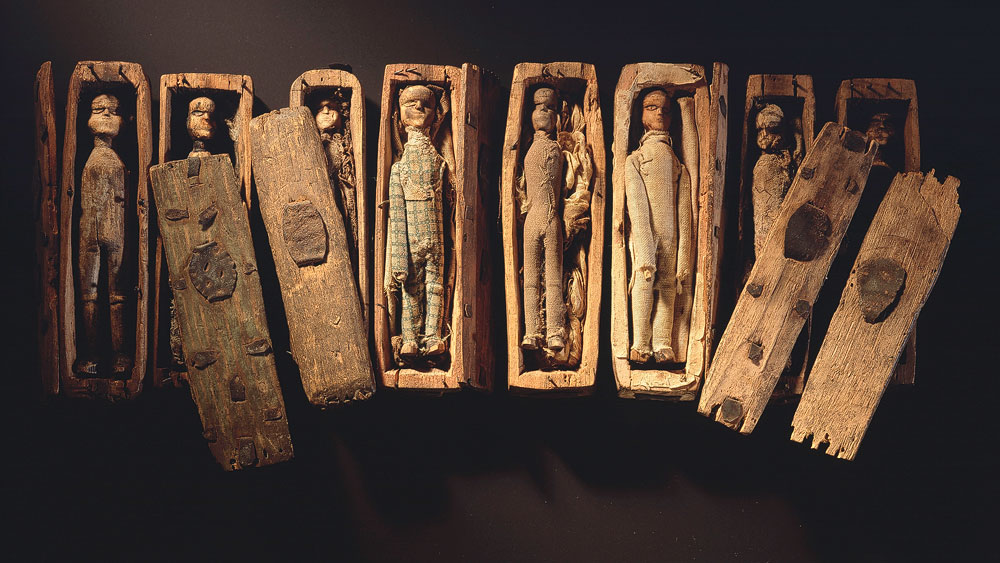
FOLKLORE FLASHBACK #2 - The Fairy Coffins of Edinburgh


Now then, last year I did some investigation into a very curious case. In the early 19th century, a strange discovery was made just outside Edinburgh - a little tomb containing a cache of miniature coffins. Over the years these little caskets and weird occupants have been the source of much speculation, and here's what I could uncover...


Thursday, 4 August 2016

FOLKLORE FLASHBACK #1 - Fairy Finds


Welcome to the first in a new series of occasional blog entries. As some of you may know, for the last few years I've been writing a regular (well, mostly) weekly feature called Folklore on Friday in which we explore various old tales, legends and superstitions. However over the years, several little articles have turned into longer works and have been released in parts over several weeks. So then, I thought it would be a good idea to occasionally put a post together collecting all the links to assorted series together in one place... 

Over  the years several items have been discovered that are said to been the work of the faeries. Of course, few of these objects have offered convincing evidence of the existence of the Little People, but these objects do have some interesting tales to tell nonetheless... 


If you're wondering where Fairy Finds II is, that mini series of articles will be collected together next time...


Friday, 22 July 2016

FOLKLORE ON FRIDAY - The Chime of the Harebells


Over the past few instalments of Folklore on Friday, we have been tracing the folklore of the bluebell, and last time we discovered that it would appear that much of what has been quoted as bluebell lore is in fact folk beliefs centred around another flower, the harebell. Now the Campanula Rotundifolia, to give it its proper Latin name, is often referred to as "the Bluebell of Scotland", however actually grows all over England too. Now just to make matters utterly confusing, the "proper" English bluebell (Hyacinthoides non-scripta) is often called a harebell too, so then it is perhaps unsurprising the legends and lore of these two common woodland flowers have become entangled over the years. 

For example, both have been claimed to be the flower of St. George. But as DC Watts points out in his excellent volume Dictionary of Plant-lore (2007), harebells bloom around August, months after St. George's Day (23rd April), whereas the bluebell begins to flower around the end of April. Mr Watts therefore theorises that it is the bluebell that is properly St. George's flower, but thanks to their names being used interchangeably at many times and in many regions, the tradition has been recorded in harebell lore too. 

And looking into the various traditional and country names the harebell has had over the years, we find clear evidence that its folk traditions have overlapped and intermingled with that of the bluebell. For harebells are also known as witch thimbles, witch's bells, the Devils bell, dead men's bells and the fairies thimbles - names that it shares with, or at least are very similar to, the assorted folk names for the bluebell. And in the light of what we already know, one has to ask which flower actually had the lore originally - for as we have seen in our previous strolls through the bluebells, actually folkloric sources are somewhat thin on the ground. 

However looking into the literature of the harebell, we find an abundance of references and links to much of the folklore that is usually attributed to the bluebell. For example, in Notes on the Folk-lore of the North East of Scotland (1881) by Walter Gregor, we are told -

The bluebell  (Campanula rotundifolia) was regarded with a sort of dread, and commonly left unpulled

While in The Folk-lore of Plants (1889), TF Thiselton-Dyer expands on this -
Among further plants of ill omen may be mentioned the bluebell (Campanula rotundifolia), which in certain parts of Scotland was called "The aul' man's bell," and was regarded with a sort of dread, and commonly left unpulled.
Now the Scottish man name for the harebell mentioned here "aul' man's bell" (meaning old man's bell) is very illuminating. For in Scotland, "the Aul' Man" was a nickname for the Devil himself, and therefore one did not wish to incur the wrath of the Dark Lord by picking his chosen flowers. And while in modern times we do not associate fairies with the Devil, in ages past there was a close connection between Hell and the world of faery. As we have mentioned in the past, the elves and sprites of folklore are dangerous beings, often cruel and malicious, and furthermore there was a belief that the faeries owed Hell an annual tithe of souls. Therefore it was thought that they snatched away travellers and children (sometimes leaving leaving changelings in their place) in order to spare their own kind being sent to the inferno.

Also closely allied to the elven folk were the witches. To begin with, witches in old European folklore were thought to be in league with the Devil, but in many witch trials in the United Kingdom, in particular those in Scotland, we have many testimonies from alleged witches that they not only consorted with evil spirits and attended sabbats with the Devil and his imps, but also had dealings with the faeries; learning spells from them, and even visiting Fairyland. With such an ominous triumvirate of associations occurring in their alternative names, it is no wonder folks were wary of picking harebells.

from The Lost Crown by Jonathan Boakes

And there is a further association with old magic contained within their proper name too. According to the Oxford English Dictionary, the name comes from their tendency to grow where hares were seen, and the hare has had a long association with magic and witches. Without falling down this particular rabbit hole - for hares in folklore is a vast subject in itself - let us just quickly note that witches were often said to be able to turn themselves into hares -
It was into a hare the witch turned herself when she was going forth to perform any of her evil deeds, such as to steal the milk from a neighbour's cow. Against such a hare, when running about a farm-steading, or making her way from the cow-house after accomplishing her deed of taking the cow's milk to herself, a leaden bullet from a gun had no effect.
from  Notes on the Folk-lore of the North East of Scotland (1881) by Walter Gregor

Now harebells coincidentally produce a white milky sap, and consequently were sometimes called milk-ort - meaning "milk herb". And given that they grow where hares were often seen, one can understand why in some places it was said that witches used the sap of the harebell to effect their transformations into hares. I have seen it claimed that that harebells were one of the ingredients in the flying ointments cooked up by witches, however as I have yet to discover a recipe which mentions them, I suspect that this alleged magical use of harebells is a distortion or misunderstanding of the belief they were used in transformations into hares. 

But showing a lighter side to the flower, but retaining the old connection with hares, there is a superstition that they rang to warn rabbits of foxes, a belief referenced by John B Tabb in this poem from his collection Child Verse: Poems Grave and Gay, first published in 1900 - 

HARE-BELLS

Ring! The little Rabbits' eyes,
In the morning clear,
Moisten to the melodies
They alone can hear.

Ring! The little Rabbits' feet,
Shod with racing rhyme,
If the breezes they would beat,
Must be beating time.

Ring! When summer days are o'er,
And the snowfalls come,
Rabbits count the hours no more,
For the bells are dumb.

There are numerous other references to harebells actually ringing too. We find this old belief mentioned in many places, for example in a song from 1911,  An Autumn Song with lyrics by Fred G Bowles and music by Bertram Luard-Selby, we have these  lines -

How soon the Autumn day is done,
The briefer light, the lower sun
Pale hare-bells ringing in the wood,

Somewhat melancholy I'm sure you'll agree, and possibly a faint echo of an older, more sinister belief about harebells ringing. For as we have heard previously, another of their country names was "dead men's bells" referring to the idea that to hear the harebells ringing was an extremely ill omen. And once again when we follow the references to harebells ringing, it is not long before we find the faeries once more. In The Romance of Nature; or, The Flower-Seasons Illustrated published in 1836, Louisa Anne Twamley (later Louisa Anne Meredith after her marriage in 1839) has the following verses in the Autumn section of her book of poems and pictures - 

Have ye ever heard, in the twilight dim,
A low soft strain,
That ye fancied a distant vesper hymn,
Borne o'er the plain
By the Zephyrs that rise on perfumed wing
When the sun's last glances are glimmering?

Have ye heard that music with cadence sweet,
And merry peal,
Ring out like the echoes of fairy-feet
O'er flowers that steal?
And did ye deem that each trembling tone
Was the distant vesper-chime alone?
The source of that whispering strain I'll tell,
For I've listened oft
To the music faint of the Blue Harebell,
In the gloaming soft.
'Tis the gay fairy-folk that peal who ring
At even-time for their banquetting.

And gaily the trembling bells peal out
With gentle tongue,
While elves and fairies career about
'Mid dance and song.
Oh! roses and lilies are fair to see,
But the wild Blue Bell is the flower for me!

Now while the verses are certainly taking a somewhat quaint a view - a very early example of the fairies of folklore being transmuted into the cute versions of modern pop culture, they are clearly linked to the older and darker associations the flower has with supernatural beings. And as this poem hails from the 1830s, it predates much of the earliest studies into folklore, and so we have the harebell providing a historic source for what are often touted as bluebell beliefs. One can also see from the wording used in this poem how the confusion has arisen over the years, with bluebell and harebell being used interchangeably. 

And harebells have continued to have magical associations even in the modern age, with a fine example being found in the poem The Lane by Edward Thomas. In this verse we have an allusions to hearing the supernatural peals of the little flowers, resulting in a moment of mysterious transcendence, being taken out of time for a moment...

THE LANE

Some day, I think, there will be people enough
In Froxfield to pick all the blackberries
Out of the hedges of Green Lane, the straight
Broad lane where now September hides herself
In bracken and blackberry, harebell and dwarf gorse.
Today, where yesterday a hundred sheep
Were nibbling, halcyon bells shake to the sway
Of waters that no vessel ever sailed ...
It is a kind of spring: the chaffinch tries
His song. For heat it is like summer too.
This might be winter’s quiet. While the glint
Of hollies dark in the swollen hedges lasts—
One mile—and those bells ring, little I know
Or heed if time be still the same, until
The lane ends and once more all is the same.


Friday, 15 July 2016

FOLKLORE ON FRIDAY - The Bluebells and the Fairies


Over the last couple of weeks, we have been exploring the legends and lore surrounding the humble bluebell. We first uncovered a wealth of superstitions surrounding this well-loved woodland flower (see here), but then we discovered that there was a suspicious lack of historical sources for all this oft-quoted folklore (see here). However not being one to give up easily, I dug deeper, consulting all manner of books on folklore, old histories, and numerous compendiums of herb and plant lore. But despite all this searching, I only managed to discover only a couple of sources. In the Devonshire Association Transactions Volume 65 from 1933, there was mention that in parts of Devon it was considered unlucky to bring bluebells indoors, however the reasons why weren't made clear.

More illuminating however was the mention of bluebells in The Fairies in Tradition and Literature (1967) by Katherine Briggs -
In Somerset they say you should never venture into a wood to pick bluebells. If you were a child you may never come out again, and if you are a grown-up you will be pixy-led until someone meets you and takes you out. 
And there I think we may have finally hit the jackpot. For Katherine Briggs was a hugely influential folklorist, penning many volumes that are now recognised as classics in the field, and hence many subsequent tomes on folklore have been assembled from old lore collected and recorded by this eminent scholar. And it is my guess that a good many of the standard write-ups of bluebell folklore one finds in modern books and webpages are built on the slim foundations of this reference. Over the years it would seem that Briggs's reference to this piece of Somerset superstition has been  (mis)represented as a common belief, with an isolated local bit of folklore being careless transmuted into a national superstition. However as the book it appears in was only published in the 1960s, and in turning up so many blanks in so many other major reference works, I began to wonder if the roots of all this bluebell folklore was actually lay elsewhere entirely.

Now there was a huge craze for all thing faery in Victorian and Edwardian England, and this ran so deep that our modern view of faeries owes far more to the romanticised whimsy of the Victorians than it does the actual legends concerning elves and the like. And in this period old folk tales were dressed up, indeed often sanitised, and repackaged as literature for children. Now in addition to trimming away all the rough and nasty edges of the old tales, we also had a pantheon of very talented authors and artists creating whole new worlds of imagination. Sometimes they drew on existing stories but more often than not they were inventing entirely new creations. Hence our modern conception of fairies as cute little Tinkerbells faffing about with flowers is very much a product of Victorian and Edwardian art and literature, creatures of what we might term faux-lore rather than authentic folklore. However in the old classics of children's literature from these times, there is sometimes a mixture of both real folklore and modern whimsy; something Katherine Briggs herself went on to note in her fleeting mention of bluebells. She speculates there may have been a similar Northern tradition of bluebell woods being places to become pixy-led, citing an incident a story book by Beatrix Potter.

For in 1929, Potter published a book entitled The Fairy Caravan which tells the tale of a guinea pig called Tuppenny and is set in the countryside around Graythwaite Hall in the Lake District, Cumbria. During his adventures, Tuppenny and his chums are riding in a horse-drawn caravan and attempt to pass through a little wood of oak trees which "was covered in bluebells - as blue as the sea - as blue as a bit of sky come down". However despite the wood being small, it takes the animal pals a good four hours to get through it, as they seem to be just going around in circles, while unseen hands pelt the travellers with little oak apples. And although Potter never had the elvish inhabitants of Pringle Wood make a direct appearance in the text, her illustration accompanying this portion of the tale clearly shows the Little Folk amid the flowers.

Now clearly this incident in The Fairy Caravan recalls the bluebell lore mentioned by Briggs. However this is never explicitly stated in the text, and hence I'm not sure we cannot draw any firm connections here. Many varieties of faeries were said to enjoy confusing travellers in this way, and to visit certain places where they were said to dwell was to risk becoming pixy-led. And so, without specific references, Potter could well be drawing on Cumbrian faery lore attached to oak trees, or woodlands in general, rather than bluebell superstitions - for example there are similar (although admittedly more sinister) shenanigans when entering fairy-haunted woods in Algernon Blackwood's Ancient Light (which you can hear here), but there are no bluebells flowering there.

On the other hand, given the popularity of Beatrix Potter, that evocative picture of the blue pixies in the woodland flowers may well have made a connection with these flowers and fairies in the popular imagination. However once again, there is a twist in the tale, for while this story was first published in 1929, the book wasn't released in the United Kingdom until the 1950s. So then, much like the Briggs volume, we have another rather relatively recent reference... Was there anything a bit older?

And so I delved a little deeper, with my next port of call being the Flower Fairy books - a hugely popular series of seven books written and illustrated by Cicely Mary Barker. The first book was published in 1923, establishing the format of a full page picture of a particular fairy and the flower it inhabits alongside a short verse telling of its character and nature. Over the years six more books would follow, along with a posthumous volume and numerous anthologies collecting the volumes together in whole or in part. And I think it's fair to say that when people generally think of fairies these days, they are picturing little floral folks like Barker's creations.  

Now the actual verse for the fairy of the Bluebell (which you can see here), appears in the first volume Flower Fairies of the Spring (Blackie 1923). Unfortunately for our purposes, it isn't terribly enlightening, however it does come with an interesting note that reads "This is the Wild Hyacinth. The Bluebell of Scotland is the Harebell". Now Ms. Barker would cover the Harebell in her second book, Flower Fairies of Summer (1925), and here I think we have the key to our puzzle, for the verse reads thus -


The Song of the Harebell Fairy

O bells, on stems so thin and fine!
No human ear
Your sound can hear,
O lightly chiming bells of mine!

When dim and dewy twilight falls,
Then comes the time
When harebells chime
For fairy feasts and fairy balls.

They tinkle while the fairies play,
With dance and song,
The whole night long,
Till daybreak wakens, cold and grey,
And elfin music fades away.

Now we did we not read in the first part of this series how it was said that bluebells tolled for faery gatherings? And while 'harebell' is an alternative name for the English Bluebell (the Hyacinthoides non-scripta), but there is another flower that bears this name, the Campanula rotundifolia. Now this flower has similar delicate bell-shaped blooms, but is of an entirely different species. And despite its title "the bluebell of Scotland", harebells are actually common throughout England. They tend to flower later in the year, around August and hence they are sometimes also known as harvest bells. And following this lead, we find the following entry in The Perpetual Almanac of Folklore by Charles Kightley (Thames and Hudson 1987) - a compendium of lore compiled from various sources, some dating back to Tudor times - 
Harvest Bells are better known as "Harebells", "the Bluebells of Scotland". This is the flower of the magical hare, called Fairy Caps and Fairy Ringers, has supernatural protectors, so it is very unlucky to pick it.
Again we are seeing a large overlap with the bluebell lore here, and I rather suspect that there has been a good deal of confusion over the years, with most of what is commonly reported as bluebell folklore actually being the lore of the harebell. Certainly it may explain why proper historical sources for bluebell lore are so thin on the ground: the actual lore is hiding under the harebells. And we shall be following this lead through the harebells next time! 


Sunday, 10 July 2016

FROM THE GREAT LIBRARY OF DREAMS 21 - A Walk in the Blackwoods


This week Mr Jim Moon delves into the works of one of the all-time great writers of weird tales Mr Algernon Blackwood. As an introduction to this classic author, we sample two of his shorter tales - we stay for the weekend in a very curious room in The Goblin's Collection, and then take an ill-advised stroll in the woods in Ancient Lights...


DIRECT DOWNLOAD - A Walk in the Blackwoods

Find all the podcasts in the HYPNOGORIA family here -

HYPNOGORIA HOME DOMAIN - Full archive, RSS feed and other useful links

HYPNOGORIA on iTunes

HYPNOGORIA on STITCHER

CLICK HERE FOR DETAILS

Friday, 10 June 2016

FOLKLORE ON FRIDAY - The Ringing of the Bluebells


Well it appears that often seemingly mythical beast, the British Summer is finally here! The temperature is up, the sun is shining, and it's the perfect time to pop out for a pleasant stroll in the countryside. Now one of the great attractions of the British countryside at this time of the year is to take a walk in some bluebell woods. And this seemingly mundane activity has been something of an unofficial annual ritual for a lot of folks for many generations. Such is the popularity of going to see such swathes of blue, that not so long ago special trains would be laid on to carry visitors to the woodlands, or meander passed vistas showcasing the vistas clad in blue. For example, a service of "bluebell trains" once used to run through the Chiltern Hills through the blooming woodlands, and this natural floral display helped earn the designation of "An Area of Outstanding Natural Beauty". While in East Sussex, one particular stretch of tracks is still known as the Bluebell Railway.  Many nature parks and stately homes still make a point of advertising when their woodland will be carpeted with a stunning sea of gently nodding little blue flowers, and the National Trust even has a page telling you where the nearest bluebell wood is to you.

It is thought that the humble bluebell - that the Hyacinthoides non-scripta taxonomy fans - first appeared in Britain not long after the last Ice Age, and indeed the presence of a carpet of bluebells is often a signifier that a forest is a surviving tract of ancient woodland. However the little nodding flowers have not only been admired for their beauty but have also long been revered for their useful properties. In the Bronze age, our ancestors attached flights of feathers to their arrows with a glue made from bluebells, while the Tudors used a starch extracted from crushed bluebell roots to stiffen their iconic ruff collars. And for several centuries bookbinders have used bluebell derived adhesives to make and repair tomes. 

In the modern era we have discovered that bluebells contain at least 15 biological active compounds that the plant utilises to repel insect and animal pests. And it would seem our forebears knew something of this, for general folklore has long asserted that bluebells are poisonous to eat, and one of the uses of bluebells recommended by herbalists, was treating spider bites. However folklore ascribes to them other more esoteric properties, such as being a good remedy for leprosy, and as a treatment for tuberculosis. However there is also a good deal of magic associated with the little flowers too, as demonstrated by the various folk names the flowers have garnered over the centuries such as witches thimbles and fairy flowers. 

Firstly, as they begin to bloom towards the end of April, they have been long associated with St. George as that saint's day falls on the 23rd of that month, while in the language of flowers created by the Victorians, bluebells symbolise constancy, humility and everlasting love. And these associations may well be derived from older folklore charms, for two well-known pieces of bluebell lore reflect these properties: it was said that if you wore a wreath of bluebells you would compel a person to tell the truth. And if you turn a bluebell flower inside out, you will win the heart of your true love.

More generally, bluebells were considered useful flowers in other ways too. For example, the Encyclopedia of Folkore and the Occult Sciences Vol 2 by Cora Linn Daniels and C. M. Stevans, published in 1852, tells us -   
If you see a bluebell, pick it and repeat the following words: "Bluebell, bluebell, bring me some luck before to-morrow night;" slip it into your shoe and you will get good luck
Folklore also seemingly draws on their repellent qualities as well, for it was said that bluebells may be used to prevent nightmares, Simply place some in or under your pillow, or just hang them near the bed and bad dreams will be kept at bay. Possibly this particular belief might be related to their long usage as an adhesive, but it is possible it may be derived from an older common strand of bluebell lore. For in many places, the little flowers have a strong association with the faeries, and as such it was dangerous to be messing about in bluebells woods. 

It has been said that faeries hang their spells on bluebells to dry and hence disturbing the bluebells may unleash wild magic upon you, or just bring down the wrath of the faeries. Less whimsically, it was thought that walking in bluebells may lead you to become 'pixy-led' - that is to say, dazed by enchantment and unable to find your way out of the woods. And darker still in some corners of the country,  it was said that a child who picks a bluebell will be snatched away by the faery folk, never to be seen again. Unsurprisingly many folks held it was foolish to pick bluebells or bring them into the house.

However folklore is often very contradictory, and hence in some areas it was said that planting bluebells in your garden was a useful thing to do. Not only would it curry favour with the hidden faerie powers, but it was said that the bluebells would ring if unwelcome visitors approached your door. However once again these whimsical bits of bluebell lore appear to have older, darker roots. For more commonly, it was held that the faeries would ring the bluebells to call their kin to gatherings and meetings. And it was very bad luck to hear a bluebell ring, and in many instances it is said that to hear the chime of the bluebells was an omen of your own death, hence in some places these lovely little flowers gained the sinister name 'dead men's bells'... 


Sunday, 31 January 2016

MICROGORIA 24 - Tales of the Changelings


Following on from our Labyrinth episode, Mr Jim Moon delves into the legend and lore of the changelings, monstrous impostors left by the faeries!


DIRECT DOWNLOAD -  MICROGORIA 24 - Tales of the Changelings

Find all the podcasts in the HYPNOBOBS family here -

HYPNOBOBS HOME DOMAIN - Full archive, RSS feed and other useful links

HYPNOBOBS on iTunes

HYPNOBOBS on STITCHER

CLICK HERE FOR DETAILS

Friday, 20 November 2015

FOLKLORE ON FRIDAY - Changelings

The Changeling by Henry Fuseli

Across the world, one of the most common beliefs is that we share this world with other races. Many cultures tells of these others, and the tales about them are strikingly similar. They are closely tied to the natural world and are mostly invisible to us. They are somewhat capricious, sometimes kinds other times malevolent, and they appear to hail from some kind of parallel plane, another world that is connected to ours through certain portals; often certain hills, caves, and forests, and sometimes even individual trees and stones. We are of course talking about the faery folk, and many different types of these supernatural beings are said to predatory; alleged to kill and even devour us mortal folk. However a more general trait that seems to be a popular pastime for many species of faery across the world, even the ones usually less inclined to grind our bones to make their bread,  is their love of spiriting people away to their own world. 

However while there are many tales of trips to fairyland, elfhame and other places the strangers inhabit, more troubling are the legends of the changelings. From the icy Scandinavia to sun-baked Africa, there are sinister stories of children not just being abducted, but switched with strange impostors. Parents would find their baby child had been replaced by odd beings who were almost but not quite human. Often changelings are described as being ugly and wizened, while others appeared normal but demonstrated weird abilities such as being able to stretch their limbs at will. However strange appearances aside it was their behaviour that marked them out - changelings were said to be either extremely badly behaved - constantly crying and prone to violence, or at the other end of the spectrum strangely docile, often mute and seemingly unable to comprehend anything about the human world they had been left in. Another common characteristic to changelings was an insatiable hunger - a changeling could eat a family out of house and home, a troubling prospect as some changelings were believed to never grow up, constantly needing care and food, while others were said to be extremely long lived, possibly even immortal, being a burden on whole generations of families.

There were several theories about why changelings were left. In the case of changelings that were said to be wizened and sickly, it was said that these creatures were actually ancient, elderly faeries, left by their compatriots to enjoy the love and comforts of a human family in their dotage. Other changelings were so infirm that they soon sickened or died, leading to folk beliefs that the impostor had been nothing more than a magical fake, such as piece of rotting wood crudely enchanted to mimic a human child. And why did the faeries steal children? Well, some traditions held that the faery folk were an old, dying race who sought new blood to strengthen their numbers. However other traditions had darker ideas - the human children were to be used as servants and slaves in their other world. Worse still, some traditions held that the faeries owed a tithe of souls to Hell, and hence they stole human children to pay the debt to the Pit. On a similar note, some folk beliefs held that changelings were mere sent to vex mankind, and in tales of particularly violent or troublesome changelings, they were said to have been left by witches or the Devil himself to increase the sum of human misery.

The Changeling by Arthur Rackham

Now, like many folk traditions, there is more than a grain of truth in these old tales, and a reason that stories of changelings are so prevalent in so many cultures across the globe. The sad fact is that changelings did indeed exist, however they were not faery cuckoos, but rather children with disabilities and diseases. One does not have to read too deeply between the lines to realise that these elf children were in fact nothing more but human babes suffering with a variety of debilitating conditions. While many illnesses and diseases could be recognized in the pre-modern era, other conditions such as gradual degenerative ailments or being born with mental conditions such as autism or schizophrenia were poorly understood. It is a natural reaction for people to seek explanations and answers, and hence in cases where what had been a seemingly healthy baby was suddenly sickly, behaving strangely, or developing in what seemed a weird fashion, supernatural forces were the only explanation available. It is very telling that beliefs in changelings begin to wane when better medical knowledge becomes available.

From the wide range of preventative rituals and charms in folklore, it was clear that finding oneself the parent of a changeling was a real and widespread fear in ages past. Various methods existed that would protect the child from being snatched by the faeries, and hanging some kind of protective charm over the crib was perhaps the common. In some regions, this would be a plant or herb with magical properties - such mistletoe or a sprig of rowan. The faeries were widely believed to have an aversion to iron, and this was also utilized, by hanging a pair of scissors or a horseshoe over the cradle. However should such measures have failed there were several possible course of action to get your child back.

Now there were many regional cures, often involving some local place, such as bathing the child in the nearby holy wells, visiting a shrine or taking it to standing stones. But there are three main ways of dealing with a changeling that occur time and time again in many different countries and cultures. The first is basically to abuse the child, often beating it with sticks, with the idea being that the changeling's real parent - the faeries or the Devil - would promptly appear and give back your own child to prevent further cruelty to their own. In a similar fashion, placing the changeling either in a fire or a hot oven would cause the malign being to take its leave, often said to fly off up the chimney, and your own offspring would be returned. Sadly however these two methods rarely resulted in happy endings, and indeed in the 18th and 19th centuries we begin to find parents and guardians appearing in court on charges of cruelty, neglect, and murder of their own children who they believed to be changelings.

However thankfully there was a third method of dealing with a changeling which while probably ineffective in the real world, at least did not involve cruelty to the suspect child. And what's more, it is somewhat amusing - indeed it is the basis for many of the more entertain changeling folk tales. This third method was based around the premise of tricking the changeling into revealing its true nature, and once its cover were blown, the faeries had to return the real child. And weirdly enough there was an exact way to do this which is recounted in many different countries. Basically in full view of the changeling child one had to cook using eggs - but these was not merely whipping up a quick omelette, rather you had to brewing beer or make stew using the egg shells as tiny containers. This culinary performance was said to be sufficiently surreal and bizarre to make the changeling reveal its true nature,with old folk tales holding that the creature would suddenly sit up, exclaim that it had never seen anything like it in its long and strange life - often the exclamation followed this pattern as related by the Brothers Grimm -
Now I am as old 

As the Wester Wood, 
But have never seen anyone cooking in shells!
from Children's and Household Tales (1812)

And then, having revealed itself as an impostor the changeling would vanish - or again fly off up the chimney - and the stolen child would be magically returned. Quite why this egg based method is so widespread is something of a mystery. Possibly there is a forgotten symbolic significance to eggs in this context - and certainly they seem appropriate given that one can draw parallels between the concept of changelings and the behaviour of birds like the cuckoo which leaves its eggs in other birds' nest to raise as their own. However I would like to think that if this performance art cookery was actually ever carried out to cure a changeling in the real world, then perhaps the oddness of the act caused the troubled child to smile or laugh, providing a valuable point of connection between parent and child, and making them realise that while their offspring may be different they were in fact human after all.

Titania's Changeling by John Anster Fitzgerald

Sunday, 18 October 2015

MICROGORIA 20 - The Mystery of the Will-o-the-Wisp


With Halloween just around the corner, Mr Jim Moon explores the secret history of the jack-o-lantern, investigating their folkloric forebears, the will-o-the-wisps, those mysterious lights that lead travelers astray. What are they? Faeries? Ghosts? Or something else?


DIRECT DOWNLOAD -  The Mystery of the Will-o-the-Wisp

Find all the podcasts in the HYPNOGORIA family here -

HYPNOGORIA HOME DOMAIN - Full archive, RSS feed and other useful links

HYPNOGORIA on iTunes

HYPNOGORIA on STITCHER

CLICK HERE FOR DETAILS

Friday, 3 July 2015

FOLKLORE ON FRIDAY - The Curse of the Tiddy Mun


Lincolnshire is a large rural county in the east of England, and while it's landscape may be extremely flat and lacking in scenic features such as towering crags or rolling hills, its folklore is as rich and diverse as any other part of the British Isles. Today it is an area boasting huge fields and farmlands, but things weren't always this way. Many of its fields are recent additions to the landscape, land from the waters by dykes and drainage; and once it was a very different place, a land of  mists and streams, of  mires and marshes. Folklore is often intimately connected with the local geography, and naturally Lincolnshire's transformation from fens and wetlands to large flat farmlands is reflected in the local legends. 

Just like other areas of this green and sometime pleasant land, Lincolnshire has its own local species of faeries and associated lore. Old tales from the fens speak of a peculiar breed of pixie-like folk known variously as the Greencoaties, the Yarthin or the Strangers, but most commonly called the Tiddy People. Their name is thought to come from an old local dialect in which 'tiddy means simply 'small'. However it has also been suggested that 'tiddy' actually derives from an Old English word 'tydd' meaning 'tide', for as we shall see they had a close association with the fens and the water levels. Folklorist EH Rudkin in a 1955 article reports them as being described thus - 
They be tiddy critturs, no more than a span high, wi' arms an' legs as thin as thread, but great big feet an' hands, an' heads rollin' aboot on their shoulders
from Folklore of Lincolnshire: Especially the Low-Lying Areas of Lindsey

 Like most faeries the Tiddy People were strictly speaking neither good nor evil, and demonstrated the usual capriciousness of elvenkind; sometimes kind, sometimes mischievous, occasionally cruel. It was said they helps crops grow, pinched open the buds in spring and it was a great honour if they came into your home and warmed themselves by your fire. Rudkin records that large flat stones in the county were often called 'stranger stones' as it was believed that the little folk danced upon them. Furthermore, in keeping with general faerie lore, folks would leave offerings on these stones, traditionally the first fruits of a harvest, to keep in the good offices of the Tiddy people.

Related but separate from these local pixies were tales of the Tiddy Mun. Said to be about two or three feet high, this being appeared as a little old man with white hair and a long beard, who dressed in grey (which made it hard to see him), and whose laughter sounded like the cry of local birds such as the peewit or lapwing. According to some, the Tiddy Mun was the king of the Tiddy People, but more generally he was acknowledged to be the guardian of the fens and wetlands, with mighty powers over their waters and wildlife. 

For example when the waters rose too high and began to creep into the houses of the folks who lived in the fens and carrs (as such wetlands used to be called), the people would go out chanting - 
Tiddy Mun wi'out a name
Tha watter's thruff
Which means "Tiddy Man without a name, the water's through!". And when they heard what sounded like the cry of a peewit, they would know the Tiddy Mun had heard their plea and the waters would begin to subside. Like many such spirits, there was a dark side to the Tiddy Mun; it was said that missing or drowned folks had been taken by the Tiddy Mun. And when appealing for his mercy, it was claimed that the wails of those he had taken could be heard.

Drainage Mills in the_Fens, Croyland, Lincolnshire by John Sell Cotman

However relations between the mortal folks and the mysterious Tiddy Mun turned very sour when in the reign of King Charles I work began to drain the fens. The king called upon Dutch engineers, who knew a thing or two about reclaiming land from the waters, to supervise transforming the carrs and wetlands in rich, flat farm fields. The locals weren't keen on "the dutchies" coming and invading their lands, but neither was the Tiddy Mun, who grew angry that his marshes and fens were being emptied and dried up. Several Dutch engineers mysteriously vanished, and folks said that the Tiddy Mun had spirited them away in revenge. 

However the drainage work continued, and the Tiddy Mun became furious and laid a curse down upon the land. Ponies became lame, cattle sickened, lambs died, pigs starved and milk curdled. Walls began to crack and houses tumble down, and worst of all, disease fell upon the people, with ague and malaria striking down many. most commonly the children. The locals recognized that all this was the wrath of the Tiddy Mun, and so began to make offerings of fresh water to him. Seemingly this did the trick, things began to settle down, and the truce was maintained with offering being made every new moon, when folks would go to the dykes and pour in water chanting - 
Tiddy Mun, wi'out a name,
 Here's watter for thee,
Tak tha spell undone!
And while the locals continued this tradition for a good while, it was generally thought that the Tiddy Mun vanished with the fens, never to be seen or heard again. 

Now at first this appears to be a fairly standard story of appeasing local spirits as the local landscape is altered. And one does not have to be terribly cynical to think that maybe it was aggrieved local lads who were really responsible for the disappearances of the unfortunate Dutch engineers, and the curse of the Tiddy Mun no more than an exaggerations of the disruption and upheavals involved in the drainage work. 

However folklorists, particularly Darwin Horn in his article Tiddy Mun's Curse and the Ecological Consequences of Land Reclamation published in the journal Folklore in 1987, have suggested that there may well be more fact in the old legend than is immediately recognized. In fact, much of the curse does relate to the likely consequences of radically altering the local geography. The livestock that had grazed on wetlands plants were now getting fed on the oats, rape and wheat which were being grown on the new fields, and the sudden change in diet could well have led to sickness. Likewise draining the land could have widespread geological consequences - the lowering of the water table would cause subsidence leading to the cracked walls and damage to the little houses of the fen folks. Similarly horses and ponies that had grown up on the soft and wet fields of the fens and carrs would indeed suffer lameness from walking on the new dry and hardened earth - and tellingly larger breeds of draft horses soon replaced the ponies on the newly created fields. 

Even the disease of the curse may be traced to the ecological changes from the drainage. Medical records from the time do actually note that there was a sudden rise in ague and swamp fever, which doctors of the time attributed to the great amounts of decaying vegetative matter that had been dredged out of the fens, being left to dry in the sun, and releasing larger amounts of toxic humours into the air. However, a more likely explanation is that the change in habitat saw an increase in the populations of mosquitoes and flies, which carried diseases such as ague, malaria and swamp fever. Of course, children were much more susceptible to illness, and at the time of the draining of the fens, child mortality was still very high even in the best of times. 

In fact, nearly all the elements of the Tiddy Mun's curse can be seen as result of the large scale ecological changes wrought by the draining of the fens. In fact it is only the reported curdling of the milk that we cannot link to the consequences of the drainage operations. However ruining your dairy products is something of a traditional piece of faery mischief, and so it is no surprise that it was appended to the other effects of the curse.

So then, much like the legends of other water dwellers like Jenny Greenteeth, the curse of the Tiddy Mun reflects something very real - recording in stories the impact a huge change in the local landscape had upon the people who lived there. It's very telling too that the Tiddy Mun vanished, not only as his habitat disappeared, but also as the old fenland way of life was replaced with a new agricultural system. The old Tiddy Mun, who may have began life as a local spook or faery, with these radical changes to the Lincolnshire countryside, certainly grew into what it was always said he was, the embodiment of the very spirit of the landscape.

Roman Canal, Lincolnshire by   Peter De Wint