Showing posts with label werewolves. Show all posts

Sunday, 23 February 2025

HYPNOGORIA 279 - The Return of the Wolf Man


We take a look at the latest incarnation of the Universal werewolf in Wolf Man (2025) written and directed by Leigh Whannell!  

Previous chapters in this series can be found here  - The Wolf at the Door: a Werewolf History 


DIRECT DOWNLOAD HYPNOGORIA 279 - The Return of the Wolf Man


Find more writing and  podcasts on the weird and wonderful here -


Sunday, 22 August 2021

HYPNOGORIA 188 - The History of Universal Horror Part XIII


In this chapter we look at one of the most seminal horror movies ever made - The Wolf Man (1941). Starring Lon Chaney Jnr., Evelyn Ankers, Claude Rains, Bela Lugosi, and Maria Ouspenskaya, this is the movie that redefined werewolves for ever!

DIRECT DOWNLOAD -  The History of Universal Horror Part XIII


Find all the podcasts in the HYPNOGORIA family here -

HYPNOGORIA HOME DOMAIN - Full archive, RSS feed and other useful links


HYPNOGORIA on TUNE IN

HYPNOGORIA ON GOOGLE PLAY PODCASTS


Friday, 13 February 2015

FOLKLORE ON FRIDAY - Valentine's Lore


Well it's that time of year when the shops are filled with hearts and flowers, love is in the air, and there is much rejoicing among card manufacturers! And thus it ever was, all the way back to Roman times, or at least so the received wisdom would have you believe. However as ever in the shifting world of folklore, things are not always what they seem. Now according to a slew of articles and puff pieces that surface every February, St. Valentine's Day is a Christianization of an ancient festival held back in the days of Classical paganism.

In Graeco-Roman times, according to some, young folks had marriages set up by drawing lots: names were placed in an urn and picked out at random, pairing up the lads and lasses. And according to others, as well as this romantic lottery, this was part of a wild festival celebrating werewolves. Now as appealing as both these sound, sadly both of these claims are what we historians call - confusing technical terms alert! - "poppycock", "claptrap" and "flapdoddle". For both these claims are at best wildly inaccurate and their connection to the origins of Valentine's day suspect at best.

Now there was a Roman festival, held from the 13th to the 15th of February, called Lupercalia. However it must be noted that this was very much a local custom, a festival held pretty much exclusively in Rome as there are only scant references to Lupercalia being held anywhere else. Therefore it wasn't a custom that spread throughout the Roman Empire, so it couldn't possibly be the seeding a proto-Valentine's day across Europe.

Lupercalia's purpose was thought to be to cleanse the city of evil spirits and usher in the spring, however there is a good deal of mystery about it. Often it is said that its name was from derived from a Lycaean god Lupercus, a god originally worshipped by shepherds and identified with the better known Roman deity Faunus and the Greek Pan. However as this was a set of customs peculiar to the city of Rome, it has also been claimed that it was a celebration of Lupa, the she-wolf who according to legend suckled that ancient city's  founders, Romulus and Remus. Furthermore many other gods have been referenced as part of the celebrations such as Juno, queen of the Roman gods, and the afore-mentioned Pan and Faunus. Also often invoked in Lupercalia was Februus, a god of purification from whom we get the name February.


Indeed it is thought that Lupercalia grew out of imported Greek practices fusing with different aspects of local cult worship around the core of an earlier festival honouring Februus, called Februa. Hence these celebrations held on the Ides of February were not dedicated to the worship of any one god or spring solely from one religious tradition but were actually a folk amalgam of many different rites. Interestingly this festival was so old that even Classical writers of the time were not sure of its history - much like our own folk festivals that survive today, its origins and exact meaning had long been forgotten by the Romans although the practice still continued.

The main event of Lupercalia was the sacrifice of two goats and a dog. Young men of the city were annointed with the blood of the animal, and then led by the priests and dressed in goatskins and/or going naked, ran round the walls of the old city, presumably to scare off the afore-mentioned evil spirits. They carried freshly cut strips of hide from the sacrifices and playfully whipping the ground and the spectators with the newly cut thongs to purify them. It was considered good fortune to be whipped, and for ladies it would ensure fertility and easier births, for it was a common belief in the ancient world that if one was purified, one would be healthy, happy, fortunate and fertile. 

However by 1 AD the festival was largely a somewhat rowdy drunken affair, with Lupercalia appearing to have more in common with the kind of beery, bawdy mischief that football teams get up to than a serious religious festival. Indeed for this reason, it was outlawed at the end of the 5th century as it was felt the festival was something of a public disgrace. So then, while undoubtedly there was a link to fertility and the spring in the festival, Lupercalia had little or nothing to do with Roman marriage customs, and in its later centuries appears to have been about as romantic as a fraternity kegger. More damningly however, no Classical source mentions any custom of drawing of lots for romance or marriage or just for fun. Furthermore there are no archaeological discoveries of artifacts used in such practices, and no frescos, statuary or artworks depicting the custom either. So while it is a quaint story, without any historical evidence that is all it is.

Now then as for the werewolf festival claims, I'm afraid that as fun as this sounds, this too is without historical basis. Or rather its alleged historical basis is actually the result of sloppy research. This lycanthropic origin for Valentine's Day appears to have surfaced only relatively recently in the last few years but has taken root on the internet. So now it gets gets bandied about every February, with all sundry being too busy making "Happy Horny Werewolf Day!" cracks to bother to check any sources.

The first alleged link is a misunderstanding of the nature of the god Lupercus. While his name is linked with wolves, he wasn't a lupine god at all. He was portrayed as a satyr i.e. a figure half man, half goat, hence his identification withe the Greek Geek and the Roman Faunus.  Now you can go a long way in history and folklore by analyzing the etymology of words and names, however simply equating two words or names as the same as they sound similar is doing a half a job at best. So simply equating "Lupercus" with the word for wolf "lupus" does not suddenly make him a wolf god or werewolf deity without a shred of any other supporting evidence. The consensus among historians is that his name actually means "he who protects from wolves" - which makes more sense for a pastoral goat god originally worshipped by shepherds.

Lupercus/Faunus - clearly not a werewolf

Similarly some writers peddling the werewolf festival line have pointed out that Lupercus was identified with Pan, who was sometimes referred to as Pan Lycaeus. Now "lycaeus" is derived from the Greek word for wolf and hence these unwise fellows have assumed that this meant that Pan, another goat god, had a wolf form In fact several Greek gods sported the tag 'Lycaeus' such as Zeus and Apollo, but it actually refers to Mount Lykaion. While its name in Greek means literally 'wolf mountain', this location in Greece is very important in Classical myth, and hence these gods all had their own mythological links to it and shrines to them built on it. Therefore "Lycaeus" is usually interpreted as a geographical honorific, with a secondary school of thought taking the alternative view that it means "Protector against wolves". Either way, Classical scholars are very sure it does not denote a wolf form of these gods, and certainly is not a sign of divine werewolvry! Other dubious claims of wolvish links are made with the detail of a sacrifice of a dog, alleging it was a substitute for a wolf. However according to Classical scholarship, dogs were a standard animal to sacrifice in many Roman rites, and if there was any symbolic significance for the choice of sacrifices in the festival of Lupercalia, it is thought that the sacrifice of two goats and a dog are thought to represent a flock and its protector.

The final misunderstanding and the one central to the werewolf festival flapdoodle, is the erroneous idea that the dressing in the skins of the sacrifices was some specious ritual transformation into wolves. Now this would be a reasonable assumption... if they were wolf pelts, in a wolf ritual, to honour a wolf god. But as it was goatskins donned, it was clearly to emulate the satyr gods of Lupercus, Faunus and Pan. Furthermore in a festival linked to shepherding and farming, the idea of celebrating wolves, never mind werewolves, is nonsensical at best. Again there is no mention of wolves, let alone werewolves in contemporary Classical sources, and the iconography for the festival found in surviving Roman statuary and the like, clearly shows a strong ovine theme, with rams and ewe heads and not a wolf insight. All of which rather definitively slays the werewolf festival myth.
Roman representation of Lupercali from of the end of the reign of Trajan

So then having debunked these two modern myths, where did these oft repeated Graeco-Roman origin claims come from? Well, they actually appear relatively late in the day, in an 18th century work Lifes of the Principal Saints. The author Alban Butler writes -
To abolish the heathen, lewd, superstitious custom of boys drawing the names of girls, in honour of their goddess Februata Juno, on the 15th of February, several zealous Pastors substituted the names of Saints in billets given on that day. 
Now while Februata Juno is thought to be a confused reference to Lupercalia and the earlier festival of Febra, as we have established, there is no mention in Classical sources of this custom of drawing lots. However being a respected source, Butler's claims have been repeated without question for many years and it is only relatively recently that scholars began to question his claims. Now as we have established there is not historical evidence for this alleged Roman custom, but as generations of historians, scholars and folklorists accepted Butler's account  thus the modern erroneous myth of a Graeco-Roman origin for Valentine's Day was born. 

However it is some truth in what Butler says. And that is that as far back as the 15th century, romantic matches were being made by lottery in mid February in Europe. Given the prominence of Classical origins in many of our old customs, Butler perhaps can be forgiven for attributing Roman roots to what was a common medieval custom.


From sources that document this tradition, it would appear that this wasn't necessarily a serious practice - back in those times marriages were carefully arranged affairs to consolidate land, titles and power. Rather it seems to have been a playful game popular in the courts of kings and nobles. It was so popular and widespread that later the custom spread down through society and down through the ages, to the extent it was still being played in 19th century - with Scottish poet Robert Burns mentioning choosing a valentine by drawing lots in the song Tam Glen. Indeed rather than betrothal by lottery, it appears to have been more cross between a party game and a sort of loose form of divination. 

But having debunked the Roman origins, where does this curious custom of romance by chance come from, and why the association between romance and mid February? Well it would appear we can blame Chaucer for this. Actually that is possibly a little unfair - rather it is in a poem by Geoffrey Chaucer that we have the first recorded instance of an odd medieval belief that was to set this romantic ball rolling. In Parlement of Foules, thought to have been penned around 1382Chaucer writes -

For this was on seynt Volantynys day
Whan euery bryd comyth there to chese his make.

And for those of you who don't speak Middle English that means -

For this was on St. Valentine's Day, 
When every bird cometh there to choose his mate.
 
Yes, in medieval lore there was said to be an exact day when our feathered friends paired up for the year, a date for the annual marriage of the birds. And this is the seed of both the drawing of lots custom, and later of Valentine's Day itself.

Now some scholars have questioned whether Chaucer's "seynt Volantynys day" actually refers to February 14th. They claim that later an astronomical process called the precession of the equinoxes would have changing the date of the start of spring, and therefore when Chaucer was writing it would be too early in the year for birds to be mating. So then, it has been suggested that perhaps he was referring to the later celebration of another Valentine, the feast of Valentine of Genoa which falls on May 3rd in the liturgical calendar.


However the idea he might not have been referencing February 14th is based on the underlying assumption that Chaucer is referring to an actual belief concerning the nature of birds. But examining scholarly interpretations of the poem, this marriage of the birds is often considered to be a poetic invention for his narrative. Partly this is due to there being no other written precedent for this belief, it is only every mentioned in other poems by John Gower, Otton de Grandson and Pardo of Valencia. And difficulties in dating all these worthy gentlemen's verses make it impossible to say whether they were written before or after Chaucer put quill to vellum. Either way it would appear to be a poetic conceit rather than authentic folklore, for the mythic tone and themes of Parlement of Foulesrather suggest it is a legend invented specially for the narrative of the verse.

But if we are to entertain the possibility that  Chaucer was documenting actual contemporary lore, which have have lost other sources for, it would still be most unwise to assume that folks of his time believed in an actual marriage of birds occurring on a set day. Firstly bear in mind that the people of Chaucer's day lived in an agrarian society and were far more aware of the habits and life cycles of local wildlife than us modern townies, and hence they were very unlikely to believe such a whimsical idea. Furthermore medieval people, very much at the mercy of the whims of the British climate, would know very well that despite the vernal equinox marking the start of spring in astronomical and calendar terms, in reality spring coming was a variable event, dependent on the local weather. Some years it would come early and birds indeed may start nesting in February, but in other years February might be lost in swathes of snow, still in the depths of winter. Therefore there could have been no real expectation that spring would actually have to start on any arbitrary date. 

A modern analogy would be having a white Christmas - that is what is depicted in our seasonal imagery, and what we hope for, but we know that it is not guaranteed, or timetabled to snow at the end of December. The medieval world view was one that was rich in symbol, allegory and metaphor, and hence if February 14th was popularly held to be the date of the marriage of the birds, it would be understood as a symbolic event marking the coming of spring, and not as biology or natural history. Therefore we can safe assume that Chaucer meant the usual date, and as further evidence will confirm.  

Geoffrey Chaucer - it's all his fault 

But no matter where it originates, whether as poetic fancy or a genuine lost piece of medieval lore, the link between St.Valentine's Day and romantic love had been made. And thanks to its appearances in poetry, the idea soon gained popularity. This was after all the age when 'courtly love' was all the rage, and poets like Chaucer were its standard bearers in literature. Therefore it is perhaps unsurprising that Valentine's Day was to become the focus for romantic activities. Now as to which St. Valentine's Day Chaucer is referring, confirmation that it was the usual date comes around two decades later. For King Charles V of France held an event named 'The Court of Love' on the 14th of February in the year 1400, which featured feasting, jousting and competitions in writing amorous verse. This is widely accepted to be the very first St. Valentine's Day party. 


Further into the 15th century, we have the earliest valentine love poems appearing, and into the sixteenth century we have Chaucer's bird tradition and the love customs now fused together, with poets Michael Drayton and Robert Herrick referring to the avian lore in their love poems To His Valentine and To His Valentine On St. Valentine's Day. And so Valentine's Day has been a tradition since the 15th century, and rather than emerging from a Christian whitewash of surviving Graeco-Roman pagan activities as Butler suggested, it would seem that our Valentine's customs are more the product of the culture and literature of courtly love that flourished in the Middle Ages. Indeed even the legends attached to St. Valentine that link him to the practice of sending cards are an addition to his mythology that appear well after the courtly love culture had invented and popularized Valentine's Day. And so despite having a saint's name and feast day, our Valentine's customs have their roots in literature and court entertainments rather than religious rites, pagan or Christian. Essentially it is a product of medieval pop culture! 


The first printed Valentine card from 1797


However the traditions have shifted and changed over the centuries. Most recently, in the latter years of the 20th century, Valentine's Day has became increasingly a couples' carnival - indeed to the extent it is regularly joked that old St. Val is now the patron saint of making single people feel like shit. But in centuries past it was more a day for finding love than celebrating an established relationship. And while love tokens were sent out to win hearts, it was also a day for a spot of romantic divination. So then let's round off with a look at some of the various charms and rites you could use to find yourself a valentine. 

Some were not dissimilar to the Valentine lotteries detailed above, allowing the forces of random chance to reveal your romantic destiny. For example, there was this common custom - you could write the names of possible beaus on strips of paper, wrap them up in clay, and then drop the clay pellets into a bowl of water - which ever roses to the surface first would reveal the name of your true love. 

In the poem The Shepherd's Week (1714) in the section Thursday, or The Spell, John Gay mentions another Valentine's folk belief (alongside many more similar charms and rites)  - 

Last Valentine, the day when birds of kind,
Their paramours with mutual chirpings find,
I early rose, just at the break of day,
Before the sun had chas'd the stars away;
A-field I went, amid the morning dew,
To milk my kine (for so should house-wives do).
Thee first I spied, and the first swain we see,
In spite of Fortune, shall our true love be.

Yes, from the 17th century right up to the 1920s, there was the superstition that the first person of the opposite sex you see on Valentine's Day morning was to be your valentine for that year. Regardless of who they were - the only stricture was that they were single. Unsurprisingly there are reports of an attendant tradition of young folks going about blindfolded or staying in indoors on Valentine's Day!

In a similar vein, and in a thankfully less arbitrary fashion, there also was folklore regarding the meaning of the first thing you saw on Valentine's Day morning. In Derbyshire, it was the custom to peep through the keyhole of the front door and divine your romantic prospects from what you saw - if you saw a single object or person, then you would be single for the rest of the year. If you saw two things or people together, you would be destined to meet some one special in the next twelve months. And if you spotted a cock and hen together, you would be married before the next Valentine's Day came around.


Keeping on the avian theme, and tying in nicely the old Chaucerian ideas of the bird "marriages", it was also said that the first bird a young lady saw on Valentine's Day morning was an omen of her future marriage prospects. There are several variations as to which bird means what but common ones are as follows - if it was a robin, she would marry a sailor, a blackbird signified a clergyman. A sparrow promised wedding a poor man but a happy married life, while a goldfinch presaged a wealthy husband to come. But a woodpecker meant you would forever stay single and never marry.

For the more adventurous, it was said that if you went to a graveyard at midnight the night before Valentine's Day, and ran round the church twelve times, then the ghostly shape of your future lover would appear before you. And finally if you had a very strong stomach you could try the following ritual to invoke a vision of your lover to be on Valentine's Eve. It starts simply enough - gather five bay leaves and pin them to your pillow, one in each corner and one in the middle. According to some versions, you must now sprinkle it with rosewater. Next take an egg, and hard boil it. Then slice it in half, remove the yolk and fill the cavity with salt. Yes, all of it! Then before going to bed you eat this specially prepared egg. And again - all of it! Yes, including the shell! Then after this highly unusual supper, before going to sleep, you recite the following charm - 
"Good valentine, be kind to me; In dreams, let me my true love see." 
And provided that a) you aren't up all night suffering with hideous indigestion, and b) can actually get a wink of sleep for bay leaves poking your face, you will then - allegedly - see the face of your one true love  in your dreams.

DISCLAIMER - The management accepts no responsibility for any ills that may befall you should you try this at home!

Monday, 6 May 2013

RED MOON by Benjamin Percy


And so a new epic length horror novel hits the shelves, a tale of werewolves and a star-crossed boy and girl... A furry Twilight perhaps? The overlords at Geekplanet Online asked Mr Jim Moon to load up on silver and investigate...


Monday, 11 February 2013

The Unnatural History of the Werewolf


As this week's Hypnobobs is somewhat delayed this week and it was Lon Chaney Jnr's birthday yesterday,  we thought we represent one of the highlights of last year's broadcasting, our multi-episode exploration of the history of the werewolf!  

We begin with some general thoughts on this famous monster as Mr Jim Moon ventures out into the light of the full moon to investigate the legend of the werewolf. As well as some chat about what the Wolf-Man means to us, we have readings of two classic lycanthropic tales - Gabriel-Ernest by Saki and High Moon by Tim Stout.


Continuing our investigations in werewolvery, Mr Jim Moon traces the  development and metamorphoses of werewolf lore down the ages, from the shamanic mists at the dawn of time to the blood-soaked pages of the Penny Dreadfuls!


Continuing our explorations of the history and mystery of the werewolf, Mr Jim Moon recounts the earliest manifestations of werewolvery in cinema and  attends the birth of the modern lycanthrope with a visit to Universal's The Werewolf of London (1935) starring Henry Hull. 


This week Mr Jim Moon delving into the audio archives of the Great Library of Dreams to bring you two contrasting werewolf tales from the eerie world of old time radio! First we have The Werewolf from The Weird Circle, a radio play based upon The White Wolf of the Hartz Mountains by Captain Frederick Marryat and then W Is For Werewolf from Dark Fantasy. 


Continuing Werewolf Month here in the Great Library of Dreams, Mr Jim Moon rambles at great length about the 1941 Universal classic The Wolf Man starring Lon Chaney Jnr. Along the way we learn about the history of the Universal Monsters and just where the werewolf's vulnerability to silver actually comes from...

Direct Download


Concluding our history of werewolvery, Mr Jim Moon tracks the progeny of Universal's Wolf Man, tracing the influence of Mr Larry Talbot on lycanthropic cinema. Under the light of the silvery moon, we hunt down The Mad Monster, The Undying Monster and The Wolves of Malveneur, hear the Cry of the Werewolf and witness the Return of the Vampire, before uncovering his descendants are alive and well in the modern age in the shape of An American Werewolf in London and The Wolf Man remake.

Direct Download

HYPNOBOBS HOME DOMAIN - Full archive, RSS feed and other useful links

HYPNOBOBS on iTunes

HYPNOBOBS on STITCHER


   HYPNOBOBS is hosted by GeekPlanetOnline and is part of the ROGUE TWO Podcasting network.


CLICK HERE FOR DETAILS

Saturday, 14 July 2012

HYPNOBOBS 86 - Children of the Wolf Man


Concluding our history of werewolvery, Mr Jim Moon tracks the progeny of the Universal Wolf Man, tracing the influence of Mr Larry Talbot on lycanthropic cinema. Under the light of the silvery moon, we hunt down The Mad Monster, The Undying Monster and The Wolves of Malveneur, hear the Cry of the Werewolf and witness the Return of the Vampire, before uncovering his descendants are alive and well in the modern age in the shape of An American Werewolf in London and The Wolf Man remake.


DIRECT DOWNLOAD - Children of the Wolf Man

Find all the podcasts in the HYPNOGORIA family here -

HYPNOGORIA HOME DOMAIN - Full archive, RSS feed and other useful links

HYPNOGORIA on iTunes


Saturday, 7 July 2012

HYPNOBOBS 85 - Even A Man Who Is Pure In Heart...


Even a man who is pure in heart 
And says his prayers by night,
May become a wolf when the wolfbane blooms
And the autumn moon is bright

Continuing what is turning into Werewolf Month here in the Great Library of Dreams, Mr Jim Moon rambles at great length about the 1941 Universal classic The Wolf Man starring Lon Chaney Jnr. Along the way we learn about the history of the Universal Monsters and just where the werewolf's vulnerability to silver actually comes from...


DIRECT DOWNLOADEven A Man Who Is Pure In Heart...

Find all the podcasts in the HYPNOGORIA family here -

HYPNOGORIA HOME DOMAIN - Full archive, RSS feed and other useful links

HYPNOGORIA on iTunes


Sunday, 1 July 2012

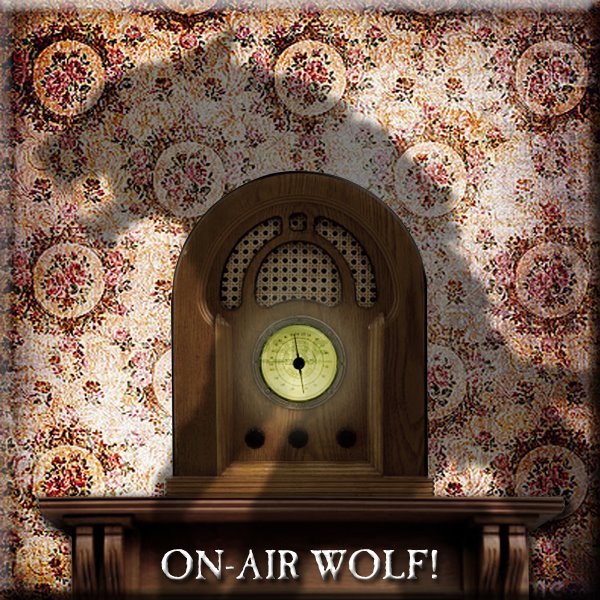
HYPNOBOBS 84 - On-Air Wolf


This week Mr Jim Moon delving into the audio archives of the Great Library of Dreams to bring you two contrasting werewolf tales from the eerie world of old time radio! First we have The Werewolf from The Weird Circle, a radio play based upon The White Wolf of the Hartz Mountains by Captain Frederick Marryat, and then W Is For Werewolf from Dark Fantasy.


DIRECT DOWNLOADOn-Air Wolf

Find all the podcasts in the HYPNOGORIA family here -

HYPNOGORIA HOME DOMAIN - Full archive, RSS feed and other useful links

HYPNOGORIA on iTunes

Sunday, 24 June 2012

HYPNOBOBS 83 - Birth of the Werewolf


Continuing our explorations of the history and mystery of the werewolf, Mr Jim Moon recounts the earliest manifestations of werewolvery in cinema and  attends the birth of the modern lycanthrope with a visit to Universal's The Werewolf of London (1935) starring Henry Hull.


DIRECT DOWNLOADBirth of the Werewolf

Find all the podcasts in the HYPNOGORIA family here -

HYPNOGORIA HOME DOMAIN - Full archive, RSS feed and other useful links

HYPNOGORIA on iTunes

Sunday, 17 June 2012

HYPNOBOBS 82 - The Wolf At The Door: A Werewolf History


Continuing our investigations in werewolvery, Mr Jim Moon traces the  development and metamorphoses of werewolf lore down the ages, from the shamanic mists at the dawn of time to the blood-soaked pages of the Penny Dreadfuls!


DIRECT DOWNLOADThe Wolf At The Door: A Werewolf History

Find all the podcasts in the HYPNOGORIA family here -

HYPNOGORIA HOME DOMAIN - Full archive, RSS feed and other useful links

HYPNOGORIA on iTunes


Sunday, 27 May 2012

HYPNOBOBS 79 - An Introduction to Werewolvery


Mr Jim Moon ventures out into the light of the full moon to investigate the legend of the werewolf. As well as some chat about what the Wolf-Man means to us, we have readings of two classic lycanthropic tales - Gabriel-Ernest by Saki and High Moon by Tim Stout.


DIRECT DOWNLOAD An Introduction to Werewolvery

Find all the podcasts in the HYPNOGORIA family here -

HYPNOGORIA HOME DOMAIN - Full archive, RSS feed and other useful links

HYPNOGORIA on iTunes

Thursday, 17 March 2011

TWIHARD PART III - Bad Moon Rising


As a companion piece to The Black Dog Podcast Twihard marathon (episodes #62 to #64), I too took up the challenge to watch all three Twilight movies. In Twihard Part I, we examined the brouhaha surrounding this franchise, and in Part II dissected the first screen instalment of the saga of Bella and Edward. A dubious claims hangs heavily in the air like a leading man reduced to a yellow smoke cameo… Oh, do not ask “what is it?”, let us go and make our visit…

New Moon (2009)
So despite a somewhat mixed critical reaction, Twilight had managed to pull into a very healthy profit (over ten times its budget), and so the second adaption was quickly rushed into production. In fact New Moon was announced the day after the first flicks opening – one presumes that it had already made its money back in first night sales alone. However what’s more unusual than this record breaking green-lighting time, well at least for fans of the Star Trek and Friday 13th sagas, is that this time around Paramount actually increased the budget for the sequel.

The original cast were secured and Melissa Rosenberg was back too to handle the script. However Hardwicke was not to return to the director’s chair, claiming the time restrictions of the production were not to her taste, and so Chris Weitz was brought in to bring Meyer’s second novel to the screen. Whereas Hardwicke had seemed a canny choice to helm a Twilight adaptation, Weitz’s looks a bit of an odd fit; while co writing and directing About A Boy showed he had the chops to handle emotional themes and literary adaptations, his earlier foray American Pie was a very different take to American teenagers and his most recent directing job was the box office failure The Golden Compass, another translation of a book for younger readers to the screen, which looked pretty but made mincemeat of the original novel. Even considering the long and trouble production of this film, which somehow managed to annoy both religious zealots and rabid atheists at the same freaking time, it’s still surprising Paramount gave the reins to a director who had so recently failed to launch a successful franchise aimed at the same cash-in market dominated by Harry Potter that Twilight is aiming for. Often such a debacle would land you in Director’s Jail quicker than you could say ‘Alan Smithee’. Then again the detractors of Twilight may well say that getting the job of helming New Moon amounts to the same…

So then, I came to this movie literally minutes after the credits of the first had rolled. I had intended doing this marathon on a one movie per night basis, however the first Twilight had charmed enough to slap the next disc into the machine straight away. But tellingly, after watching New Moon I was in no mood to plunge into Eclipse. Now I can understand why some folk rate this entry in the series higher than the first but personally I found it to be something of an ordeal.

Partly this may be due to the source material. Firstly plot-wise the meat of this movie; the blooming and subsequent wilting of the romance between Jacob and Bella, plays far too closely like a retread of Twilight with werewolves replacing the vampires. To certain extent I can let this slide; after all, a great many sagas and franchises often are guilty of just delivering more of the same.

But what I have real trouble forgiving is the somewhat dubious about the whole plot thread which has Bella recklessly putting herself in danger just to catch a glimpse of a foggy phantom Edward. Perhaps I’m showing my age here – I’m at that stage in life when if I see scantily clad young ladies on the street I tend to think “they’ll catch their death of cold dressed like that!” rather than breaking into a Sid James leer – but I really couldn’t help fretting about what kind of role model Bella is providing here, and I pray that Meyer’s novel handles this better than Weitz does on screen, because what we actually see is reckless and extremely stupid and I dread to think that some impressionable teens may get the idea that putting themselves at risk is a great way of reconnecting with their former beaus.

But the wider implications aside, none this actually does much to endear us to Kirstin Stewart’s Bella. Now technically Stewart was somewhat less of an irritant in this flick – for much of it she is supposed to be heart broken and depressed which actually suits the ultra-moody perma-frown performance she’s reprising from the first film – but any sympathy this matching of the narrative tone and her face-like-a-smacked-arse delivery might have elicited is totally undercut by the courting death routine. In Twilight Bella generally annoyed me through Stewart’s reading of the role, and while she was better in this outing, in New Moon it’s the character herself and her scripted actions than wound me up.

However in fairness, we do get to see her actually look happy for a brief time. When she eventually succumbs to the charms of Jacob’s company, we even get to see her smile and have some fun with her childhood chum whose slowly morphing into boyfriend material. Now these are some of the best sequences in the movie; they are gently naturalistic, touchingly warm and not over played. And besides getting to witness the once a century breaking of the witch’s spell that locks Stewart’s face in glower mode, Taylor Lautner gets to step into the limelight.

Now in the first film, he had impressed me with his relaxed, likeable and subtle performance, and the promise showed in his brief appearance comes to full fruit in the courtship of Bella. However when his lycanthropic heritage come into play and we move out of the blossoming romance section and into the subsequenct saddening wilting that is the “I can’t be with you” heart break, his performance seems to go downhill. Some may say that this is a simple of case of a young actor who can excel in a supporting role but hasn’t yet the dramatic confidence to play centre stage, and there is probably an element of truth in that.

However I think the trouble is emanating from two behind the camera areas. Firstly there’s a distinct change in the lines he’s being asked to deliver once he becomes a werewolf – instead of well crafted and realistic dialogue, once the wolf is ascendant he mainly seems to get ponderous stilted speeches. However this is a minor problem, the real trouble is the way Weitz shoots the scenes. Basically he seems to stick the camera on a tripod then (presumably) fucks off for a coffee, leaving poor old Taylor just to stand there, metaphorically as well as literally shirtless, spouting exposition Rosenberg’s script has mistaken for high drama. If I hadn’t recognised Weitz’s name, I could have sworn that New Moon was made by someone with a lot of daytime TV soap on their CV, for this just propping up the camera and just calling action reeks of the kind of ‘quick get it in the can!’ direction you see on The Young & The Witless. I can only assume that Weitz thought that the sight of Jacob’s six pack was height of drama in itself.

And as a whole New Moon suffers from a tendency to concentrate on looking good rather telling the story, a failing that it shares with Weitz’s previous flick The Golden Compass. Now it’s true that one of the golden rules of cinema is show, not tell, however that’s not a license to leave your actors floundering in dull static shots in key dramatic scenes, or to expect pretty colours to distract from the fact that the pace of story telling is erratic and often flagging.

There’s a strong stench of style over substance throughout the entire film and while one may be charitable and blame the rapid production schedule for the film’s patchily substance and general lack of dramatic weight, Weitz’s directorial choices must also be held to account. For example, while the movie’s colour palette is lush and gorgeous, overflowing with opulent golds, vivid greens and striking reds. The trouble is though; this vision inspired by Italian art doesn’t make sense for the mood of the story line or its central location. Now this gold and crimson palette makes perfect sense for the final act in Volterra but not for Forks…

Whereas Catherine Hardwicke gave us a gloomy milieu for Twilight, present Forks as a town drenched in blues and almost perpetually overcast by slate coloured rainclouds. And hence you could easily suspend disbelief and buy that Carlisle and his brood of friendly bloodsuckers could blend into human society thanks to the endless rain haunted days. But in New Moon it’s dripping in honey hued tones and you wonder how on earth the vampires get by in this now sun-kissed clime. Presumably Dr Carlisle’s patients must be dying in droves during New Moon thanks to a string of sick days caused by the persistent appearances of what Gollum referred to as “evil yellow face” in Forks a la Weitz.

And I can only assume that casting Michael Sheen as Aro of the Volturi was more to do with having a credible big name that would look good on the poster than giving the story some dramatic gravitas with a highly respected actor. Now don’t get me wrong, I generally love Michael Sheen’s performances as much as the next film buff but in this outing I suspect he was extracting the urine because Weitz seems not to have noticed he was doing a Tony Blair impersonation. As cameos from high classy acts in low brow movies go, Bill Nighy fared far better with the whole vampire elder routine in Underworld than Sheen does in New Moon.

However in fairness, Weitz’s visual flair does mean that as a whole New Moon looks more like a blockbuster movie than the first film, which with Hardwicke at the wheel more resembled a low budget independent offering. And certainly Weitz seems more at home in serving up the special effects and action scenes but this seems to have come at a cost of the drama. But despite the vampire action looking far better in this outing than the previous one, I am honestly at a loss to explain why the werewolves are still on the ropey side.

Apparently the special effects crew handling the lycanthropes spent a good deal of time studying the real lupines and going on jollies to Wolf Mountain Sanctuary. All of which came as something of surprise as the first appearance of a transformed werewolf is simply ghastly. The CGI in bear in The Wolf Man remake got a great deal of flack, but in comparison to this… this abomination that digital bruin looks nearly convincing. This wolf looks like its bulging in random places and the fur is rippling and changing more than a chameleon crossing a tartan rug – honestly how this passed the grade for the final cut is beyond me.

Admittedly the rest of the wolf effects aren’t nearly as bad, but still you don’t want the audience’s first look at your lead creatures to be so shoddily done. rather than thrilling or frightening, having such a ghastly debut has the effect of destroying any belief in the beasts right from the outset. And while the rest of the movie doesn’t have any shots of werewolves looking like they’ve got the parasites from Cronenberg’s Shivers squirming under their pelts, it appeared to me that throughout the flick their size seemed to vary somewhat; sometimes as big as ponies but at other seemingly more like young rhinos. A minor quibble maybe but firstly I may not have noticed if their first appearance wasn’t so botched and secondly Weitz should really be paying attention to such details.

So then to wrap up, in some regards New Moon is superior to Twilight but only in superficial ways. While it closer to the horror heartlands than its predecessor, exploring and expanding the mythology of the novels, and plays more like a Hollywood popcorn flick than an indie teen angst movie, it still largely failing in the same areas and that is simply that it’s fumbling the dramatics of the central relationships: again it’s a case of the problem not being a watering down of horror tropes but not delivering the emotional punch the romance should have.

And while New Moon expands the sense of the fantastic and takes us further into the secret world of the supernatural; the heart of the film is lost beneath the gloss and flashy tricks. And all the emphasis on the gaudy visuals made me appreciate the first film’s low key atmospherics a whole lot more. Now I can understand why for some viewers this may make this second adaptation superior to the first, however this reviewer much preferred the gothic mood and quiet realism of the first. Ideally I’d have liked to see this move equally weight the supernatural and the emotions, because I still feel that the core story line has a lot of cinematic potential. Perhaps Eclipse can get the balance right…

Don’t forget, you can hear The Black Dog podcast marathon that inspired these articles here

Thursday, 11 March 2010

THE UNIVERSAL WEREWOLF Part I - The Werewolf of London


Even a critic who is pure in heart,
And watches films at night,
May let some spoilers slip,
While penning spurious shite!


The movies hold an enormous power to influence the popular imagination. For example, one of the classic tenets of vampirism, that sunlight destroys the undead monsters, come not from centuries old folklore but 1922 when FW Murnau had the very cinematic mechanism of the rays of dawn vanquish Graf Orlock in Nosferatu. Similarly Browning’s Dracula created an image of the Count that has brushed away the moustachioed and varyingly aged vampire Stoker created. And James Whale had an even bigger influence when he made the 1931 Frankenstein; such a successful reimagining of the classic novel that it is has supplanted Mary Shelley’s vision in the public imagination as the ‘proper’ version.

And the humble werewolf, although he has haunted our stories since the dawn of time, has not been immune to the influence of Hollywood. Indeed as we shall see, Universal’s films of the ‘30s and 40s have had a profound effect on the legend and lore of the werewolf …

The earliest screen lycanthrope I can find is a 1913 feature called The Werewolf. This silent short featured a Navajo witch who gained the power to transform into a wolf, and subsequently her daughter, whom she passes the power onto, uses it to take revenge on the invading white settlers. The film is now lost sadly but it’s worth noting that it was a very early foray into the macabre from Universal Studios, a field they would later make their own.

Next came another silent feature Wolf Blood in 1925, which though not technically a horror film, does feature some werewolf action in the last quarter. In this feature, a logger receives a blood transfusion from a wolf and shortly afterwards his fellow loggers begin dying. Here the lycanthropy is a hallucinatory phenomena rather than a physical transformation but it’s worth mentioning as it’s the first of many films that will bring psychological theme into a werewolf narrative.

It was not until 1935, when Universal unleashed The Werewolf of London that we get a proper full length werewolf feature. Often wrongly credited as the first werewolf film, but it is the earliest surviving horror picture dealing with lycanthropy. Like 1932’s The Mummy, this first werewolf talkie was an attempt to create an original screen monster, one not drawn from the pages of literature. But for a variety of reasons, this film somehow failed to capture the public’s imagination and didn’t recreate the successes of Dracula and Frankenstein for Universal. And also like the Mummy, the werewolf would have to wait until the ‘40s for silver nitrate and celluloid to do their alchemical magic and conjure forth creatures to haunt the 20th century imagination.

But The Werewolf of London does lay the foundations for the cinematic reinvention of werewolvery. To begin, this Henry Hull vehicle also brings us the hugely important idea that lycanthropy is an infectious condition, for this is a marked break with the original folklore.

Anyone studying the traditions, legends and lore of the werewolf will be somewhat surprised to discover that it is actually extremely rare to find lycanthropy being passed on through receiving a wound from a werewolf. Generally speaking, historical werebeasts are created most often by two means. Firstly the condition was a curse – sometimes from a witch or sorcerer as revenge, sometimes by the gods as a punishment, and occasionally as a trait passed down through families - and this method tends to be prevalent in the earlier tales of shape shifters. Secondly, and certainly the more frequent in later times, one became a werewolf deliberately through the use of magic. There’s a host of different methods documented - strange ritual acts like drinking water from a wolf’s paw print or consuming wolf brains, and a host of disgusting recipes for potions and elixirs – but a perennial element of the magical process is the wearing of clothes or a belt made from the skin of a wolf.

And this choosing to become a monster for one’s own purposes, usually for evil (but interestingly not exclusively), was particularly common in Europe. Most people are aware of the infamous witch trials that pepper Western history, but what is less well known is that there were similar outbreaks of public hysteria surrounding werewolves with waves of cases being brought to the courts, particularly in France and Germany in the Middle Ages. The trial of Jean Grenier is fairly typical – click here for a splendidly lurid retelling of the tale.

(Though it should be noted, Grenier was far more fortunate than many accused of shape shifting. A common belief, dating back at least as far as the Roman era, was that werewolves possessed a double skin – human on the outside and lupine within – and that they literally turned their hides inside out to change. Hence the Latin term for the creatures is versipellis, which translates as ‘turn skin’, and a standard test for werewolvery was to be flayed to see if the accused was furry on the inside. Grenier was lucky on two counts; firstly not to be subjected to this often fatal procedure, and secondly to have a judge who considered that there was more madness than black magic at the heart of his crimes.)

This kind of magically created werewolf dominated the stories and legends for centuries, and in the main was seen as an agent of evil. When gothic fiction arrived, some like Captain Frederick Marryat in The White Wolf of the Hartz Mountains (1839) continued the satanic tradition with werewolves that were clearly allied with the powers of darkness, but other works such as Wagner the Werewolf (1847) revived lycanthropy as a curse and introduced the now familiar trope of the decent man doomed to change into an evil beast. Gothic fiction was often as concerned with questions of theology and morality as it was crumbling castles and clanking chains, and hence the concept of the werewolf offered an arena to explore the dividing lines between man and animal and good and evil.

And perhaps the most enduring expedition into this territory, is Robert Louis Stevenson’s The Strange Case of Dr Jekyll and Mr Hyde (1886), which while not technically a werewolf tale, certainly borrows heavily from both mythological and gothic lycanthropy. The smoking potion clearly is the scientific descendant of the medieval elixirs, and created from similar drives alter individual morality in a physical fashion. Yet the results of Jekyll’s experiments are clearly the same tortured moral dilemmas of a gothic hero. And there is more than touch of Stevenson’s good doctor in the character of Dr Glendon in The Werewolf of London.

However it is in The Werewolf of London that establishes the idea that lycanthropy is transmissible like vampirism. And as far as I can tell, this is possibly the first instance of becoming a werewolf by infection in fiction. Marryat’s lupine femme fatale is diabolic creation, Wagner’s condition is the catch in a deal with Dr Faustus and Bertrand in Guy Endore’s The Werewolf of Paris has lycanthropy as a hereditary curse.

Now down the centuries in European folklore, vampires and werewolves have been closely aligned in the legends of many different regions. Some traditions hold that a slain werewolf rises again as a vampire, some that the reverse is true, and yet others have the werewolf as a supernatural guardian that protects people and crops from vampires and witches*. To further confuse the issue, in Southern Europe, particularly in the Balkans, the same terms have been used to describe both creatures – vrykolaka and vurdulak.

However in the case of this Universal film, it’s a good bet that the writers were actually cribbing the plot dynamics from Dracula; something also seen, but more overtly, in The Mummy which appears to be using the 1931 Browning adaption of Dracula as a plot template. However Stoker, having studied Southern and Eastern European folklore, noted the blurring of the lines between the vampire and the werewolf and hence his immortal Count has more than a touch of the lycanthrope about him. Aside from the obvious shape shifting into what witnesses describe as a large black hound, Dracula is not dissimilar to the willing werewolves of the Middle Ages. What many people don’t realise is that the Count has an origin story of sorts, outlined by Van Helsing in Chapter 18. His vampirism is linked to the practice of the dark arts learned at the legendary Scholomanse, a secret school presided over by the Devil himself.

So this borrowing back of elements from Dracula is fair trade. And this new idea of lycanthropy as an occult kind of transmissible disease was to be hugely influential. However this is not the only addition the mythos presented in The Werewolf of London.

Although the medieval writer Gervase of Tilbury associates the full moon with werewolf transformations and a handful of rituals to become lycanthropic that either specify performing the rites under the full moon or utilise its rays, mainly this phase of our planet’s satellite does not figure much in lycanthropy through the ages. After all, curses could be a permanent change of shape or be tied to a variety of different significant times, while the career werewolf could change whenever they chanted the spell, quaffed the potion or donned the wolf skins. However The Werewolf of London has the full moon as a key part of the transformation process, and so far my researches into werewolf fiction have yet to uncover a literary precedent, so it is possible that this is the first instance of the full moon lore (if you know any different leave a comment or drop me a line).

So, although it is often glossed over in horror movie history, this movie deserves a good deal more attention than the usual write-off as a botched dry run for The Wolf Man. Admittedly, Universal’s second treatment of the creature is a much superior film, but it draws a great deal more from its predecessor than merely learning from its mistakes.


While searching in the wilds of Tibet for the exceedingly rare plant, the Mariphasa Lumina Lupina, noted botanist Dr Glendon (Henry Hull) is attacked and wounded by a strange man beast. On returning to London with the plant, he encounters the mysterious Dr Yogami (Warner Oland) who reveals that the flowers of the Mariphasa may be a cure for lycanthropy and hints heavily that it was he who attacked Glendon and now he bears the same condition as a result. Naturally as a man of science, Glendon does not believe in werewolves until while using a special lamp that simulates moonlight on the night blooming Mariphasa his hand begins to change…

…And you can probably guess the rest – Glendon struggles to contain his feral alter ego and fails to find a cure before he is killed menacing his loved ones - the typical werewolf movie plot in other words. But it must be remembered that for the time, this was anything but standard werewolf fare, indeed it’s from this film we derive a lot of the familiar elements of modern werewolf stories. However, there is also a good deal in The Werewolf of London which is quite novel in the lycanthrope canon.

To begin with placing the genesis of the lycanthropy in Tibet is an interesting alternative to the usual Old World werewolf stylings, giving the movie the exotic oriental flavour that was popular in works as diverse as the Fu Manchu saga and the National Geographic reports of Dr Joseph Rock. Rock was an explorer and botanist, and his accounts of his travels in Tibet are said to have inspired the best selling 1993 novel Lost Horizon which established Tibet as a mystical milieu in fiction and the parallels between Glendon and Rock are obvious.

However The Werewolf of London does not draw upon the magical potential of its Far East opening locale, as it is science rather than folklore that will dominate the movie. The MacGuffin of the movie, the Mariphasa plant, is presented as a possible source for a biological treatment for werewolvery rather than an occult cure. And there is more than a touch of science fiction in the film: Dr Glendon has a hot house filled with bizarre carnivorous plants, his own hi tech secure laboratory with a futuristic looking lamp that produces artificial moonlight and a proto CCTV array so he can see anyone approaching the locked door.

However, all the scientific stylings do not preclude the supernatural and the film wisely doesn’t offer us some cod scientific explanation of lycanthropy. What we do get however is the birth of the familiar full moon mythos. But in The Werewolf of London, the full moon is somewhat more significant than usual, as according to an ancient tome of werewolvery Glendon consults, a werewolf must kill on the nights when the moon is full in order to stave off becoming a beast permanently.

Although The Wolf Man would later elaborate on the full moon’s role and fix it forever in the minds of the public, so far no subsequent werewolf stories have picked up on the intriguing concept. The idea that the lycanthrope must kill in order to retain its dual form is a great plot twist, and it’s a shame no one has thought to resurrect it.

However, the Werewolf of London doesn’t exactly capitalise on the concept either. On the third night of the full moon Glendon is thwarted in his attempt to kill, yet the script seems to have forgotten the rule it introduced earlier and the next morning the good doctor has transformed back into an English gent again. Instead the film seems to switch focus onto another piece of lore - this time delivered to Glendon by Dr Yogami - that the werewolf will always seek out and kill that which they love most. But considering what a staple of the lycanthrope stories this plot has become, I’m inclined to forgive the movie for ignoring the old tome’s lore.

Certainly concentrating on Yogami’s warning meshes better with the overall plot. The key relationship in The Werewolf of London is between Glendon and his wife Lisa, whose marriage is showing the strain Glendon being tied to his work and researches. At the same time he is infected with lycanthropy, Lisa has encountered her childhood beau, Paul, who soon notices her dissatisfaction with her forever working husband. Naturally an intelligent fellow like Doc Glendon also spots her unhappiness and the temptation posed by Paul but as the moon grows full, he has no choice but to sequester himself further. And aside from imbuing the werewolf myth with a psycho-sexual subtext, it also introduces another classic lycanthrope plot device - in order to prevent himself killing, Glendon attempts to cage himself prior to moon rise.

So then, here we have a movie that is brimming with imagination, coupled with a fascinating plot and is breaking new ground left, right and centre for the werewolf mythos. And yet despite all these strengths, the movie flopped and its critical reputation hasn’t exactly blossomed over the subsequent decades either. So what went wrong?

Over the years, the main contender for the fatal flaw has been the titular werewolf himself. Many have fingered the make up as being insufficiently wolfish – and certainly looking at the make up job with post Wolf Man eyes he certainly looks insufficiently hairy to be a lycanthrope. In a quick straw poll, I showed several friends who are unfamiliar with early horror movie history, a still of Doc Glendon and asked them to identify the monster...


And all bar one (a spoilt ballot that read 'is this Ron Pearlman's dad?') guessed it was an early Mr Hyde as I suspected would be the case.

Now, the standard story behind the effects goes something like this – legendary make-up man Jack Pierce originally devised a far more hirsute werewolf – and according to some the very combination of appliances and yak hair Lon Chaney would don several years later. However Henry Hull was not keen on being subjected to the long hours in the make-up chair and hence Pierce created a simpler look for the beast which was quicker to apply and consequently a lot less furry.

However, personally I tend to think that Jeremy Dyson is quite right to wonder if this piece of movie lore is apocryphal. As the paperwork shunted between the studio execs and the film makers are now sadly destroyed, there is now no evidence to consult to discover the truth. But I think Dyson’s view, found in his excellent book Bright Darkness, that it is exceedingly unlikely that Universal would bow to pressure from an actor of Hull’s status is nearer the mark. Although he had been appearing in films since 1917, it was only the previous year he had transcended bit part work and garnered the attention of the studio bosses with his portrayal of Magwitch in Great Expectations. So he certainly didn’t have the star clout to veto a make up job.

And considering how important and influential Jack Pierce was at the time, and indeed knowing how much of a prima donna Pierce could be, it’s very unlikely he would have allowed an actor getting his first top billing in a major feature to dictate terms in this fashion. More likely I think, is that after the film failed to ignite the box office or make Hull an icon like Karloff and Lugosi, the reasoning behind the make-up was reconned by Universal or possibly Pierce himself.

But despite looking a little bald to modern viewers, Pierce’s make up work is still top notch. And it’s important to remember that we are seeing the first screen wolf man. Although folklore and legend occasionally has depicted the lycanthrope as a bipedal wolf, in the main the old tales usually maintain that the werewolf transforms completely into an animal. Now such a transmutation brings a whole mess of problems for a film maker and so The Werewolf of London cannily has Dr Yogami tell Glendon and the audience, that contrary to legend, the werewolf does not change into a wolf but a hybrid creature that combines the worst features of both species.

And this is a salient point as the altered Glendon behaves in a fashion somewhat different from other fictional werewolves. While he is still a raging beast most of the time, he does display unusual characteristics informed by the twist to the mythos in the script. He appears to retain a high degree of intelligence – for example, when venturing out to hunt the shadowed London streets he dons a voluminous overcoat and a large cap to disguise his monstrous form.

But while this is an interesting idea, the script never develops it sufficient to work properly. As the Glendon-wolf never comes across as having a distinct and separate personality of its own but retains a very human-like intelligence, this ultimately serves to undercut the savagery of the werewolf itself. Furthermore, the audience is left in something of a muddle as to how much control Glendon has in his shifted form, and this becomes a major factor in the effectiveness of the grand finale.

At the film’s close, when Glendon is finally gunned down, we get another familiar werewolf trope making an early outing – the dying speech forgiving his slayers and the now cliché ‘you killed me but you’ve saved my soul” routine. But the problem is that in this movie, the speech is delivered BEFORE Glendon transforms back into his human form. Now this breaks all the rules of dying transformed man-monsters for the modern viewer, but I think it also struck all the wrong dramatic notes for audiences back in the day. As Glendon’s final words are delivered while he still in beast form, instead of feeling pathos for the doomed doc, the audience is left rather surprised werewolves are so loquacious.

Another reason often trotted out for The Werewolf of London flopping with audiences over the years is that Glendon as played by Hull is too cold a character for audiences to sympathise with. But I’d contend that the role is written to be cool and scientific – the focus of the script isn’t to invoke sympathy for the lead character as The Wolf Man does, rather the key dynamic is that Glendon is so driven by his researches that he is already losing touch with his humanity before he’s bitten by Yogami. In fact, the script actually presents Doctor Yogami as the sympathetic character; he is far more the usual tortured lycanthrope than Glendon is – a very interesting twist for a character that in a less imaginative script would have been written as a conventional villain.

The tragedy of Dr Glendon isn’t that he suffers the torment of lycanthropy like Larry Talbot, but that his commitment to science is destroying his marriage and makes him ignore the warnings of Yogami. And the cruel irony is that he must isolate himself further to continue the very research that is wrecking his relationship with Lisa in order to cure his condition, and more importantly, save her life. His lycanthropy can be seen as an outburst of his repressed emotions, and it’s no coincidence that in the final act he breaks free from the ancient hermit’s cell when he spots Lisa out walking with Paul through the bars. His predicament echoes both the ancient myths and fables that preceded it where a divine punishment mirrors the sinner’s crime, and the myriad mad scientist yarns that would follow where the pursuit of knowledge comes at a high personal cost.

But at the ending of tale, where such ironies of fate should resonate, is botched by having Glendon deliver his final oratory in monster form. This robs the film of a satisfying symbolic close; the proper order of events in such a tale should be that the transforming spell is broken, he regains his rightful shape and then his humanity is reasserted leaving the viewer with a sense that good has triumphed, albeit at great cost, over evil and normalcy has been restored. Instead the close of The Werewolf of London has you almost wondering if Glendon’s human side was not quite as in thrall to the wolf as they’ve made out.

And I strongly feel that it is this botching of the conclusion that has damaged the film far more than a furless werewolf or an unsympathetic hero. Now the film has other flaws; for example the script has Yogami referring to werewolvery as ‘lycanthrophobia’ rather than ‘lycanthropy’, a trio of tipsy old ladies for comic relief, and director Stuart Walker seems unsure whether to emphasise the gothic or the contemporary, but it is the simple misplacement of Glendon’s last words is what effectively stops the film from becoming the properly rounded mythic tale it should be.

But folks, I come not to bury this film but to resurrect it. In all fairness, Universal’s Dracula is as equally hampered by Todd Browning’s static direction as The Werewolf of London is by its slightly uneven scripting. Yet the former is regarded as a classic while the latter is often relegated to footnote status. And while it is perfectly true that The Wolf Man would bring werewolvery to the screen in a far more accomplished manner, as we have seen The Werewolf of London establishes a huge part of the modern werewolf mythos. And for these innovations alone, the film deserves a better reputation than it currently enjoys.

But aside from meriting a place both in movie history and modern myth making, The Werewolf of London has much to recommend it. Once you separate the film from the shadow of The Wolf Man, you discover a very unique take on the werewolf, bursting with imagination. Admittedly it never generates the atmosphere of either Dracula or Frankenstein but it is still very entertaining, with solid performances from the leads and some memorable visuals. And whether loping about in tweedy impertinence or prefiguring the beatniks with his choice of groovy head gear, Doc Glendon must surely be the best dressed werewolf of all time.

The original audiences may have been nonplussed by its blend of the gothic and sci-fi, but after decades of werewolf flicks that are virtually unofficial remakes of The Wolf Man, The Werewolf of London now feels remarkably fresh and original. It may have laid the foundations for the modern fictional lycanthrope but it also has a great many elements that have not been picked up in subsequent lycanthrope tales. And there is so much that is unique in the plotting and concepts of The Werewolf of London that this film is surely as deserving of a modern remake as its better known sibling.


* - For those you intrigued by this little known good side to the werewolf, may I direct you to Paul Devereux’s Haunted Land (Piatkus Books 2001) which has a fascinating section on this subject.