Thursday, 25 February 2010

THE WOLF MAN (2010)


Even a critic who is pure in heart,
And watches films at night,
May let some spoilers slip,
While penning spurious shite!


It’s been a very long road that has brought Larry Talbot back to the screen. Unlike his fellow Universal monsters Dracula and Frankenstein who have both enjoyed frequent revivals over the decades, cinema’s iconic tormented lycanthrope was not based on a literary work with its rights in the public domain. So although many of the werewolf movies that followed over the years have borrowed the character template created back in 1941, Larry himself hasn’t seen the light of the moon since 1948. Even when Universal decided to bring back their old horrors in the latter day monster rally Van Helsing (2004), the werewolvery on display wasn’t courtesy of Mr Talbot.

But in 2006, Universal announced that at long last it was slating a remake of The Wolf Man and as events unfolded it looked like the property was as cursed as Larry himself. There was a pack of directors circling around the director’s chair after the original choice, Mark Romanek left citing creative differences. Eventually Joe Johnston landed the gig, the script was rewritten and shooting finally began. However even then it was far from plain sailing – the production was delayed several times as reshoots were done, effects tweaked, the score was mucked about with several times, and veteran editor Walter Murch brought onboard put the film through its final transformation.

Now I was initially quite excited about his project, especially when they announced that the make up work was to be handled by the great Rick Baker and Benicio del Toro was in the frame to play Larry Talbot. However after the seemingly never ending merry go round of changes and alterations, I was beginning to wonder whether this flick would ever make it into the theatres at all. And when the film opened, Joe Johnston announcing that the disc release would feature a director’s cut featuring an extra seventeen minutes didn’t exactly inspire confidence. So when it finally arrived at the local fleapit, before going in I had not so much lowered my expectations as beat them to death with a silver headed cane.

Now Joe Johnston has received a fair bit of flak, a good deal even before the film’s release, for being a journeyman director. However since seeing the movie, I have to say he’s done a remarkable job in riding out all the waves and what actually appears on screen is far better than we had any right to expect, especially considering the production history. And while The Wolf Man is not going to garner any awards or go down as a classic of cinema, it is does work well within its own parameters.

And let’s be clear on what these parameters are - The Wolf Man is a monster movie pure and simple. It might be a horror film but it’s not really trying to terrify you or incubate a phobia of lycanthropes. Of course, many hardened horror heads were hoping for a proper hardcore horror; whether that would be a darker more psychological piece, or a brutalist retelling of the tale with viscera everywhere, or just a film with real terror rather than ghost train shocks. But The Wolf Man is aiming for none of these things - rather it’s out to serve up a gothic themed popcorn muncher, with everything a general audience expects of such of a creature feature – plenty of action, some gore, and a few jump scares. In short, the emphasis is on fun rather than fear.

And though some fans will be muttering about the watering down of the genre for the multiplex audience, as a creature feature The Wolf Man does succeed. Now it’s not a perfect film, and I’ll be the first to concede that it could have better, but it does entertain consistently through its running time.

So what does The Wolf Man get right? First up, it stays broadly true to the original - it retains the period setting and carrries over many of the elements present in Curt Siodmak's screenplay for the 1941 film. Stand out differences are the inclusion of the full moon's role in lycanthropy and jettisoning the original's folklore surrounding the pentagram. Also the role of the gypsies in the story is lessened - possibly this is an issue with the edit released in theatres but more likely I suspect the Maleva character smacked too much of horror cliches and possibly the Romany band of the original would appear at somewhat ethnically insensitive if not for modern audiences then certainly for Universal's lawyers.

However the changes still well within the story, as despite being cut from the whole cloth of the original, this version of the Wolf Man tale put a neat twist on the tale. And it manages to admirably to be a fairly faithful remake of the first film but bringing a new version of the story to the screen.

The look of the movie is simply fantastic. It recreates Victorian England rather nicely and in this respect it does trump the original. The decision to film in England pays off in style; for example, it would have been very easy to go the CGI route and mock up the Talbot estate but actually filming at a real stately home gives the film an authentic weight that digital trickery often lacks. Plus by extensively filming in a variety of UK locations, Johnston gets to make good use of the surrounding landscape which adds considerably to the atmosphere of Englishness. Now that might seem a small nebulous point but I do think that if they had opted to film somewhere else – and let’s be frank, England isn’t the cheapest country in the world to make a movie in – you would lose something.

While still on the look of the film, I also did sense that the designers and set dressers were aiming a little more historical accuracy than the usual Hollywood period London drowned in pea soupers and gaslights. For example, the depiction of the gypsy encampment was noticeably more down at heel and ragged rather than the standard travelling fair cliché that we usually see whenever a script calls for Romany or carnival locations.

I do have one set/location related quibble though, which is the Talbot house itself was slightly over dressed for my taste. Within the framework of the story, the hall should be somewhat overgrown, reflecting the fact that Sir John Talbot has misplaced a few of his marbles over the years, but it was also at little too close to the old screen cliché that the monster’s home must look like hell on toast. You could have scaled back the ivy choked exterior and toned down the accumulating detritus indoors and retained the same effect. Less would have been more, and the Talbots’ home would have meshed better with the rest of the onscreen world.

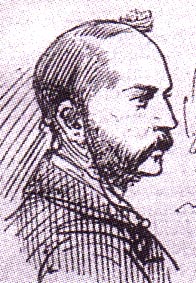
Anyhow, amid all this rather lush scenery, we have a fairly decent cast, and no one seems to have enrolled in the Dick Van Dyke Gor Blimey Guv’nor school of acting prior to the cameras rolling thankfully. Sir Anthony Hopkins puts in a good turn and generally chews the scenery far less than I was expecting. Emily Blunt makes for a fine Victorian lady though I did feel she was a little under used – but more on that later. And Hugo Weaving is as excellent as Inspector Fred Abberline as you’d expect him to be; yet again he shows his range in creating a fresh character with an entirely different voice and mannerisms to his previous roles and pretty much steals most of the scenes he’s in. He even looks uncannily like the real Abberline.

Of course the big issue is Benicio del Toro as Larry Talbot. Now when I first heard the casting news, although I respect del Toro immensely as an actor, I did wonder whether he could pull off playing an English gentleman – after all, accents are a tricky beast and in the past many a fine actor has struggled, and in some case fallen badly, in mastering a voice pattern from outside there their native lands. Would the new Wolf Man end up too closely emulating the original 1941 version with a blatantly non-Brit playing the son of an English lord?

Of course, I needn’t have worried – del Toro hits all the correct cadences without obviously attempting to force an English accent. And though the story does include a little detail to explain why he looks a touch less British than his father, there is a certain family resemblance to Hopkins. On paper, it shouldn’t work but when you see them on screen together you can believe they are related – of course the strength of the performances create this illusion in the main but they do have strangely similar facial features in some respects. Indeed, they are a far better match as father and son than Chaney and Rains ever were.

However on the subject of similarities, del Toro appears to be actually channelling Lon Chaney Jr. Now Benicio is a huge fan of the original Wolf Man movies and you can tell he’s studied his predecessor in depth for the role. Though his Lawrence Talbot is more brooding than Chaney, he emanates the same troubled aura of melancholy, with the torment visible in the eyes and hang dog expression. And as his wolfish alter ego, he brings a far greater physicality to the role and deeper sense of rage to the monster.

This brings us nicely to the depiction of the Wolf Man. Now obviously the effects work by Rick Baker is as every bit as good as you’d expect it to be, and he's has done an excellent job in modernising Jack Pierce’s original designs for the 21st century. But equally obviously, the transformation sequences just don’t have the wow factor of his previous work on American Werewolf in London. The trouble is we’ve all seen these kind of physical transmogrifications done to death by every man and his dog in the intervening years. However the sequences do look fantastic, with none of the glaringly obvious CGI that often blights such scenes.

Sadly though, not all the digital effects in this movie are as skilfully blended as the transformations. In the main, where the CGI doesn’t work as well is in some occasional moments of the London scenes, particularly the rooftop chase. Now in fairness, here The Wolf Man never plunges into the screamingly obvious levels of digital scene creation that marred similar rooftop sequences in The Incredible Hulk but the smoking skyline doesn’t always feel quite real enough.

However there is a truly awful bit of CGI in this flick, and it's very much the low point of the entire movie – that damned bear. Now the problem here isn’t that the ursine in question is particularly badly animated or rendered, the trouble is it doesn’t look like a real bear when we see it up close! For the screen time it has, it surely would have been cheaper to matte in footage of a real bear than create this digital porridge hunter.

Now I appreciate that real bears are quite difficult to work with (getting stuch in honey trees and trying to flog you Hofmeister) and a continuing problem for CGI effects is animating fur realistically, but this creature tossed me out of the movie so hard I felt like bloody Goldilocks. And from now on, I propose that any such cringingly bad piece of CGI should be dubbed ‘a bear’…

And if you are wondering why the bear is in there at all, I think it’s one of the many nods to the original movie. The 1941 Wolf Man was supposed to include a scene at the gypsy camp where a bitten but pre-change Larry wrestles a tame bear as part of a fair ground contest. However the real bear the studio brought in was not keen on being in show biz and after two days shooting the scene was scrapped. Maybe they were considering riffing on this lost scene and planning a fight scene with Paddington’s feral cousin and the werewolf but decided against it when they saw the CG work… In which case, we all dodged a silver bullet there.

But just as one swallow doesn’t make a summer, neither does one dodgy bruin a bad movie make. And the fluctuations in the overall quality of the special effects aren’t the movie’s real problem. The major flaw as far I’m concerned is the plotting. Now don’t get me wrong The Wolf Man bounds along at a brisk speed and is properly punctuated so you are never far away from some action or a story development. However the film seems to sacrifice a little too much drama for the sake of pace, and it is here that all the production’s tortuous development history makes itself felt.

It doesn’t really spend enough time developing the relationships in the story, hence my earlier remarks about Emily Blunt – we only get enough on screen to superficially sell the romance between Lawrence and Gwen. And similarly, in the spiky relationship with his father, I felt that there was more dramatic mileage there than was actually delivered. And in trimming down this material, presumably in the name of tempo, it effectively weakens the opening sections and more crucially the last act. The climatic battle between Lawrence and Sir John feels a little overshadowed by the London rampage as all we are left with is the action; as their relationship has been dramatically under weighted in the rest of the film, this confrontation lacks the emotional wallop it should have had. And more seriously, as the Lawrence/Gewn relationship is undercooked, we don’t get enough to establish any real pathos for the finale where Gwen must kill Lawrence to save him.

As it stands the story functions ok, but with some more flesh on its bones it would work a whole lot better. The crux of The Wolf Man story is Talbot’s struggle for humanity, and if we were to see more scenes that emphasised his emotional conflicts then the film’s narrative would work on a deeper level than the slightly hokey one it currently does.

Interestingly, in the extended cut has assembled for the disc release, Johnston has confirmed that the extra quarter of an hour mainly comprises of character driven sequences rather than extra action and gore (click here for details). All of which confirms the suspicion I had when watching the movie that there were a few scenes missing here and there, and especially in the first half. It will be interesting to see how differently the longer plays and I think we’ll see a version that sports superior performances and deeper drama, a movie that builds more evenly to its finish.

One final quibble though, and one that I doubt the longer cut will fix, is the very end of the movie where we are left wondering if Abberline is to be the next werewolf. Now although I’d be more than happy go and see Weaving as the Wolf Man, and indeed it would be great to see him in a lead role, I do have a couple of problems with that.

Firstly, we’ve just got Larry Talbot back and a great actor, Benicio del Toro in the role. So if you want a sequel, raise him up from the grave. It’s not hard, just steal the opening from Frankenstein Meets The Wolf Man, and let’s face it, who wouldn’t want to see what Rick Baker could do with moonlight reviving Lawrence Talbot? Come on, a desiccated corpse to werewolf transformation would be pure gold!

Secondly if they are planning to go down that route, why set the film in 1891? If you’re having Fred Abberline turn lycanthrope in a sequel, a more interesting premise would be to set this first movie BEFORE the Jack the Ripper murders.

But as I stated at the start of this review, The Wolf Man has come out pretty decent considering the production’s troubles. What we have here is an entertaining movie rather than a great film; in trading off drama for pace, it romps where it should lope. Or to put it another way, we have a comic book version of the story rather than the dark fairy tale it perhaps should have been.

However, although The Wolf Man has missed a cinematic bulls eye, it has at least hit the right target. I mean, look what happened when Universal have resurrected their famous monsters in the recent past - The Mummy series has upped stakes entirely from the horror genre and wandered onto Indiana Jones’ turf and as for Van Helsing … deary deary me, I never realised that pissing on graves counted as a homage these days.

The Wolf Man on the other hand, does respectfully tip its hat to the original in many ways – indeed for the Universal buff out there there’s a lot of nice little references to the original to spot. And neither is it as annoyingly and wilfully dumb as either of those other resurrections. Yes, it is a bit hokey but it is a fun watch. And lest we forget, many of the monster movies of years gone by, all those creature features that we all love so much, share the exactly the same kind of flaws. For all the unevenness in the story telling, it does the Wolf Man right and will no doubt win him a whole new generation of fans. Welcome back Larry!

Saturday, 20 February 2010

INK (2009)


What are dreams? And where do they come from? Such questions have always proved fertile ground for myth makers and story tellers down the ages and in the world of cinema, dreams have been have formed an integral part of many narratives, from the common device of the dream sequence to whole films built around the subject.

Considering that dreaming is one of the great mysteries of life, and one we all experience every night, it’s surprising that there aren’t more movies built around our nocturnal psychic excursions. But when one recalls the awful badly contrived weirdness for the sake of weirdness scenes that constitute the usual dream sequence (you know the kind of thing: hey look a dwarf and a penguin playing cricket in a room with a chess board floor ), or tired cliché of throwing in a shocking event that turns out to be just a dream, you begin to see the problems of exploring the realm of dreams on the screen.

But if a film maker actually bothers to try to get to capture the essence of real dreams; subtle strangeness and slight lapses in logical reality coupled with powerful emotional atmospheres rather than witless cod surrealism and a chance to use any old tat the props department has lying about, then
usually we get something very memorable, whether it’s an art house outing like Michel Gondry’s The Science of Sleep packed with low-fi stop motion reveries bristling with personal confusion, or something more populist like the original A Nightmare On Elm Street that accurate recreates dream dread on the silver screen.

And the latest properly equipped expedition into this mysterious territory, Jamim Winans’ Ink, is such a film. In lieu of any synopsis, here’s the first trailer…


Now I’m not going to go into any more detail about the plot, because I really feel the less you know about Ink before going in the better. And indeed as this is a somewhat under seen film at the time of writing, I’m going to hold off embarking on an in-depth discussion of the film until a lot more of you have had the chance to see it. And I heavily suspect you all are going to be hearing a lot more about Ink over the coming months…

You see, Ink is a low budget feature that the major distributors passed on and so was released the internet for download from all the usual places, rent it, or buy it on disc direct from Double Edge Films here. Of course it is widely available as a torrent which has resulted in the film finding an ever growing audience and sent rentals and sales through the roof. And believe me, should you see Ink for free – either legally on Hulu if you are in the US or *ahem* by ‘flying to America’ digitally, then there’s every chance you’ll be placing at order very soon after. Because Ink is a film you’ll want to see again, a film that repays repeated viewings, a film that you’ll want to own in the best possible quality. In short it’s a movie film that you’ll cherish having in your collection.

Because there really isn’t anything quite like Ink. Now I’m not making a ‘it re-invents the wheel’ Avatar style claim here, but it really is a unique piece of work. A good comparison would be Let The Right One In - that film is as close to Stand By Me as it is to Romero’s Martin but it nothing like a fusion of these two, and as a whole ends up defying all the usual categories and creates a piece of cinema that is stands alone.

WithInk there is a plethora of other works that may be wheeled out to give you some idea of what this film is like, but they are so diverse and numerous that any kind of accurate description rapidly becomes a nonsense. However that said, here goes… imagine the modern fables of Neil Gaiman blended with the dark weirdness of Doom Patrol era Grant Morrison, filtered through the imagination of Terry Gilliam, shot with the wild visual inventiveness of early Raimi, with lush cinematography via Tarsem Singh, mixed with the twisted fairy tale tones of City of Lost Children, the perception bending of The Matrix, the fresh imagination of Barker’s Hellraiser, encompassing the collision of reality, memories and dreams of Dennis Potter’s The Singing Detective, sprinkled with the magic of Labyrinth and the off-kilter personal journeys of Kaufman and Gondry…

Now I’m not saying any of these were direct inspirations, though undoubtedly some probably are, I merely offering this unwieldy description as a list of possible references points to encourage you to see it. The simple fact that in these days of rehashes and retreads Ink cannot be boiled down to a quick ‘like film X meets film Y’ formula is a testament to the powerful imagination of creator Jamim Winans.

It’s a stunning piece of work, packed with enough ideas and concepts to fuel at least ten Hollywood blockbusters. And they are beautifully executed within the film that is positively bursting with rich imagery, a gorgeous orchestra score, and a magical story that has real depth to it and works on many different levels. And what is really astonishing is the tiny budget it was created for.

Last year, we were all wowed by how Neil Blomkamp and Duncan Jones made budgets of only a few million look better than a lot of the hundred million plus summer movies. Now have a look at the Ink trailers (find ‘em here) and take a guess how much it cost…

Back? Ok then, ready for the answer - Ink was for $250,000 – that’s right, just a quarter of a million. And it’s not a case of all the most expensive money shots going into the trailers either. Simply astonishing – you really don’t expect to see such an ambitious and striking film for that kind of dosh.

Now I’ve probably rambled on enough for now – as my money is on this becoming the sleeper hit through internet buzz as Let The Right One In and Paranormal Activity I’m very wary of gushing on and on about the movie and creating an over-hype situation.

However, a quick word of warning - Ink is somewhat overwhelming to begin with and judging from the negative reviews on IMDB seems to lose some viewers with its seemingly disjointed nature and relentless imagery. But I assure you that everything does all come together - just go with the flow and all the pieces will start connecting. But if, for example, you hated the way Twelve Monkeys tells it’s tale or were bewildered by Eternal Sunshine of the Spotless Mind, you’ll probably hate Ink too. This film does seem to polarise people – again looking at the IMDB write ups, most people seem to love it but a minority absolutely hate it. Now I know that kind of polarity is par for the course on IMDB but in this case it is very marked – either virtually full marks or nearly no stars at all.

And sadly, it seems the distributors were in the latter camp. Admittedly a film like Ink is unlikely to do mainstream blockbuster box office, but it is so well realised it surely deserved picking up for art house release if nothing else. Frankly it’s criminal that the mainstream Hollywood industry has so totally cold shouldered this movie.

If you are a lover of intelligent and creative cinema, you really need see Ink and judge for yourself. Grab yourself a copy and we’ll talk about it more later…

Wednesday, 17 February 2010

Son of Stop! Motion! Action!


After our successful impromptu foray in the world of stop motion animation the other week, we decided to give it another go this weekend. The Bag is really just an extended test but this time around we were somewhat better organised and as well showing you all the latest effort, I thought I’d share what we’ve learned so far for any of you out there how fancy giving it a bash yourself.

First up, bear in mind that stop motion animation is a time consuming process and so set up where you want to film carefully. Ideally you want a space where you can leave your camera, models and set in place and where they aren’t going to get knocked, nudged or otherwise disturbed from their positions.

Secondly when starting out, don’t worry about technicalities like frames per second as many video editing/animation programs will allow you set the frame speed when you process the frames into film. As you can tell from our two efforts, we’re not overly concerned with working to a set frames per second speed just yet as we’re still finding our feet in the medium. Basically, just walk before you can run.

Now the most important piece of equipment you will need, after the blatantly obvious (i.e. cameras and puppets) is a tripod. As you’ll see the quality of the shots composing The Bag is far superior to our first effort The Magic Trick having acquired a brand new tripod to shoot with. Now a word of warning for any would be animators out there – as with a lot of photography related gadgets and gizmos, you can spend a hideous amount on a tripod; indeed for a three legged beast composed of carbon fibre, flidor gold and unobtainium which has been hand tooled by the Elves of Zurich you can spend the same cash as you would on a high end professional camera. However for the purposes of stop motion, all you really need is a tripod that holds the camera steady, and for that a cheap model will suffice, provided it’s sturdy enough to carry the weight of the camera you are using and can be adjusted to a range of heights easily.

Now in the various tests we conducted so far, we’ve gleaned a couple of handy hints about using a tripod. First off the key thing in setting up the camera is how you set the tripod height, especially if you’ve gone for an inexpensive model. With most tripods, to set one to table height you will have the choice of either extending the legs or raising the central column to gain the desired shot. We found that using the legs provide far better stability and reduced the chances of slight wobbling when you press the shutter release.

Secondly, once you have got your tripod in place it’s a very good idea to mark the legs positions on the floor. We found that during the animation process, which involves a lot of moving from behind the camera to the animation set and back again, you will at some point end up inadvertently nudging the camera set up, so it’s very handy to be able to re-align the camera and tripod back to their original positions. It’s well worth thinking through how you arrange your workspace to avoid accidentally moving the camera, and not being a cack handed galoot helps too. However in the main, three bits of masking tape or similar on the floor will save you an awful lot of headaches!

On subject of shooting in general, when you are positioning your cameras, it really does pay to do a lot of test shots. Take plenty of pictures with your models in difference positions and establish where on your set you can move them without them going out of focus. Remember, as the camera must stay static for all shots, you don’t have the usual leeway for adjusting the lens focus as you do in still photography. It’s also handy to work out where the boundaries of the shot are and mark them on the table, especially if you are planning to have objects or characters walking in and out of shot.

Right, so you’ve got your camera, lashed up a set, some models to animate, and marked out your tripod position and shot boundaries so you are ready to go then? ‘Fraid not, as there’s the tricky problem of lighting rearing its head. Now as a stop motion animator, the sun is now your enemy. If it weren’t bad enough that that evil yellow face generally can’t be tossed to drag its arse over the horizon most days, when the busy old fool actually does decide to put a decent day’s work in he can’t relied upon to provide consistent lighting.

As you can see from The Bag, even though we had the set lit with an array of lamps we completely failed to guess that the ambient light streaming in through the windows would vary so wildly minute to minute. Now you could possibly bugger about with f-stops and shutter speeds to achieve consistent light levels but really it’s a lot less time and trouble to shoot at night. If you want to shoot in daylight hours, then the perfect set up would be a windowless room or fitting one with blackout curtains, but investing in gaffer tape and black bin liners is a cheap alternative to temporarily light proof an area.

As for the lighting itself, the exact type of lamps you will need will largely depend on the abilities of your chosen camera. For example, an SLR will give you lot more scope to use different levels of lighting than that point and press comedy your phone is trying to pass off as a camera. However even if you are an experience snapper and well versed in the blacks arts of aperture sizes and shutter speeds, for stop motion you will be wanting to avoid longer exposures wherever possible given the tendency of even the best made stop motion puppets to droop and sag. So then the brighter the lighting the better.

For the enthusiastic beginning, I’d recommend getting hold of several goose neck lamps – you know, the kind with a flexible articulated neck. And if possible acquire ones that come with a clip rather than the usual base. There are two advantages to using this sort of lamp – firstly you can clip the lamps in place means they will stay perfectly still, and secondly you have a large degree of freedom in organising the lighting effects you want; you can clip them to the edges of your animation table or even to an overhead frame.

Right then, having looked at some general technical basics, here’s the low down on the thinking behind The Bag. Apart from testing out the tripod, the main thing we were experimenting with was using models built with wire armatures and utilising supports in the animation process. As with The Magic Trick we both constructed a model.

For mine, the weird rat-penguin thing on the left, I was testing a simple armature made from some gardening wire – basically one piece of wire bent in two and twisted together leaving a loop for the head and another length of wire attached to this for the arms. Now I found that the wire I was using was actually slightly too thick for the size of model. And consequently I found it was a little too stiff to animate easily, or rather it worked well for head and body movements but not the limbs. The problem was it was hard to animate the arms without apply so much pressure that the plasticine deformed or the wire popped through. But the armature did keep the model a lot more stable and prevented the various appendages dropping off during the animation.

My co-creator Aaron opted for using an even more basic armature, essentially the same as mine but minus the arm pieces and instead used a variety of pieces of toothpicks to support various parts of the model during filming. And with this technique we created the jumping on and off the skateboard and the passing of the bag.

Of course the toothpicks were visible in a fair number of frames, but we let this pass as it meant we could also use the footage to test the feasibility of digital removing such things in post production. As it turned out it was a relatively quick process to Photoshop out any stray bits of wood in the dozen or so frames they were visible in. If you are planning to do something similar I highly recommend mastering the clone tool. Also take a shot of your set without the models so you can paste in sections to cover up areas with a lot of detail seamlessly.

And while buggering about in Photoshop, we decided to add a little traditional 2D animation in the form of the musical note that appears. Again with the magic of a digital editing program this was very quick and easy to do. In future productions, we plan on using a lot more of this and probably will attempt some animating drawing in the style of Ivor the Engine at some point down the line.

So then to round of this little tutorial, here’s a handy check list of things to remember. Yes, a lot is stating the bleedin’ obvious but there’s a lot to bear in mind when attempting some stop motion!

1) Test your model designs thoroughly – make sure they move smoothly and aren’t going to droop or fall apart the minute you press the shutter release.

2) Also remember to check the model’s stability in different poses – there’s nothing more annoying that a character keeling over and having to spend ages getting it set back in it’s original position.

3) Ensure your set is robust and stable.

4) Set up your lighting.

5) Position camera and work out the limits of your field of focus – test models in a variety of different locations on the set.

6) Mark out boundaries of the frame at the edge of the shot.

7) Tweak lighting – the better you light your scene the less chance there is of getting blurred shots.

8) Accurately mark the tripod position.

What we’ve discovered so far is that the longer you spend on the preparations listed above, the quicker and easier you’ll be able to progress once you start the animation proper. Once you start bringing your character to life, you have enough on your mind keeping track of all adjustments between shots without having to worry about refocusing the camera every other shot or finding that moving a character into a certain position will swallow it in shadow.

And finally, perhaps the best advice of all is to watch plenty of stop motion work – for beginners in the realms of claymation, I’d recommend checking out the various Morph shorts from Aardman Animations and The Trap Door - there are hoards of both on Youtube. These were done with minimal sets and basic plasticine models but show the full range of things that can be done small and simply. For beginners they serve as far better inspirations than the better known Wallace & Gromit films as these classics were produced by large teams of animators with resources that the novice is unlikely to have access to. Plus they are bloody funny too!