Showing posts with label mark gatiss. Show all posts

Sunday, 20 November 2022

HYPNOGORIA 229 - New Ghost Stories for Christmas


In this show we take a look at a quartet of recent Ghost Stories for Christmas created by Mr Mark Gatiss which have at long last been collected together and released on DVD! Hence we have a welcome revisits to The Tractate Middoth (2013) , The Dead Room (2018), Martins Close (2019) and The Mezzotint (2021)! 

DIRECT DOWNLOAD - HYPNOGORIA 229 - New Ghost Stories for Christmas


Find all the podcasts in the HYPNOGORIA family here plus more articles on the weird and wonderful here-


Saturday, 29 December 2018

HYPNOGORIA 107 - Ghostly Rules and Dead Rooms


In the last episode of the festive season, and indeed of the year, Mr Jim Moon takes a look at what makes a good Christmas ghost story. We have a chat about the latest BBC Ghost Story for Christmas, The Dead Room starring Simon Callow and written and directed by Mark Gatiss, which aired this Christmas Eve. And then we hear from the master of the ghost story himself, MR James, with three readings of various essays and articles where he outlined his own rules for writing ghost stories. 

DIRECT DOWNLOAD - HYPNOGORIA 107 - Ghostly Rules and Dead Rooms


Find all the podcasts in the HYPNOGORIA family here - 

HYPNOGORIA HOME DOMAIN - Full archive, RSS feed and other useful links


Monday, 23 October 2017

INKTOBER WEEK #3


Day 16  - "Uninvited Guests" - another homage to old school RPG art


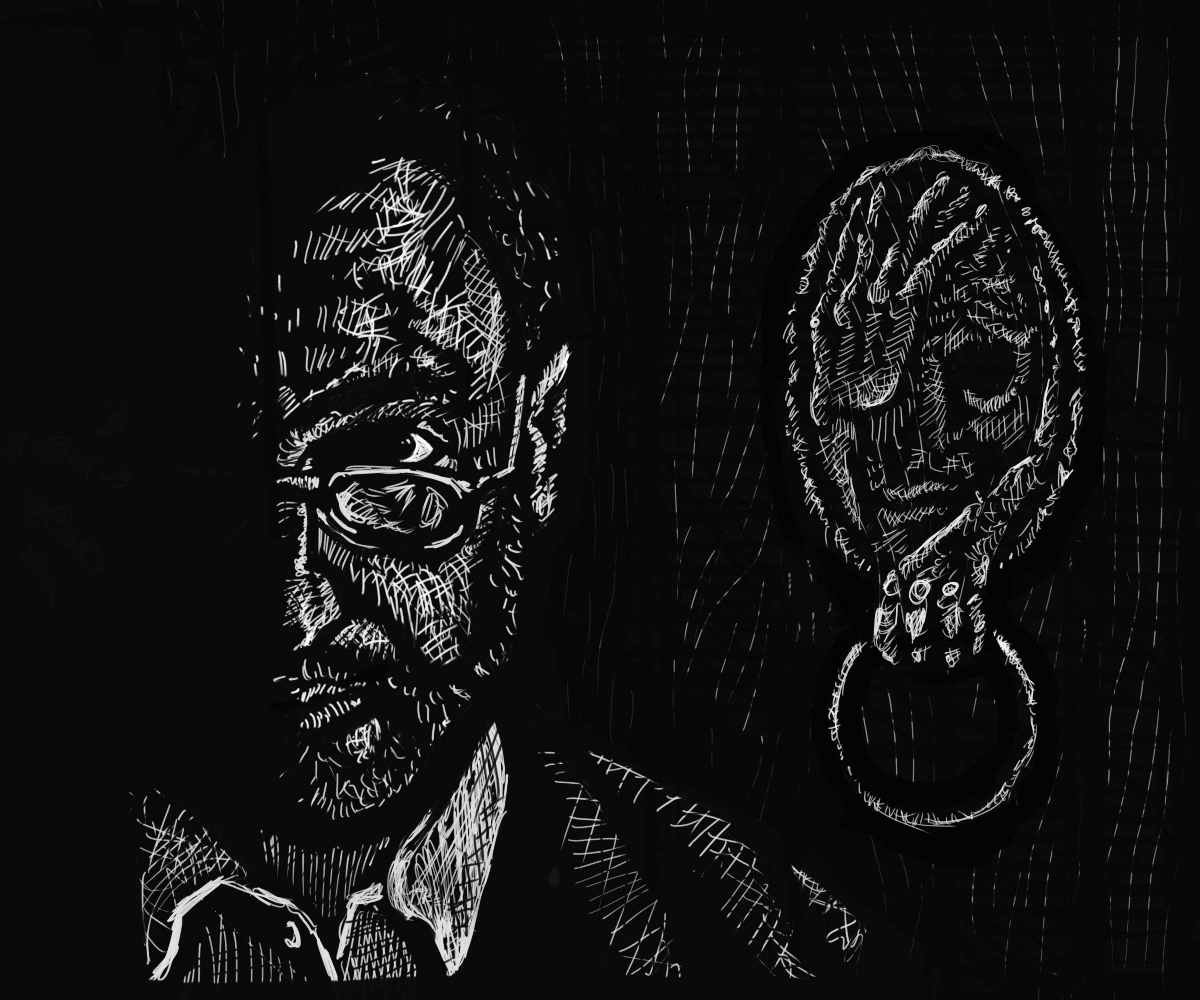
Day 17 - Crooked House with Mark Gatiss as the Curator


Day 18 - I think I'm calling this one "Black Goat Kaleidoscope"


Day 19 - Ghastly McNasty, Editor at Large #inktober2017


Day 20 - A regular face at the Great Library of Dreams...


Day 21 - Misty


Day 22 - another piece inspired by MR James
"One thing I did notice in the carving on the well-head, which I think must have escaped you. It was a horrid, grotesque shape — perhaps more like a toad than anything else, and there was a label by it inscribed with the two words, “Depositum custodi” - "Keep that which is committed to thee"...

from The Treasure of Abbot Thomas


Day 23 - The Stain of Vampirism - this piece was very much an exercise in seeing what suggested itself from some random splashes.

Sunday, 5 May 2013

DOCTOR WHO 7.11 - The Crimson Horror


Scanners indicate the presence of spoilers


So then Episode 7.11 brings us the second offering from Mark Gatiss in this half of the series. Now given the Victorian setting and knowing Mr Gatiss's love of all things horrific, I'm sure that more than a few of you were expecting something along the lines of his first Who episode The Unquiet Dead. However after a run of monster-heavy episodes and knowing that in next week's story Neil Gaiman is promising to make the Cybermen scary again, I guess that The Crimson Horror would be more of a romp than a chiller.

And indeed, my exercise in Holmesian deduction proved to be quite, quite correct!

Oh alright, the presence of the Paternoster Gang - that's Madame Vastra, Jenny and Strax to you chief - did rather give it away! I mean, honestly how could any story featuring a Silurian lady, a Cockney minx and a comedy Sontaran investigating a sweet factory not be a romp?

Now I could quite easily write several paragraphs at this juncture pointing out that actually a lizard lady and a proto-Mr Potato Head living in London in the 1800s would not actually be as implausible as some of you may think; pointing out that Victorian society wasn't a said and stolid affair but an exciting go-ahead culture where everything was changing rapidly, sensation was the key word in culture and royalty was dropping by to take tea with the Elephant Man. But as the show itself takes a light-hearted tack with this trio of adventurers, so nor should we. So then realistically, going lighter is the correct way to go when your supporting cast is the Pasternoster Gang.

And personally, I don't mind the show sometimes going lighter and funnier - admittedly it doesn't always work, but in fairness that's true of all the different modes the show operates in. However that undoubtedly is the main problem of The Crimson Horror - the Elephant Man in the room as it were - for some just don't like it when Doctor Who breaks out the comedy. And if you're one of that merry band, I'd strongly advise skipping this episode, as you'll hate it.

However for me the injection of comedy in this episode worked a treat. The Crimson Horror was a glorious fusion of Victorian adventure, horror and humour. Yes, it was rather silly in places, but the comedy never detracted from the plot, which itself was a glorious confection of pop culture. We had steampunkery, Dickensian melodrama, and touches of Hammer horror and Carry On comedy in equal measure. The actual story itself managed to nod at both Moonraker and Frank Henlotter's Brain Damage - quite something itself - but also featured the kind of psychedelic mad science scheming from a thoroughly British eccentric that would not be out of place in a vintage Avengers episode.

No, not the Marvel comics superhero menagerie, but the British Avengers - the long running 1960's pop art espionage TV series featuring the adventures of John Steed (Patrick McNee) and a succession of beautiful ladies, most famously Mrs. Peel, who often wore a leather catsuit like the one Jenny sported in this episode. Of course Mrs Peel was played by Diana Rigg who played the villainous harridan Mrs Gillyflower in this story. And there were further meta shenanigans ahoy too - for Ada, Mrs Gillyflower's long suffering daughter was played by Rachael Stirling, who is Rigg's real life daughter. Apparently the ladies had never acted together before and Mr Gatiss obliging wrote this episode with them in mind, hence we have Dame Diana using her native Doncaster accent and both mother and daughter clearly having a ball in their roles.

The Paternoster Gang too were well served in this episode. Dan Starkey's Strax was a delight as always and while Neve McIntosh's Madame Vastra took more of a backseat role, it was nice to see Caitrin Stewart's Jenny take more of the limelight. Now I know that many - well among those that love them at any rate - have been calling for a spin-off series along the lines of Madame Vastra Investigates but I must confess while it sounds like an excellent idea, I wasn't entirely convinced it could work in the long term. However on the strength of this episode, if it was more a Victorian/steampunk Avengers than a period-bound Who, it could work...

Now obviously if you don't like the humour or get the homages The Crimson Horror will go down like a lead balloon, however for me it was great fun on many levels, and my only real misgivings were with the epilogue. I must hold my hand and say that the prospect of the Doctor being saddled with two ankle-biters next episode doesn't exactly fill me with joy. And having two child sidekicks in tow doesn't seem to meld comfortably with Nightmare in Silver being mooted as a return of the Cybermen to their classic roots. But then again, Neil Gaiman is writing that one, and I didn't think The Doctor's Wife sounded like a good idea beforehand either...


Monday, 15 April 2013

DOCTOR WHO 7.8 - Cold War


Scanners indicate the presence of spoilers

So then, after a low key opening episode and a highly divisive one, the third installment of Series 7B sees the return of two old friends to the show. Firstly this episode was penned by Who regular Mark Gatiss, but more significantly for old time fans, Cold War sees the return of one of the legendary Doctor Who monsters, the Ice Warriors!

Now in the pantheon of famous monsters, the Ice Warriors rate very highly, often jostling with the Sontarans for third place after the Daleks and the Cybermen. And that's very appropriate as those two biggest of bads had a direct influence upon the creation of the Ice Warriors. Briefly then, in the late '60s, it was decided to give the Daleks a rest from the show, largely because the homicidal pepperpots' creator Terry Nation had other plans for them. So then after the Second Doctor adventure The Evil of the Daleks, they were to disappear for many years, and hence the Cybermen became a recurring villain for Patrick Troughton. However the production team were keen to have another recurring race of evil aliens and hence script writer Brian Hayles came up with the Ice Warriors to ease the burden of villainy on Mondas' finest.

Hitting the the screen in late 1967, their eponymous debut adventure The Ice Warriors was a huge hit, and so returned to menace the Earth (and the Second Doctor) in 1969 in The Seeds of Death. However, and here's where it get's interesting, in their next proper outing (they had made cameo appearances in The War Games and The Mind of Evil)  in the Third Doctor story The Curse of Peladon, wily Mr Hayles had a trick up his sleeve. For in this tale, set in the far future, the twist was that by this point in their history the Ice Warriors had were not longer hostile war-mongers and weren't the villains of the piece! 

However in their fourth and final story in the classic series, The Monster of Peladon,  they were back up to their old war-mongering tricks, albeit in the shape of a rogue faction wanting to return their civilization back to the old martial ways. They were scheduled to reappear twice more in the classic series in stories that never got made due to internal troubles - in a Sixth Doctor adventure Mission to Magnus (which later appeared as a Target Missing Episodes novel) and tangle with the Seventh Doctor in Ice Time (but later surfaced as an audio play Thin Ice).

But despite last being seen in the Jon Pertwee days, the Ice Warriors have remained firm fan favourites. And I believe this is largely because Hayles chose to sketch in a history for them in which their society and attitudes changed over the centuries, making them a more fascinating race than the usual just thoroughly evil species such as the Daleks. Indeed they have returned many times in novels, comics and audio plays - indeed many more times than they appeared on TV - with other writers exploring them in different eras, where sometimes they are foes and sometimes friendly.  


So then, when it was announced the Ice Warriors were to return, there were a lot more questions other than the usual intrigue on how the new series would interpret the design and look of a classic era creature. What era Ice Warriors would we see? Would they be invaders or diplomats? Would there be references to the long history established in their numerous off screen appearances?

Of course, after the last two episodes which for the sake of brevity we shall file under 'mixed reaction', would Cold War deliver the Who goods some felt lacking in the show of late and unite fan opinion? Well, no, of course not! But largely that's completely irrespective of the quality of the episode, and more to do with the fact that Doctor Who is a highly successful show. For as such the show's stature and high profile ensures that any given episode now will find half the commentators, whether professional, amateur or causal viewer, proclaiming it a 'the best so far', while the other half shrieks 'worst thing ever'.

Now in the case of Cold War, we have the added dividing factor of a Mark Gatiss script. Now personally, I've enjoyed all the episodes he's penned for the returned show, and while I'll happily admit that Victory of the Daleks and The Idiot's Lantern aren't the strongest stories in the show's history or the best he's written, I am somewhat confused by the howling ire from some quarters they seem to generate. So naturally Cold War has generated much eye rolling among the ululating fraternity alluded to above, and if you're among their ranks you'll probably hate this as well.

Another thing I've noticed in the online reaction to this story apart from the usual flow of Gatred, is a lot of dissection, and indeed dismissal, by reference i.e. 'it's just Alien on a submarine' or 'The Hunt For Red October meets Alien'. Now it is true that these days, you can probably sum up any new stories with the 'it's x + y with a dash of z' formula. But, and this is a big but here folks, it really does help if you know what in the name of Rassilon you're talking about!

Yes, both Cold War and The Hunt For Red October feature a submarine and a maniac threatening the world, but so does 20000 Leagues Under The Sea - and I think that nicely illustrates nicely how ridiculous it is to base charges of rip-off on two shared elements. And no, it does not make a difference that the first two also have Russians in common either - the point here is that the shape and dynamics of the stories are very different, and two or even three shared elements do not make them the same!

If comparisons to Sean Connery's exercise in being making Russians sound Scottish are lazy, the parallels thrown around to Alien are just shockingly ill-informed. To begin with, if you know anything about Alien or SF movie history in general for that matter, you should know that Ridley Scott's tale of an unwelcome interstellar hitch-hiker is hardly an original work. Beautifully and brilliantly executed yes, but original, hell no! As discussed in this episode of Hypnobobs, Alien draws heavily from Dark Star and Planet of the Vampires and as a whole is pretty much a remake of It! The Terror From Beyond Space. 

Furthermore, Alien also owes more than a little to a Fourth Doctor story The Ark In Space. And it should be noted that over the years the monster-on-the-loose in a closed environment trope has been done very often in Doctor Who, so much so fans have dubbed the 'base-under-siege' subgenre. Indeed the eponymous Ice Warriors adventure in 1967 is a classic example of the base under siege story.


Of course in classic SF, the classic base-under-siege story is The Thing From Another World, and as it also features an alien being thawed out of ice and was an influence on Alien too, you could argue that that Cold War is ripping off this 1951 movie. However again, monsters being defrosted from blocks of ice isn't original to The Thing From Another World - HP Lovecraft did it well before even the John W. Campbell novella The Thing is based on in At The Mountains of Madness and The Horror in the Museum, and even then the trope didn't originate with him.

More importantly however, to reference either Alien or The Thing From Another World in relation to Cold War is somewhat wonky as both these SF classics, while fitting comfortably in the base-under-siege subgenre, are actually a different species of story to the Doctor Who take on the trope. Howard Hawks and Ridley Scott's movies are bughunts - a  mindless beast stalks the humans and picks them off one by one, whereas in Doctor Who, in both the classic and new series, the alien threat tends to be an intelligent invader with a plan for domination that extends far beyond just snacking on the locals Ten Little Indians style.

And this is why, provide you not got a Gatiss axe to grind or wrong-head popular references in your eyes, most folks will find much to enjoy in Cold War. For it is an adventure in the classic mode, a piece of solid storytelling with the Doctor caught up in a fraught situation and an intelligent foe to verbally joust with. There's action, a historical setting, and the right blend of horror and humour. As I've remarked before often the essence of a great Who story is a sturdy moral dilemma at the heart of the adventure and Cold War is a great example of this. Gatiss uses the different sides of the Ice Warriors' nature to excellent effect in our defrosted menace Skaldak, allowing the monster become a character rather than another threat-of-the-week.

It's often thought there there is a gulf between the old and new series with the higher emphasis on emotion and character being at odds with traditional adventure serial storytelling. But if you look at the past stories that are considered classics of the old series, such as The Sea Devils or Genesis of the Daleks to name but two, you find that it's the ethical arguments between the characters that give them their emotional wallop rather than the thrills and spills of the adventure. And Cold War shows that the new show, with its greater character focus, can unite the two rather well in the right shape story. This is an old school adventure with a new series gloss - and in fact, many I suspect would say exactly the kind of story the show should be more of.

But that's not say this story might not ruffle the feathers of the old guard. For perhaps where this episode is most controversial for old school fans is the depiction of the Ice Warriors. Now design-wise they stick closely to the previous versions, and the backstory is consistent enough with what has previously been established.  But the business of them being able to pop out of their suits might seem to some like an uncomfortable bit of stealth reimagining.

However this seemingly new aspect of the Ice Warriors is actually canon - Brian Hayles conceived them as a reptilian race with cybernetic systems and while this has not been explicitly referenced in the classic series quartet of stories, it has surfaced in their appearances in spin-off media. Indeed we have seen a de-armoured   Ice Warrior already before in comic strips such as Ascendence and as you can see here -


So all this apparently new details of Ice Warrior biology is actually reasonably canonical. If I were a nit picker (possible irony alert considering the ranty section above about getting your references right), I might wonder how those long fingers fit with the human style gloves the armour has, but as we are not given any indication how large the natural Martian inside the suit is, it might be a Aliens power load kind of setup with the armour being more vehicle than clothes.

But all of that is largely a cosmetic concern, as in terms of the episode it made for a good twist and, perhaps more importantly they didn't show us the full creature. Indeed when you have a monster on the loose, they're are always scary when you only see them partially. More longer term, on reflection I think it's quite fun not to know what the Ice Warrior inside looks like.

It's probably too early to say whether Cold War is a bona fide classic or not, but certainly it was a delight to watch. For a start, we had an excellent guest turn from David Warner who, let's face it, is always excellent in anything he appears in. Equally good was Liam Cunningham, now perhaps best known as Davos in Game of Thrones, as Captain Zhuhov, and the pair provide two strong characters to underpin the main cast. Matt Smith was excellent as always, but it was nice to see a quieter, more serious side to his Time Lord. Also quieter and better for it was Jessica-Louise Coleman; Moffat has referred to these opening three stories as a sort of getting to know Clara trilogy and I think we have seen her character rounded out rather nicely.

All in all then, a very solid episode that I think should sit well with most fans, both old and new. Looking forward to see what next week's haunted house antics will bring us!


Sunday, 18 December 2011

HYPNOBOBS 60 - Christmas Spirits Part II - Ghost of Christmas Television Past


In the second part of our Yuletide festivities, Mr Jim Moon takes an epic length look back at all the various ghostly tales that have haunted our televisions in Christmases past. Featuring productions by luminaries such as Lawrence Gordon Clarke, Dr Jonathan Miller, Nigel Kneale and Mark Gatiss, plus many diverse adaptations of classics by MR James and old favourites like The Turn of the Screw.


DIRECT DOWNLOAD - Christmas Spirits Part II - Ghost of Christmas Television Past

Find all the podcasts in the HYPNOGORIA family here -

HYPNOGORIA HOME DOMAIN - Full archive, RSS feed and other useful links

HYPNOGORIA on iTunes

Saturday, 3 September 2011

DOCTOR WHO 6.09 - Night Terrors

Scanners indicate an absence of spoilers

Now Mr Mark Gatiss surely need no introduction to followers of the TARDIS, as he wrote The Unquiet Dead, The Idiot's Lantern and last year's Victory of the Daleks, was the eponymous star of The Lazarus Experiment, and author is the author of several Doctor Who novels and audio plays. And indeed, he's no stranger to fans of cult television in general, as one quarter of the League of Gentlemen, co-star and co-creator of Sherlock, and numerous roles in the likes of Spaced, The Quatermass Experiment and Nighty Night.

And after the Daleks meet war movie homage of the last series, he's back on spooky ground! And Mr Gatiss does scary rather well, as he demonstrated with the eerie mini series Crooked House, which pleasingly continued the BBC tradition of televising ghost stories at Christmas. And I am sure I am not alone in being a bit creeped out by the pictures of the strange doll-like figures before the episode had even aired.

Now ultimately, how effective this episode will be for you, depends on how you feel about creepy old dolls.
Personally I'm not a fan after being traumatised at a young age on hearing a version of this old chiller. Hence I found there were eerie moments aplenty in this episode. Plus the haunting sound of old fashioned songs sung by child voices also never fails to raise the hairs on the back of my neck.

However the actual story is fairly simple and straight-forward, looking almost basic after last week's plot explosions. However this is a story all about the atmosphere and emotions, and an uncluttered narrative full of spookiness and dark ambiance was a refreshing change of pace after the high octane madness of Let's Kill Hitler. Indeed, even if the dolls and decaying Victoriana don't push your fear buttons, you may well still be pleased with this little tale for it has a traditional beginning, middle and end format with none of that  time-wimey mucking about.

Also it was also refreshing to see a story set on present day Earth, as this is the first time we've been back since The Lodger last series! And the fact that it seemed a novel location only goes to show how well the Moffat tenure has moved the Doctor back to exploring space and time after the earthbound feel of the Davies years. Additionally however, what Night Terrors does rather well is to make the familiar unsettling. It's full of well observed little touches that may well transport you back to the days when bed time was an unwelcome prospect as you knew that as soon as the light went out, the toys in your bedroom would cast bogeyman-shaped shadows on the walls...

And it's good to see the Doctor tackling a relatively small scale local threat for a change. We don't need mind bending paradoxes and the universe blowing up every week. Indeed for those types of tales to work, we need the smaller scale stories in between. Hence with regards the scope of the tale and traditional storytelling, Night Terrors felt like a classic series tale in many respects, and that's not a bad thing at all.

 However it's not totally old school though as it does have the emotional warmth that the show again when it returned in 2005 too. However it's prime focus is still the story rather than tugging at the audience's heart-strings in a contrived fashion as the new version of the series has been wont to overdo at times. Also Night Terrors felt like it fitted it's running time perfectly - I didn't feel like this was a story that would benefit from being a two parter or felt overly rushed.

So all in all, quite a successful blend of the new and old, which is just as it should be...  Indeed, to invoke a shared childhood memory, this episode was like the perfect bowl of porridge. Not the stuff of banquets or haute cuisine, but at the same time, sometimes you know there's nothing more satisfying than porridge - when it's not too hot and not too cold, it's just right...


Monday, 26 July 2010

SHERLOCK - A Study In Pink


Spoiler free, my dear Watson!

Sherlock Holmes is one of fiction’s most enduring creations, and he is so firmly embedded in the public imagination that some mistakenly believe him to be real. Not only do tourists flock to Baker Street to see where the master detective took his residence but to this day he still receives letters from the misguided members of the public offering him a case. Much like his contemporary Dracula, he has appeared in so many versions on our screens, and so many divers hands have created fresh adventures for him, that his fictional weight seems to have reached a density where it may distort the fabric of space-time and hence people assume that all these stories are based at least in part upon the exploits of a real life person.

However also like the Count, he is such a familiar character, new iterations of his adventures tend to fall into one of two camps; either directors plump for a reverential approach holds fast to the traditional portrayal of the character and his world which revels in the Victoriana, or they opt to reinvent the tropes, focusing on differing aspects of the canon or radically rewriting the character wholesale. However frequently these new incarnations, whether trad or rad, are uniting in their claims that this latest version will be truer to the original texts.

And equally often, these claims prove to be somewhat dubious. Like Frankenstein and Dracula, the trouble with Holmes is that the public perception of the character has been indelibly altered by the power of the early renderings of the character. Hence in the same way that most people are unaware that originally Frankenstein’s Monster was an intelligent and highly articulate being rather than a lumbering hulk festooned in sutures, or that Stoker’s Count wore a moustache and could walk aboard in daylight to no ill effect, few realise that the Holmes created by Sir Arthur Conan Doyle was never described as habitually wearing a deerstalker and Inverness cape or ever uttered his famous catchphrase ‘Elementary, my dear Watson’. Therefore many elements that audiences consider to be traditional, and hence are included on screen, are in fact additions to the original texts.

Holmes' famous saying actually first appeared in the William Gillette stage productions. And his trademark garb actually comes from the famous Sidney Paget illustrations that accompanied Conan Doyle’s tales when they originally were published in The Strand, which served as the visual template for the most influential screen version of Holmes, the Basil Rathbone films. And this series of movies created the bulk of the popular conception of the characters – Rathbone’s Holmes established the typical portrayal of the consulting detective as a stern and icy logical thinker, while Nigel Bruce gave us Watson as his bumbling comic relief sidekick.

Interestingly though, these screen adventures are both trad and rad; the first two entries produced by Fox are Victorian outings whereas when Universal picked up the series they moved the setting to contemporary times, and had Holmes and Watson tangling with pulp style villains like the Spider Woman and foiling Nazi plots. And while die-hard Sherlockians may favour the Jeremy Brett television adaptations as being the definitive screen Holmes, an opinion with which I concur incidentally, in the pop culture consciousness it’s Rathbone and Bruce that most readily spring to mind.

Now at heart I am something of a purist, and as regular visitors to these pages will know, I am firmly of the opinion that if you are going to adapt a famous work of literature, then you should stay to true to the source. Yes, changes are inevitable in the translation to the screen, but this isn’t carte blanche to discard everything and produce a a work that only shares the names of the characters in common with the original. And so when I heard the internet faeries whispering that there was a new television version of Holmes in the offing and that it would be set in modern times, I put the kettle on ready for a visit from Dr Rant and Mr Swearing.

Thankfully though, these two dubious mental gentlemen postponed their appointment when further intelligence reached me that the guiding lights in this venture were to be Steven Moffat and Mark Gatiss. Mr Gatiss I knew was a great admirer of the master detective and Mr Moffat’s modernisation of Jekyll and Hyde, another venture that I was initially dubious about as it had shed its period setting, turned out to be a great delight. And naturally being impressed with their work on Doctor Who into the bargain, I was of the mind that if anyone could pull of a contemporary rendition of Holmes, it was this duo.

And after further cogitation on the subject, I did come to the conclusion that the concept of moving the characters forward into our age was not necessarily such as bad idea. After all, the Jeremy Brett series did so marvellously bring the canon to the screen, was there any real point in trying to top it? Against such stiff competition, it does make sense to attempt something different rather than compete with these classics.

Even more encouraging though was the news that despite being initially conceived as a one-off, the BBC was so impressed they commissioned a series of three feature length episodes. And I am very pleased to report that both my faith and that of the mandarins at Broadcasting House in this endeavour has been amply rewarded. The first episode of Sherlock, A Study in Pink is both a fantastical piece of television and a great reinvention of Holmes.

Firstly they avoid a major pitfall by crafting a new case for Holmes to crack. The details of Holmes’ deductions are often so rooted his world and his times, that any attempt to move one of the classic tales over a hundred years into the future would make a nonsense of the proceedings. Rather than a mere modernisation of Conan Doyle’s stories, Sherlock is perhaps better thought of as an alternate universe version of Holmes where he exists our modern times, and hence A Study in Pink, while it borrows some components from the first ever Holmes adventure A Study In Scarlet (1887), is very much a separate adventure in its own right.

And despite the change in period, they have actually delivered a Holmes that is in many ways very close to Conan Doyle’s original. As they have both remarked in interviews preceding the series airing, their concept was that what makes the Holmes stories so enduring is not all the gaslight and pea soupers, but the brilliant deductions, the unravelling of the mysteries, the outré nature of the crimes and the interplay between our two heroes. And Sherlock proves that if you get these elements in the correct measure, then it really doesn’t matter when the stories are set.

And barring a couple of contemporary touches, Moffat and Gatiss haven’t messed about with the fundamentals. He may wear nicotine patches to appease health Nazis and use a mobile phone but essentially he's the same man as ever. Hence Sherlock is a reintroduction to the character rather than the dreaded reimagining. All the incisive reasoning is here in abundance - something the recent incarnation of Holmes courtesy of Guy Richie was a little light on – and rightly it drives the devilish plot forward. Benedict Cumberbatch captures not only Holmes’ intellectual brilliance but his relish of a challenge and there is great chemistry brewing with Martin Freeman’s Dr Watson; as the mystery unfolds, their relationship grows.

Although this is very much an introductory piece, A Study in Pink thankfully isn’t an origins story. In a sense, what we are actually presented with here are two mysteries; aside the titular case, we are introduced to the characters and their new world through Watson himself attempting to unravel the enigma of who Holmes is and what he actually does. It’s a marvellous mechanism that allows the episode to leap straight into the main plot very swiftly while at the same time establishing the key characters, relationships and elements of this new Holmes.

And I must applaud the decision to make the episodes in this series feature length. In order to present a proper Holmesian mystery, there are layers of deduction to be peeled back and the more usual 45 or 60 minutes just isn’t long enough to include the depth of detail that a case worthy of the world’s greatest consulting detective. Also I must praise the music, which I felt was nicely retro; an old school orchestral score that evokes the period spirit and atmosphere of the Holmes stories. Similarly the London depicted is closer to the real city than we often see, with its mix of ancient and modern buildings, and as often grimy and smoky as it is flash and shiny.

Now as I am keeping this missive spoiler free, I shall speak no more of the intricacies of the narrative. Suffice to say then this outing has great pace, masterful performances and is superbly directed by Paul McGuigan. There are some lovely original flourishes in the way the episode presents some of the deductions which I shall leave as surprise for the new viewer. So that said, let us move on to safer waters where we make discuss the details that comprise the new Holmes and Watson.

Undoubtedly there will be both purists who will cry foul at moving Conan Doyle’s creations into the 21st century, and causal acquaintances of the master detective who will disappointed that there is neither a deer stalker nor a voluminous pipe in sight*. However Moffat and Gatiss have brought us a Holmes that adheres closer to the canon than one might expect. To begin, let us examine some of the little details.

Holmes’ rooms at 221 B Baker Street are every as messy as described by Sir Arthur rather the genteel abode most screen version employ. Doctor Watson is once again a veteran of an Afghan war and is introduced to Holmes in the same manner. In our first encounter with Holmes see him brandishing a riding crop, which as any Sherlockian will tell you, was stated as the detective’s preferred weapon. And like his Victorian incarnation, this Holmes has also dabbled in illicit substances.

However where Sherlock most strongly channels the spirit of Conan Doyle is the conception of the characters. Martin Freeman presents us with a Watson that is closer to the original; capable and loyal rather than the clownish companion essayed by Bruce. As in the original stories, this Watson is more a partner in the investigations than a sidekick whose role is to provide comic relief and ask useful questions for the sake of exposition. Also like the original, he’s a man of action as well as a capable doctor, a crack shot and capable of making a few deductions of his own.

Cumberbatch’s Holmes is equally faithful. While some may baulk at the arrogance and the passion he displays, this is how Conan Doyle wrote him. Most interpretations of the role portray Holmes as a chilly thinking machine guided by the cold light of logic, to the extent that in some renditions he appears to be a honorary Vulcan. But this is just one aspect of his personality as laid out by Conan Doyle – the true Sherlock is a man possessing by a formidable double nature; on one hand the icy, razor sharp intellectual but on the other a wild bohemian in constant need of stimulation. The recent Guy Richie movie attempted to readdress this, for example drawing on the little known fact that in the original stories was stated on several occasions that Holmes was a skilled bare knuckle boxer, but in the main Robert Downey Jnr. incarnation comes across a simple thrill seeker. Cumberbatch’s Sherlock on the other hand, is far more psychologically complex – this is a man driven by his inner forces into the role of detective. Doyle always stressed how much of an outsider his intellect and talents made Holmes, and in Cumberbatch we have at last a Holmes who "detests every form of society" like the original.

Similarly the Holmes of Sherlock has also regained his wit. For all his mighty intellect, Doyle's Holmes frequently employed his brain power in dispensing sharp one liners, and it's a real pleasure to side this aspect of Holmes back on the screen.

But also of key importance is the relationship between characters. So often screen versions of this famous pair break down the relationship to hero and sidekick whereas the original stories present are far more equal partnership. But judging from this first outing, Sherlock looks set to rectify this; throughout A Study in Pink you can see the fascination with each other and the friendship developing between Holmes and Watson. By the finale, their relationship is firmly cemented and it is a refreshing return to the originals that we get to see that Holmes values Watson as a true friend rather than a mere companion in crime solving. There is a genuine warmth between the pair that bodes well for future adventures.

All in all Sherlock is a riveting watch. It manages to be solidly traditional and faithful to Doyle while being fresh and modern at the same time. And despite the change in period, I suspect Holmes novices won’t find it hugely disconcerting if they go back and read the original tales. It’s fair to say that Moffat and Gatiss have mixed the characters and flavours with the contemporary world into the perfect seven percent solution. Once again the game’s afoot!

* "I'm f**king with them on that one! Those anti-smoking c***s deserved to be royally f***ed with a meerschaum as far as I'm f**king concerned" - Mr SWEARING


Saturday, 17 April 2010

DOCTOR WHO 5.3 - Victory of the Daleks


One of the more unanimous niggles about the resurrected Doctor Who has been the fact that the Daleks have returned, regular as clockwork, every single season. And even though none of the four specials last year were tales concerning Skaro’s finest, those pesky pepperpots still managed to get their polycarbide shells back on the old goggle-box with a generous cameo in The Waters of Mars.

And I have to say, I broadly agree with this popular sentiment that we are seeing them far too regularly these days. Now don’t get me wrong, I love the Daleks to bits but I do think that things were better when you couldn’t set your watch by their reappearances. In the classic series, despite the great public appetite for Dalek stories, they rationed their appearances and so a new battle between the Doctor and his arch enemies was a big deal – what we would now call ‘event television’ – rather than an expected feature of every season.

However other diluting their screen power, there is another problem tied up with the overexposure of the Daleks, and I suspect, a major source of the annoyance with their constant returns in the new show. And it’s this: in every appearance, they rebuild their ranks from a handful of survivors only to be completely wiped out again.

Now way back in 2005, when Who had just returned this was acceptable; when the Emperor and his hoard were dissolved by Bad Wolf/Rose it made for an epic and thrilling finale to the first series. The mass destruction of the Dalek fleet had an almost operatic feel to it and neatly provided closure to the back-story arc concerning the Time War and its effect on the Ninth Doctor. And from a production point of view, considering that no one foresaw the huge success of the show would turn out to be, it made sense to tie up all those loose ends neatly. More to the point, as it was very possible that the new Who could end up being axed, Russell T Davies could afford to go for a real Götterdämmerung ending and exterminate the Daleks completely.

However repeating this formula every series since is less forgivable. Firstly, even though we always expect arch enemies to cheat death and return again and again, does every outing have to end with their final end? Couldn’t the Doctor just defeat them for a change? Foil their plans and force them back, rather than commit another act of genocide. Secondly, these constant Dalek apocalypses create a real pain in the arse for the unlucky sod that has to find a way to conjure up another hoard of Daleks to menace the universe.

And for this latest Dalek return, the aforementioned unlucky sod is Mark Gatiss. Although perhaps best known for being one of the League of Gentlemen, he also is a long time Doctor Who fan who has ended up realising his dreams to be involved with the show. In the regenerated series, he penned The Unquiet Dead - a personal favourite of mine from Series 1, The Idiot’s Lantern in Series 2, and starred as the villainous Professor Lazarus in Series 3’s The Lazarus Effect.

Furthermore, during what Gatiss himself wryly refers to as ‘the interregnum’ – that dark time between 1989 and 2005 when the good Doctor had vanished from our screens - he wrote four Who novels. Two were for Virgin Books’ continuation of the series, furthering the adventures of the Seventh Doctor in Nightshade and St Anthony’s Fire. And the other pair were for the later BBC range of Past Doctor Adventures; The Roundheads which was a historical outing for the Second Doctor, and Last of the Gaderene which was a tale set in the UNIT era of the Third Doctor’s life. Plus he also scripted two audio plays for Big Finish (who were also furthering the travels of the Doctor while he was away from television) -Phantasmagoria and Invaders From Mars.

And if all of that wasn’t enough Time Lord credibility for you, his favourite book in childhood was the Target novelisation of the Jon Pertwee classic Planet of the Daleks. And perhaps this is most relevant thing on his Who CV…

But more on that later! On the episode itself…

Considering the first two episodes have effectively been new pilots for the revamped series, Gatiss was a good choice to helm the third, the point when the show can just get on with the action. And being very familiar with most of his previous Who output, and indeed the rest of his canon, I was hoping an old school adventure but packed with fresh ideas rather than lapsing into a mere pastiche of past stories. And indeed this is what he delivered. In spades!

My initial reaction is that this is perhaps the best of the three episodes he has penned for new Who. Let’s face it, when you give a writer who understands stories and genre tropes as well as Mark Gatiss the brief 'write a script involving Daleks and Churchill', you’re bound to get something good out the other end.

So we have a wonderful portrait of Churchill, that is both fun and respectful, and brilliantly performed by Ian McNeice, Bill Paterson shining as the slightly bumbling but quite brilliant Dr Bracewell, the Daleks being subtle and cunning, and all wrapped up beautifully in the wartime setting. Throw into the mix an impressive set piece consisting of spitfires taking on a Dalek saucer plus some clever plot twists and we have a winning episode here.

Also it was nice to see Amy getting plenty to contribute throughout the story and again it was good that the resolution involved some old fashioned quick thinking rather than the magic solution new Who has relied on too heavily in the past, particularly when the Daleks are involved.

However I do have some negative points to raise. I don’t whether it was down to the traditional adventure yarn structure or the fact that this is an early outing for a new incarnation, but the Doctor himself felt a little more generic. Now Matt Smith was wonderful as ever, but some of the time his part could have been played by any of the other Doctors. And I am perhaps being a little nitpicky - after all we get the superb scene where he bluffs the Daleks with a jammy dodger!

On reflection, I think the problem was that the episode was so fast paced that at some points there just wasn’t the time for the Doctor’s new personality to shine through as much as the previous two episodes. Of course, stories not having the space to breathe is the curse of modern Doctor Who.

To be honest, I really think that the BBC should bite the bullet and extend the running time and make each episode an hour long. As the specials last year proved, that extra fifteen minutes does make for better pacing and story telling. I appreciate that in an effects heavy show like Doctor Who the mandarins at Broadcasting House will be worried about the extra expense but really the additional time doesn’t need to be more explosions and eye candy. In fact, the extra time would ideally be more of the cheapest scenes - people talking and mood shots; all those little details that flesh out the plot and the characters.

And certainly I feel that this episode was deserving of more a little more time. Perhaps not stretching it out to a two parter, but an extra quarter of an hour would have given the plot more room to breathe and for the script to spread its wings a lot further. For example, I'm not sure we get to spend enough time with Bracewell for his ultimate salvation to have all the proper dramatic impact it could have.

Secondly, those spitfires in space… They were marvellous but - and this is not a criticism of the episode itself - I did think it was a bit of shame that they’d showed snippets of this impressive set piece in the trails. Now obviously as it’s a brilliantly executed sequence that looks truly cinematic it's only natural the BBC wanted to show it off in the previews.

But as stunning as it was - and I heartily concur with a tweet I’ve just seen by comics author Andy Diggle that reads ‘Hard to focus on the aerial dogfight in tonight's DR WHO because I was literally weeping with joy’ - imagine how much more amazing it would have been if you didn’t know it was coming...

Last niggle - the new Dalek design. Now I don’t mind the bright colours - after all, these are a set of Dalek leaders. The Stolen Earth/Journeys End has shown us a Supreme Dalek in red livery, and in the classic series we've seen colour coded Daleks in command positions - a pertintent example here would be the Gatiss favorite, Planet of the Daleks which features another Supreme Dalek in gold and black. Similarly the loss of the slats around their waists and the enlarged bumpers is a return to the designs of the Hartnell days - check out this Dalek Commander from their second outing The Dalek Invasion of Earth and compare it with tonight's newcomers.

My problem is they seem to be, well, a little too chunky for my tastes... Oh sod it, I’ll just come out and say it - to my eyes it looks like they’ve got fat arses now! Exterminated all the pies, did you? Maybe the new look will grow on me - I hated the new Cybermen the first time I saw them but love the design now - so time will tell.

Of course, not all future Daleks may follow the new design - these were a set of founding father models remember. Which brings me to the biggest issue I had coming into this episode and the one I addressed in the opening of this review - were the scourge from Skaro back again only to meet another ‘final’ end?

Thankfully no! As I’d hoped, the new Moffat broom isn’t repeating the same lazy pattern of threat to the universe/destroy the Dalek race. And as I suspected Mark Gatiss was the perfect man to break the cycle. Remember I mentioned his love for the Third Doctor story Planet of the Daleks? Well, the pertinent point here is the portrayal of the Daleks in this outing. This six parter’s plot takes place in future history when the Daleks are plotting an major intergalactic campaign, one of several they launched in this period. On the mysterious planet Spiridon, they are secretly building up an army to conquer the galaxy and carrying out covert experiments to replicate a unique ability Spiridon’s natives possess - the power of invisibility.

Now while the Time War and the elevation of the Daleks to universe destroyers was a logical extrapolation of their ultimate plans, it is a limiting factor for story lines. After all, after they have attempted to obliterate the rest of creation, how do you top that? And the cycle of return/total destruction was just as constricting.

Now with Victory of the Daleks Gatiss has returned them to the status they held in the classic series - a constant menace to other civilised worlds, building empires and hatching fiendish plans to conquer galaxies. And the redesign, which harks back to these earlier days, reflects this back to basis approach. The way is open once again for smaller stories - the small defeats and thwarted schemes we all want to see again. Indeed skirmishes like this one, where the stakes are high but not apocalyptic.

And for this reason, despite a few niggles, I rate this episode very highly. Victory of the Daleks is well named - it restores the Daleks to their rightful place in the show’s mythology, but more importantly, the Daleks actually win this one! Yes, the Doctor and Amy may have prevented them from destroying the Earth but that was never their real objective. Their true goal was accomplished - to build a new Dalek race and even as I type this they are no doubt making planet fall on their old home world Skaro, ready to begin hatch further diabolical plans…