Showing posts with label Ramsey Campbell. Show all posts

Sunday, 31 July 2022

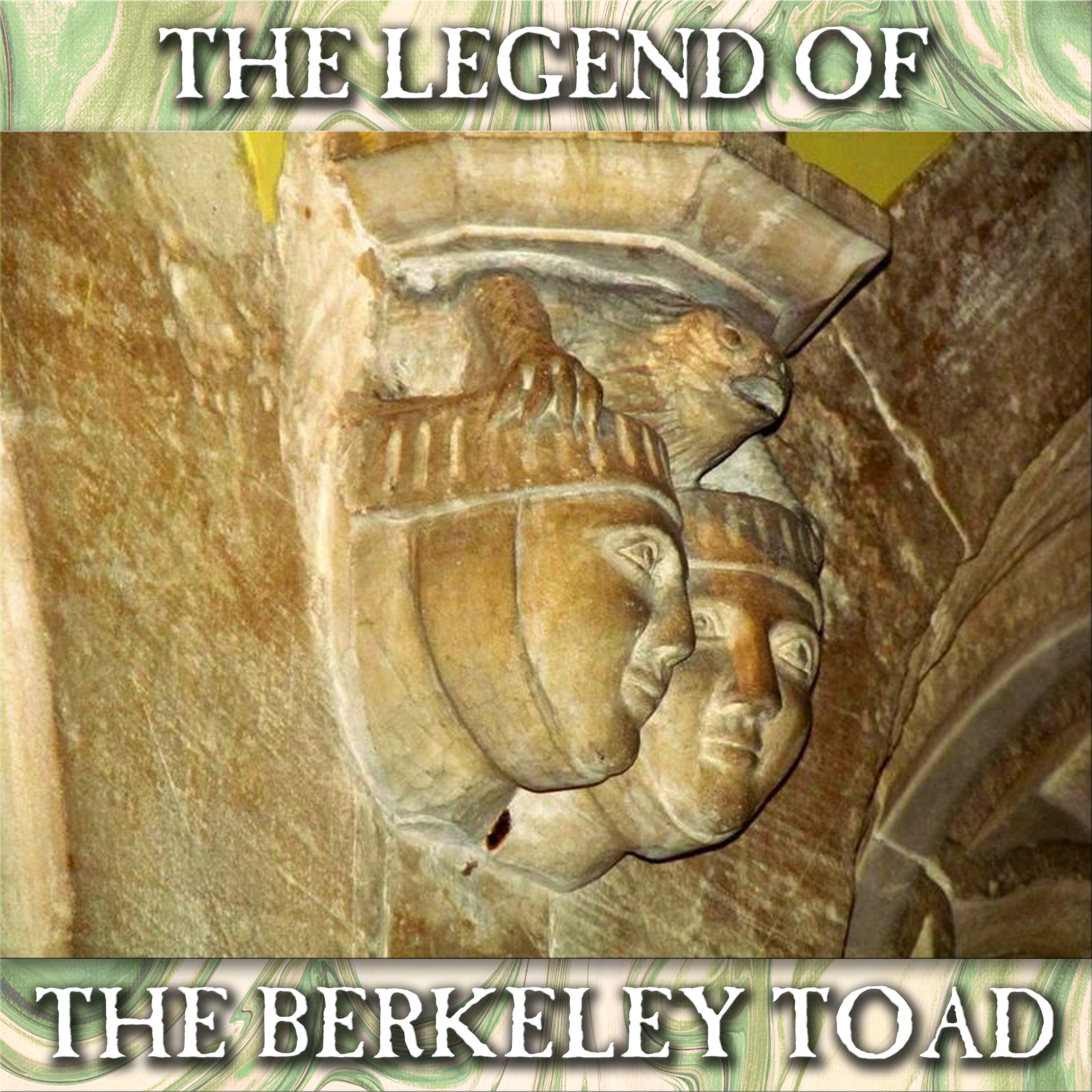
HYPNOGORIA SUMMER SPECIAL 05 - The Legend of the Berkeley Toad


In this show we go hunting for a most sinister cryptid, and uncover monstrous secrets in the writings of Ramsey Campbell, the cosmic horrors of the Cthulhu Mythos, and a dark British legend lurking in an ancient castle!

DIRECT DOWNLOAD -  The Legend of the Berkeley Toad


You can find all the podcasts in my series on toads and witchcraft here

Find all the podcasts in the HYPNOGORIA family here -

HYPNOGORIA HOME DOMAIN - Full archive, RSS feed and other useful links


HYPNOGORIA on TUNE IN

HYPNOGORIA ON GOOGLE PLAY PODCASTS


Sunday, 2 May 2021

MICROGORIA 092 - The Gruesome Book


In this podcast we take a look at an old favourite tome - an anthology of horror tales for children assembled by the legendary Ramsey Campbell himself, published back in the 1980s and featuring tales from masters of the macabre such as Robert Bloch, Richard Matheson and Brian Lumley! Kid's stuff it ain't! 

DIRECT DOWNLOAD - MICROGORIA 092 - The Gruesome Book


Find all the podcasts in the HYPNOGORIA family here -

HYPNOGORIA HOME DOMAIN - Full archive, RSS feed and other useful links


HYPNOGORIA on TUNE IN

HYPNOGORIA ON GOOGLE PLAY PODCASTS


Tuesday, 31 October 2017

INKTOBER WEEK #4


Day 24 - I'm calling this one "Granny Smith" 


Day 25 - "Before the Storm"

"Something clambered up from the dark - a bloated blanched oval supported on myriad fleshless legs. Eyes formed in the gelatinous oval and stared at him. And he prostrated himself as he had been told, and called the horror's name - Eihort - and under the arched roof amid the nighted tunnels, the bargain was sealed"
from Before the Storm by Ramsey Campbell


Day 26 - "The Red Lodge"
"I saw something slip through the door. It was green, thin and tall. It seemed to glance back at me, and what should have been its face was a patch of soused slime..."
from The Red Lodge by HR Wakefield


Day 27 - "The Headless Horseman"
"When the spooks have a midnight jamboree
They break it up with fiendish glee
The ghosts are bad but the one that's cursed
Is the headless horseman; he's the worst
That's right, he's a fright on Halloween night!"


Day 28 - "The Return of Grimsdyke"
Peter Cushing in Tales From the Crypt 1972


Day 29 - "The Phantom of the Opera"
"He is extraordinarily thin and his dress-coat hangs on a skeleton frame. His eyes are so deep that you can hardly see the fixed pupils. You just see two big black holes, as in a dead man's skull. His skin, which is stretched across his bones like a drumhead, is not white, but a nasty yellow. His nose is so little worth talking about that you can't see it side-face; and the absence of that nose is a horrible thing to look at..."
from  Le Fantôme de l'Opéra by Gaston Leroux


Day 30 - "Prince of Darkness"
Sir Christopher Lee as Dracula


Day 31 - "Portrait of the Artist as a Spooky Man"

And that dear friends brings us to the end of #inktober! This was the first year I actually got it together to give it a shot, and I've had immense fun doing it. For anyone who wants to sharpen their artistic skills or, as it was in my case, revive some long dormant ones, I can highly recommend the simple exercise of doing a sketch a day. It's also a great way to experiment - I had alot of fun trying out some different styles, and while not all of them quite worked, I'm still quite pleased with the results. Certainly I shall be continuing my sketching endeavours into the future from now on! 

Monday, 16 October 2017

INKTOBER WEEK #2


Day 8 - "When It Was Moonlight..."  - I just can't resist the Ionicus style at the moment! Although there's more than a touch of MR James about this one too..


Day 9 - "Morning Stroll, Pnakotus, 400 Millions Years BC" -
This time I was having a go at doing something in a Gahan Wilson style, and hence opted for a little drawing of one of the Great Race of Yith who according to HP Lovecraft's The Shadow Out of Time lived on Earth in the millennia before man...


Day 10 - Nothing clever, just an undead fella! 


Day 11 - "Vincent in Blue"


Day 12 - "Delvers in the Dark" - a little homage to old school RPG art


Day 13 - "He seemed to be a tall thin man — or was it by any chance a woman?— at least, it was someone who covered his or her head with some kind of drapery before going to bed, and, he thought, must be possessed of a red lamp-shade — and the lamp must be flickering very much..." from Number 13 by MR James


Day 14  - The Inhabitant of the Lake - a pen and water colour inspired by the writings of Ramsey Campbell 


Day 15 - The Rose Garden 

"It was not a mask. It was a face — large, smooth, and pink. She remembers the minute drops of perspiration which were starting from its forehead: she remembers how the jaws were clean-shaven and the eyes shut. She remembers also, and with an accuracy which makes the thought intolerable to her, how the mouth was open and a single tooth appeared below the upper lip. As she looked the face receded into the darkness of the bush..." from The Rose Garden by MR James

Friday, 15 May 2015

FOLKLORE ON FRIDAY - The Berkeley Toad


Byatis by Luis Nessi

One of the more entertaining aspects of writing this little series of articles on folklore is the fact that my researches often throw up a huge number of surprises. Often these are the unexpected connections between different things, surprisingly ancient origins for common customs, or simply discovering that the received wisdom on a particular topic is complete hogwash. But every now and then, you unearth something that will give you a little chill...

Over the last week or so, I've been researching the folklore that has grown up around toads; and a very fascinating area of study it is too, as you will discover in the coming weeks. Now then, I was just doing a bit of digging, hoping to discover more about a secretive group of yesteryear called the Toadmen, when I chance upon an article discussing a creature that I was fairly sure was the invention of a favourite author of mine. Now as regular readers of my Great Ghosts of the Shelves articles will know, I have long been a devotee of the fiction of Mr Ramsey Campbell. So then it was something of a strange surprise to find an article by a cryptozoologist on a being that I had always assumed to be one of his creations. 

Mr Campbell began his writing career at an early age, having his first weird short stories published while still a teenager. And in these early years he had fallen under the spell of HP Lovecraft, as many of us do at that age, and hence his first tales were stories in a Lovecraftian vein, expanding the canon of the Cthulhu Mythos. Following his hero's lead, Campbell constructed a milieu of fictional towns, located in the Severn Valley, where his own pantheon of evil Elder Gods and beings from Outside brought the gifts of madness and death to all those disturbing their ancient slumbers. One such early tale was entitled The Box in the Priory, which under the mentoring of Lovecraft's friend and publisher August Derleth, would become The Room in the Castle. And this tale would appear in Campbell's first book, published in 1964 by Arkham House, The Inhabitant of the Lake and Less Welcome Tenants (and can also be found in the Campbell anthologies Cold Print 1985, Dark Feasts 1987, and Alone With the Horrors 1993) which collected together these Lovecraftian pastiches from our young author. 


Now Cthulhu Mythos tales are very much exercises in myth making with writers inventing monsters, alien races and demon gods that haunt accursed places and are referenced in blasphemous grimoires and ancient legends. The approach was pioneered by Lovecraft, who being rather disappointed by conventional occult lore and feeling the likes of ghosts and vampires were a bit too familiar to be frightening, decided to create his own horrors and constructed their own histories and myths to give them life. Other authors - at first friends of Lovecraft such as August Derleth, Robert E Howard, Clark Ashton Smith and Robert Bloch, but later new generations of writers - joined in the game, dropping names and references picked up from each others stories, weaving together a new dark mythos. 

Therefore The Room in the Castle, like many Cthulhu Mythos tales, takes an obscure name found in an earlier story and spins a new yarn with it. In this case, Campbell had picked up on a reference in a Robert Bloch story entitled The Shambler from the Stars (first published in Weird Tales, September 1935). In this tale  Bloch (the man who would later write classics such as Psycho) has his narrator say "I recall allusions to such gods of divination as Father Yig, dark Han, and serpent-bearded Byatis". And as no one else had written anything about the last in that roll call of ancient evil, Campbell decided to pen a story about the snake-fringed Byatis. Hence in the tale we learn the monster god was accidentally freed from its in a primordial tomb by the Romans in ancient Britain, and had haunted the Severn Valley for centuries ever since. Byatis's manifestations was the dark truth behind a local legend of a monster known as the Berkeley Toad, and the alien horror would later be captured by a wicked nobleman who practiced the dark arts, who trapped the horror in a dungeon in the ruins of a crumbling Norman castle. It is a fun little story, and given that it has been reprinted in two best of collections, it's fair to say it's one of the better Lovecraftian pastiches the young Campbell wrote. And indeed it is a favourite of mine too, and not just because its hero is a researcher into folklore!   

So then, imagine my surprise when I stumbled upon a site relating the tales of the Berkeley Toad as actual fact. At first, I simply assumed that this was merely the product of the kind of sloppy journalism for which the interwebs are notorious. And the paucity of the results yielded by an initial causal Googling seemed to confirm this, with the Berkeley Toad only appearing on pages relating to Byatis, the Cthulhu Mythos and of course Mr Ramsey Campbell. However one should never give up after the first attempt, and with some more extensive and careful searching, I discovered to my surprise that actually the reverse was true - that what I had assumed to be a fictional entity was in fact real. Or rather, a real life legend I should say...

Now it is fair to say that this is a rather obscure local tale, and I had trouble in finding sources for some of the claims in the original article, and its recounting of Romans discovering a curious tomb sound suspiciously like a garbled version of Campbell's backstory for Byatis. However I have established the following facts...

Berkeley is a small market town in Gloucestershire, and indeed just like in Campbell's story there is a Norman castle there. However rather than being the isolated ruin of the tale, Berkeley Castle is still in relatively good order and is the home of the Berkeley family - indeed it is the one of oldest continuously inhabited castles in England.  However in the Morning Room of the castle there is a curious carving which depicts a monstrous toad-like thing squatting upon two human heads. More curious still, a very similar carving of a toad and two heads is found carved on a corbel in a local church, St. Marys. And significantly this carving adorns the chapel of the Berkeley family tombs.

Toad carving in the Morning Room of Berkeley Castle


According to the conventional wisdom, these carving are supposedly what is often called a sermon in stone. The medieval world had a complex system of symbolism, and hence many odd features in old churches that feature seemingly un-Christian things are actually visual lessons using this  language of imagery. In the medieval mind toads were associated with poison (for they secrete toxins as a defence) and romantic jealousy (due to their breeding habits where several males will attempt to mount the same female), therefore these two Berkeley carvings are traditionally interpreted as warnings on the sins of gossip and envy, with the toad figure poisoning the minds of two women as they speak. 

However local legend has a different interpretation - allegedly the carvings show not two women but two children, a pair of unfortunates who were gobbled up by the monstrous toad!  Now quite where the horrible creature came from I have been unable to ascertain, but it was claimed that the skin of the beast was exhibited in Berkeley Castle. In his 1837 tome A History of British Quadrupeds including the Cetacea zoologist Thomas Bell quotes an associate, a Mr Broderip who relates the tale in a letter -
The legend ran, that this was the great toad which inhabited the dungeons of the castle, and victimised the captives. Two of his own children were said to have been sacrificed to this monster by a Marquis of Berkeley of the olden time. I remember hearing the tale from our old nurse, and afterwards venturing to dispute the truth of the story. I can see her now, with her close white cap and shaking head, reproving me for my want of faith, and settling the question, as she thought, by solemnly announcing that the skin of the toad was still seen at the castle.
Delving further into the matter, I discovered that in the early 1600s, a faithful servant, John Smyth of Nibley,  the steward of the castle, had compiled a history of both the Berkeley family and their home. And in these voluminous writings, which historians have named The Berkeley Mss.,  Symth writes -
Out of which dungeon in the likenes of a deepe broad well goinge steepely down in the midst of the Dungeon Chamber in the said Keepe, was (as tradition tells,) drawne forth a Toad, in the time of Kinge Henry the seventh, of an incredible bignes, which, in the deepe dry dust in the bottom thereof, had doubtlesse lived there divers hundreds of yeares; whose portraiture in just demension, as it was then to me affirmed by divers aged persons, I sawe, about 48 years agone, drawne in colours upon the doore of the Great Hall and of the utter side of the stone porch leadinge into that hall; since, by pargettors or pointers of that wall washed out or outworne with time; which in bredth was more then a foot, neere 16 inches, and in length more. Of which monstrous and outgrowne beast the inhabitants of this towne, and in the neighbour villages round about, fable many strange and incredible wonders; makinge the greatnes of this toad more than would fill a peck, yea, I have heard some, who looked to have beleife, say from the report of their Fathers and Grandfathers that it would have filled a bushell or strike, and to have beene many yeares fed with flesh and garbage from the butchers; but this is all the trueth I knowe or dare believe.
Now for those of you unfamiliar with archaic measurements, the terms mentioned were weights for dry goods - a peck was two gallons, a bushel was eight gallons (four pecks), and a strike was sixteen gallons (or two bushels). So then we have a beast that was several feet in size - far from Godzilla proportions of course, but all the same a toad, an animal usually only a few inches long, that was the size of a large sack of grain would indeed be a "strange and incredible wonder". And more to the point, big enough to chomp on people...
Corbel in St. Marys

Here we also have the origin of the legendary beast - an old well deep in the castle dungeons. However it is interesting to note that as the loyal servant he undoubtedly was Symth somewhat glosses over the fact that the old tales claim that prisoners were fed to the monstrous toad. Nor does he mention the legend that two of the family's children were once upon a time fed to the beast. So far I have not been able to locate any Marquis of Berkeley, or any other worthy of that family for that matter, who had a reputation for dabbling in the black arts as did Sir Gilbert Morley in The Room in the Castle.

Was the beast ever real? Well toads in captivity can live up to fifty years and do indeed grow larger with age. Hence it is possible that a very long lived specimen might have exceeded the usual six inches or so. And so, taking the lower end of the range of sizes mentioned by Symth it is perhaps just feasible that there was such a creature - although a toad around a foot long would hardly be able to chow down on prisoners. Alternatively it may have been a specimen of some larger foreign species acquired as an unusual pet - the largest on record was a cane toad that measured 15 inches, which is certainly in the same ballpark as the smaller estimates of the Berkeley Toad.

But what of the skin that hung in the castle? Well sadly, it was long ago identified as something rather different. In his 1836 book Berkeley Castle: An Historical Romance, Volume 1, Grantley Fitzhardinge Berkeley writes - 
One thing, which I remember well as a child has been removed; on yonder shelf was the stuffed skin of a huge seal, often pointed out to me by my nurse, as the great toad of old, which my ancestry used to keep in the donjon to feed upon their captives; and to which, as an ancient legend run, (doubtless derived from as authentic a source) the Marquis of Berkeley was supposed to have abandoned his two children.
Yes, the hide of the Berkeley Toad was nothing more than a badly stuffed seal it would appear. Whether this was acquired to embroider the legend of the carvings or maybe was their inspiration we cannot say. However it seems likely that some noble of the Berkeley family at some time either had the stuffed seal ,or perhaps a live toad of amazing proportions, as a curiosity. For in the pre-modern age, it was not uncommon for aristocrats to furnish their homes with such wonders and curiosities - such things were the blockbuster movies of their day. For like having ornate gardens and exhibiting works of art, owning an unusual animal would make one very fashionable, and draw many eminent visitors and guests to one's home. And the tales of feeding the creature on human flesh would only spice up the attraction of the curiosity. 

However one mystery remains - and that is why as a long time devotee of the folklore of the British Isles, and indeed having a love of mythical monsters, I had not come across legends of the Berkeley Toad before.  
But perhaps I had read of these tales before, and merely forgotten... For after all, did not Ludwig Von Prinn write in the horrible De Vermis Mysteriis that Byatis had the power to cloud the minds of men?
Byatis, the serpent-bearded, the god of forgetfulness, came with the Great Old Ones from the stars, called by obeisances made to his image, which was brought by the Deep Ones to Earth. He may be called by the touching of his image by a living being. His gaze brings darkness on the mind; and it is said that those who look upon his eye will be forced to walk to his clutches. He feasts upon those who stray to him, and from those upon whom he feasts he draws a part of their vitality.
But surely that cannot be. Indeed, one hopes not, for might not dwelling upon the legend constitute a modern version of making obeisances to its image. No, of course not, that is mere folly born of poring over too many old and dusty tomes. But wait... What is that slithering I hear at the window...


Thursday, 7 May 2015

GREAT GHOSTS OF THE SHELVES #8 - Dark Companions by Ramsey Campbell


A few weeks ago on Great Ghosts of the Shelves, I covered one of my early encounters with Ramsey Campbell, the anthology The Gruesome Book. Now in that little write-up I did mention that his bleak and horrible tale Calling Card in that tome had resolved in my mind that I really needed to read more by him. Therefore his name joined a mental list, one that at that time included Ray Bradbury, Robert Bloch and Richard Matheson, of authors I was looking out for when browsing various anthologies of fantastic fiction. And naturally I was keeping an eye out for his own books. And as it turned out, it wasn't too long before whichever angel that is set above secondhand book stores looked in my direction...

For one day in town, I had a sudden impulse to swing by the secondhand paperback stall on the market. Now this was one of those places whose stock didn't dramatically alter from week to week, but there were gems to be found for those willing to flip through the battered long unsold paperbacks, passing through the familiar same creased covers. And to this day I wonder if they ever did shift that dog-eared copy of The Devil's Coach-horse by Richard Lewis... But I digress...

And I'm sure it is no surprise to seasoned book hunters, but that this particular impulse turned out to be a golden one, as such sudden impulses often are. Yes, the angel of battered paperbacks was smiling at me, for there, amid the tatty Kings and Herberts, was a pristine copy of Dark Companions, whose cover (miraculously still rather pristine after all these years) you can see above. Yes, the condition was good, the price was even better, and I was already reading the introduction on the bus home.

Issued by Fontana in 1982, Dark Companions was the fourth collection of short fiction from Mr Campbell, and thanks to my somewhat excitable interpretation of the back blurb, for a good while I was thought it was a kind of best of collection spiced up with some new tales. Well, on the back it did say -
Dark Companions is a collection of some of his best stories. Most have not been published in this country before and some have never been published before.
In fact, it wasn't until I hunted down copies of his second and third short story collections - Demons By Daylight (1973) and The Height of the Scream (1976) - that I realised my error. So then, were the folks at Fontana being a bit naughty with their blurb?

Well, not really. First up, I'd have to say that really there's no such thing as a bad short story collection from Campbell - and I should know having being addicted to them ever since I picked up this volume. However as it turns out, this collection could well be legitimately considered a best of, for by a weird twist of fate it does contain a great many stories that have turned up in bona fide cream of Campbell collections - sharing nine tales with the 1987 best of Dark Feasts: The World of Ramsey Campbell and thirteen with Alone With The Horrors: The Great Short Fiction of Ramsey Campbell 1961-1991. So as it goes, my initial misreading of the back cover has ended up being not that far off the mark.

The full contents list is as follows  -
  • The Chimney
  • Down There
  • Above the World
  • Napier Court
  • Out of Copyright
  • The Depths
  • The Man in the Underpass
  • Vacant Possession
  • The Little Voice
  • Drawing In
  • The Trick
  • Heading Home
  • The Show Goes On
  • The Change
  • Calling Card
  • Baby
  • In the Bag
  • Conversion
  • Mackintosh Willy
  • Call First
  • The Companion
And if you know your Campbell, you''ll see that there are some of his most famous short tales in this collection, such as award winners like Mackintosh Willy, The Chimney and In The Bag. While in stories such as Out of Copyright or The Trick you can see why later critics would hail Campbell as the modern day heir to MR James, Campbell's terrors are very much his own, with tales like The Companion and Down There coming as close as one can to capturing the essence of  nightmares in print. 

And the collection showcases nicely the diversity of Campbell's short fiction. We have old school ghost stories with a modern twist and exercises in urban horror and alienation, but there's some fun homages to old horrors too. There's a sprinkling of tales that Campbell wrote to honour the infamous EC Comics, some fun takes on well-known horror tropes (Conversion and Vacant Possession), while others put interesting and entertaining spins on classic monsters, with Drawing In being one of my all-time favourite takes on bringing a certain gothic horror icon into the 20th century. 

After being out of print for many years, Dark Companions has been recently reissued in hardcover, paperback and e-book. The new edition has seen some slight changes to the running order with some stories swapped out for different ones, but given that any Campbell tale is usually a treat that's not a real problem. Dark Companions, in either incarnation, is still a fantastic introduction to Ramsey Campbell's short fiction and it's very good to have it back haunting the shelves once more. 


Thursday, 9 April 2015

GREAT GHOSTS OF THE SHELVES #4 - The Gruesome Book ed. Ramsey Campbell


Ramsey Campbell is of course one of the modern masters of the weird tale, and even as far back as 1983 he was regarded as one of Britain's foremost horror writers. Of course a certain grubby twelve year old who picked up this book didn't know that, but he did know the name - as Mr Campbell had written some memorable short tales appearing in other anthologies, tomes edited by the late Michael Parry to be exact, but that's a story for another day...

Anyhow back to a grey February afternoon in the bookshop - it was just getting dark when the delightfully blood-spattered and worm-oozing skull caught my eye. Naturally as a young horror fanatic, back then my opinion was that the height of cover design was sticking a skull on it, preferably with plenty of blood and worms into the bargain, and hence The Gruesome Book immediately had my attention. And I was further delighted to see that cover artist Ivan Lapper had provided equally striking black and white illustrations for every tale too. Oh yes, this might be a slim kids book, but judging by the artwork both in and out, the gloves were well and truly off. 

Even the introduction from Ramsey reads like almost a dare - in a brilliantly no-messing-about two paragraphs, our host first decries the shoddy selections of ghost stories he encountered as a child - "those books wouldn't have scared a neurotic three year old" - and then outlines his mission to provide an introduction to good adult horror fiction with stories that have scared him... and still scare him. Now to my young and foolish eyes that seemed like throwing down the gauntlet - and yes, Mr Campbell - CHALLENGE ACCEPTED! You have my pocket money sir! 


Ivan Lapper illustration for Long Distance Call by Richard Matheson

Actually in all honesty, he had already got my sale from the instant I glanced at the contents page. Nigel Kneale was already a legend in my mind thanks to seeing assorted Quatermass adventures, August Derleth had penned a favourite of mine in Deadly Nightshade, and it was already my policy to buy or borrow any books with tales by either Robert Bloch or Richard Matheson in them. The full contents are as follows - 

Calling Card by Ramsey Campbell 
The Pond by Nigel Kneale - 
The Extra Passenger by August Derleth
Hobo by Robert Bloch
Bones by Donald A. Wollheim
The Deep-Sea Conch by Brian Lumley
Long Distance Call by Richard Matheson
3:47 AM by David Langford

Needless to say the Bloch and Matheson tales were both up to scratch, Derleth's story very creepy, and Nigel Kneale's The Pond proved to be stunningly strange and macabre. Wollheim's Bones was a mummy tale with a big and gory difference, while 3.47 by David Langford was a truly horrible tale of a recurring nightmare that I'll bet spawned more than a few bad dreams. The Deep-Sea Conch was my first taste of Brian Lumley, and Calling Card (originally called First Foot, a title that is blackly hilarious if you've read the story) cemented in my mind that I really had to find a full book of Campbell tales.  However my favourite tale in this collection - though only by a whisker thanks to the stiff competition - is The Graveyard Rats - both wonderfully atmospheric and horrible, and as I would later discover a story that neatly ties into HP Lovecraft's Pickman's Model. 

The Gruesome Book certainly lived up to its title, and indeed put many anthologies for grown-ups to shame. And it still stands up today as a very fine collection of horror tales, boasting perhaps one of the strongest line-ups of tales and top talents ever assembled, and hence well worth the trouble of tracking down. 


Ivan Lapper illustration for The Graveyard Rats by Henry Kuttner