Showing posts with label Guillermo Del Toro. Show all posts

Tuesday, 14 June 2022

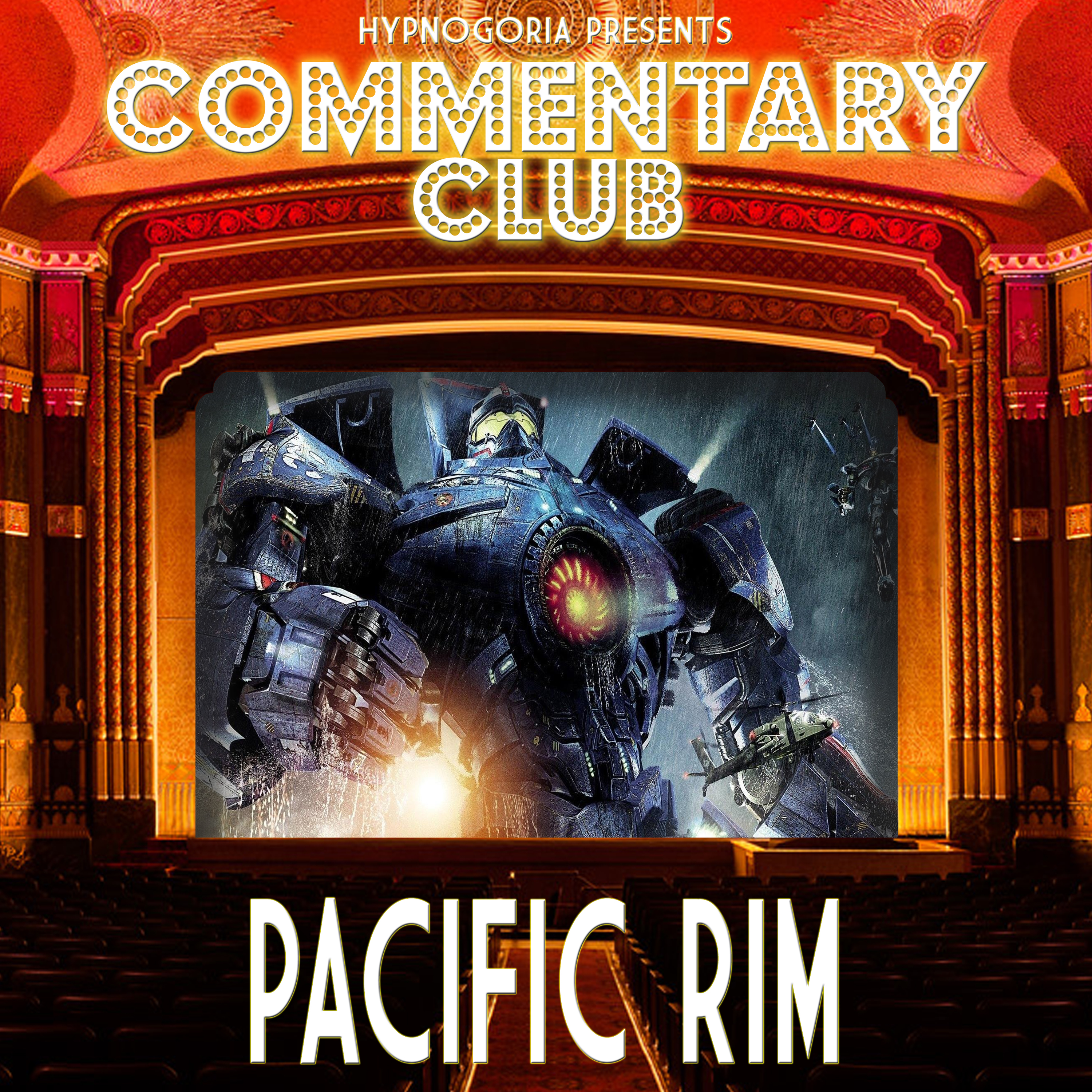
COMMENTARY CLUB 064 - Pacific Rim


For our cult movie this time, once again we cancel the apocalypse and revisit the glorious mecha-kaiju smackdown that is Guillermo del Toro's Pacific Rim (2013)

DIRECT DOWNLOAD COMMENTARY CLUB 064 - Pacific Rim


COMMENTARY CLUB HOME DOMAIN 
COMMENTARY CLUB on iTUNES
COMMENTARY CLUB on STITCHER
COMMENTARY CLUB on GOOGLE PLAY PODCASTS

If you enjoyed the show, we have a little campaign to raise money for Alzheimer's Disease research! Any donations gratefully received!

COMMENTARY CLUB JUST GIVING PAGE


Sunday, 8 September 2019

HYPNOGORIA 125 - Scary Stories to Tell in the Dark


Taking a look at the new movie directed by Andre Ovredal and produced by Guillermo del Toro - Scary Stories to Tell in the Dark - based on the legendary books by Alvin Schwartz and Stephen Gammell

DIRECT DOWNLOAD HYPNOGORIA 125 - Scary Stories to Tell in the Dark


Find all the podcasts in the HYPNOGORIA family here -

HYPNOGORIA HOME DOMAIN - Full archive, RSS feed and other useful links


HYPNOGORIA on TUNE IN

HYPNOGORIA ON GOOGLE PLAY PODCASTS


Friday, 22 June 2018

THE SHAPES IN THE WATER - The Chronicles of the Gill-man and Kindred Dwellers in Deep


On my little show this year, we have been exploring the history of the Gill-man and similar aquatic horrors. Starting with a look at assorted legends and folklore about aquatic monsters, we traced appearances of dwellers in the deep in weird fiction, and discovered how Universal came up with the iconic Gill-man. The series then explored the various sequels that followed, including Del Toro's The Shape of Water, a love letter to the Creature from the Black Lagoon. We then went on to uncover assorted cameo appearances by the Gill-man and finally we have looked at the assorted similar creatures, both reverent homages and outright knock-offs that followed in his wake. 

Find all the shows in the series linked below! 


HYPNOGORIA 85 - The Shapes in the Water

In celebration of Guillermo del Toro's new opus The Shape of Water, Mr Jim Moon sets sail on a new new podcast series and submerges the Great Library of Dreams Bathysphere into the deeps to discover all manner of aquatic horrors. In this first episode, we explore the Gill-man's ancestry in mythology, legend and folklore, encountering kappas, nixes, nymphs, tritons and of course various mermaids and merfolk.

DIRECT DOWNLOAD -  HYPNOGORIA 85 - The Shapes in the Water


FROM THE GREAT LIBRARY OF DREAMS 42 - The Harbor-Master by Robert W Chambers

In the second part of our Shapes in the Water podcast series, we look at the grandfather of all hybrid aquatic horrors, the weird tale of The Harbor-Master by Robert W Chambers!

DIRECT DOWNLOAD -  The Harbor-Master by Robert W Chambers


HYPNOGORIA 86 - The Chronicles of the Creature Part I

In this episode, Mr Jim Moon invites you all to take a leisurely boat trip down the Amazon river to the Black Lagoon. Here we'll learn of the origin and history of its famous resident monster the Gill-man, and all about the making of the classic movie The Creature From The Black Lagoon (1954).

DIRECT DOWNLOAD -  HYPNOGORIA 86 - The Chronicles of the Creature Part I


Tea-time at The Black Lagoon

A bonus mini-episode for you all recounting a childhood encounter with the Creature!

DIRECT DOWNLOAD -  Tea-time at The Black Lagoon


HYPNOGORIA 87 - The Chronicles of the Creature Part II

In this episode, we continue on your exploration of the Gill-man and take an in-depth look at the classic horror SF movie The Creature From The Black Lagoon (1954) directed by the great Jack Arnold. Plus we also take a peek at the Gill-man in print and unearth various plots for remakes.

DIRECT DOWNLOAD -  HYPNOGORIA 87 - The Chronicles of the Creature Part II


HYPNOGORIA 88 - The Chronicles of the Creature Part III

In this episode Mr Jim Moon takes a look at the further adventures of the Gill-man, exploring Revenge of the Creature (1955) and The Creature Walks Among Us (1956)


HYPNOGORIA 89 - The Shape of Water

In this episode, Mr Jim Moon takes an in-depth look at the Oscar winning monster movie from Guillermo del Toro. First we have a spoiler-free review of The Shape of Water, and then in the second half, we delve deeper, exploring its connections to The Creature From the Black Lagoon movies and other connections to folklore, fairy stories and classic films.

DIRECT DOWNLOAD -  HYPNOGORIA 89 - The Shape of Water


GREAT LIBRARY OF DREAMS 43 - Dagon by HP Lovecraft

In this episode, we round off the current leg of our series on aquatic terrors with a seminal tale of marine horror from the great HP Lovecraft.

DIRECT DOWNLOAD -  GREAT LIBRARY OF DREAMS 43 - Dagon by HP Lovecraft


HYPNOGORIA 92 - Spawn of the Gill-man Part I

Beginning a new mini-series, Mr Jim Moon returns to the world of aquatic horrors to discover assorted ameos and homages to the Gill-man, not to mention a few outright rip-offs too!  We have a look at Return of the Creature (1955),  Castle of the Monsters (1958), Monster Of Piedras Blancas (1959) , Mad Monster Party(1967), Chabelo and Pepito vs. The Monsters (1973), The Monster Squad (1987), plus some small screen appearances in McHale's Navy and Night Gallery.

DIRECT DOWNLOAD -  HYPNOGORIA 92 - Spawn of the Gill-man Part I


HYPNOGORIA 93 - Spawn of the Gill-man Part II


We continue our exploration of the Gill-man's kith and kin, this time rounding up assorted Black Lagoon knock-offs! We take a look at The She Creature (1956), Creature From The Haunted Sea (1961), Horror of Party Beach (1964), Beach Girls and the Monster (1965) and The City Under The Sea AKA War-gods of the Deep (1965).

DIRECT DOWNLOAD -  HYPNOGORIA 93 - Spawn of the Gill-man Part II


HYPNOGORIA 94 - Spawn of the Gill-man Part III

In this episode Mr Jim Moon brings this series of podcasts on gill-men and aquatic horrors full circle with a look at some curious cases from the annals of cryptozoology which seems to have echoes of the Black Lagoon...

DIRECT DOWNLOAD -  HYPNOGORIA 94 - Spawn of the Gill-man Part III


We round off our current series on aquatic horrors with a tale of terror by the great HP Lovecraft.

DIRECT DOWNLOAD -  The Doom That Came To Sarnath by HP Lovecraft

And you can find all the podcasts in the HYPNOGORIA family here -

HYPNOGORIA HOME DOMAIN - Full archive, RSS feed and other useful links

HYPNOGORIA on iTunes

HYPNOGORIA on STITCHER

CLICK HERE FOR DETAILS

Sunday, 25 March 2018

HYPNOGORIA 89 - The Shape of Water


In this episode, Mr Jim Moon takes an in-depth look at the Oscar winning monster movie from Guillermo del Toro. First we have a spoiler-free review of The Shape of Water, and then in the second half, we delve deeper, exploring its connections to The Creature From the Black Lagoon movies and other connections to folklore, fairy stories and classic films.


DIRECT DOWNLOAD -  HYPNOGORIA 89 - The Shape of Water

Find all the podcasts in the HYPNOGORIA family here -

HYPNOGORIA HOME DOMAIN - Full archive, RSS feed and other useful links

HYPNOGORIA on iTunes

HYPNOGORIA on STITCHER

CLICK HERE FOR DETAILS

Sunday, 18 February 2018

HYPNOGORIA 85 - The Shapes in the Water


In celebration of Guillermo del Toro's new opus The Shape of Water, Mr Jim Moon sets sail on a new new podcast series and submerges the Great Library of Dreams Bathysphere into the deeps to discover all manner of aquatic horrors. In this first episode, we explore the Gill-man's ancestry in mythology, legend and folklore, encountering kappas, nixes, nymphs, tritons and of course various mermaids and merfolk.


DIRECT DOWNLOAD -  HYPNOGORIA 85 - The Shapes in the Water

Find all the podcasts in the HYPNOGORIA family here -

HYPNOGORIA HOME DOMAIN - Full archive, RSS feed and other useful links

HYPNOGORIA on iTunes

HYPNOGORIA on STITCHER

CLICK HERE FOR DETAILS

Friday, 12 July 2013

PACIFIC RIM (2012)


Giant monsters fighting giant robots... Now for some of us just the thought of a multi-million dollar Hollywood movie with the concept of kaiju versus mecha is an instant ticket sale. And therefore, the temptation just add 'does what it says on the tin' and call that a review is very, very great!

However, I do appreciate that for everyone skyscraper-scaled monsters and droids knocking seven bells out of each other might not be enough. And I can understand why... No, honestly I can. After all, a lot of us - your humble reviewer included - were badly burned by those goddawful Michael Bay Transformers movies; horrendous flicks where everything exploding and a legion of big robots couldn't make up for ill-judged, ill-conceived and ill-executed jokes of scripts.

But on the other hand, Pacific Rim is the brainchild of Guillermo del Toro - a film-maker in a very different ballpark to that shitfox Michael Bay. It's one where everything isn't exploding for a start off, and unlike Bay, del Toro knows how to shoot robot fisticuffs so as that you can actually see what the hell is going on! Plus I can confirm that as wondrously detailed as the mechs and monsters are in this movie, we never ever see their titanic testicles clanging together.

Now I'm sure del Toro's previous works need no introduction, and if they do that why IMDB was invented, but I feel I should offer a word of warning here - this is not the del Toro of Pan's Labyrinth or The Devil's Backbone, who fused phantasmagoria and drama in movies that delighted both arthouse heads and genre fans. But neither is this movie the product of the del Toro who made the highly entertainingly offbeat Hellboy movies, although it is fair to say there's a large strand of comic book chromosomes in the DNA of Pacific Rim.


And that should be evident from the storyline - giant monsters, dubbed 'kaiju' have started to emerge from a crack at the bottom of the Pacific ocean to wreak havoc in the world. After having their cities stomped, humanity fights back with the Jaeger program - building giant robots, each piloted by a brace of humans, to indulge in some preventive stomping of their own. And that's basically it.

Now undoubtedly some will denounce this movie as dumb, just another blockbuster chock full to the gills of CGI destructo-porn. But, I ask you what you expect from a movie about giant robots smacking down equally giant monsters? Yes, it IS a ridiculous concept, and yes, it IS a blank cheque for FX crews go berserk creating improbably beasts and to rain down carnage upon the cities of the world. What were you expected? War and Peace?

However it is fair to say that Pacific Rim is del Toro's most simplistic film to date, but I wouldn't say that this isn't a case of the respected director selling out. Rather, and what I suspect some will fail to grasp, is that this movie has been made deliberately like this. Essentially this is del Toro setting out to make the 21st century equivalent of an old fashioned monster movie, designed to delighted the ten year old child in all of us. It's a homage to Godzilla and his ilk, to the big bug movies of the '50s, and to the creations of Ray Harryhausen. Hence simple story telling, exaggerated comic relief characters, lots of action and the monsters front and centre.


Now I shall not be claiming Pacific Rim is a new masterpiece from del Toro, for it is far more lightweight than the other movies in his oeuvre. But it is a glorious delight for monster movie fans - it's big, colourful, and slightly daft - just as the all the best Godzilla movies are. For lovers of old school kaiju flicks and creature features, Pacific Rim is like Christmas come early - it's tremendous fun right from the start, and if you a fan of the Big G and his brood, you'll be sat with a big grin on your face for much of the time and restraining the urge to wildly applaud in the big set pieces.

However while Pacific Rim is clearly modeled on old kaiju movies - even down to the slightly wonky plotting and scenery chewing performances - the big difference is the quality of the FX and the vision behind them. Now if you are a fan of the genre, you will be giggling insanely throughout - however rather than laughing at the cardboard cities and rubber suits as one does in old Toho movies, they'll be chuckles of joy and delight as del Toro delivers some of the most spectacular and imaginative giant monster mayhem you'll ever see. Not only is the action breathtakingly bonkers but with del Toro behind the camera it looks simply gorgeous too.

But I also suspect that Pacific Rim will prove to be tremendous fun for non-kaiju fans too. For while the story is simple and there are tons of special effects, this is a movie with a big heart too. While the human characters are largely just sketches, and in fairness that's all they need to be in a big screen fantasy like this - del Toro fleshes them out enough so we can get behind them and want to cheer them on. Yes, it's painted in broad strokes - but so are all the classic comicbooks and all the fondly remembered fantasy blockbusters of '80s.

And let's cut to the chase here folks - we often claim we want fantasy movies to be intelligent and gritty and dark and serious, but when they do, how often do we end up carping about them being too grim and joyless? Whereas Pacific Rim isn't trying to be weighty and profound - it's a giant monster movie that just wants to have fun, to revel in the sheer delight that can only come from seeing a tower block sized mech clobbering an interdimensional dino-dragon with a cargo ship. I wouldn't say it's a check-your-brain-at-the-door movie, but rather it's a bring along your inner ten year old who loved Star Wars, Destroy All Monsters  and Jason & The Argonauts deal. Go along and cheer on the Jaegers battling the kaiju!


Friday, 29 May 2009

THE STRAIN by Guillermo Del Toro & Chuck Hogan


SPOILER INFECTION TEST RESULTS: Clear

As a great admirer of Guillermo Del Toro’s work, I was naturally very excited to hear that besides the myriad of film projects he has in development, he was going to pen a novel. And I was even more delighted to get my mitts on a naughty proof copy and find out early if the man Mark Kermode dubbed the Orson Welles of Horror Movies cut it as a novelist.

The first thing to note about The Strain is that Del Toro has a co-writer for this venture into the literary world. When I initially heard about this I couldn’t help wondering whether this would be prove to be a case of an outline from the great man fleshed out by other hands. I feared a cynical attempt to cash-in on his reputation to sell another author’s work – the modern equivalent of the ‘collaborations’ of HP Lovecraft and August Derleth in which the latter expanded the single sentence ideas from HPL’s notebooks into full blown stories.

But I’m glad to say this doesn’t appear to be the case. Although I don’t have any details on who wrote what, The Strain simply reeks of Del Toro at every turn. Apparently the concept for the novel was originally a pitch for a fantasy/horror TV series with a police procedural flavour to Fox (who weren’t interested surprise fucking surprise). So when he decided to produce the Strain as a book, he enlisted Chuck Hogan, a writer of several well respected police procedural thrillers, who he felt would be able to achieve the correct air of believabilty to the material. I’ve not read of his previous books but his work being bigged up by the likes of Stephen King, Jeffrey Deaver and the grand old man of thrillers Ed McBain, he appears to be the perfect collaborator for the project. And on the strength of The Strain I’ll definitely checking out his own work.

The partnership works extremely well. As you’d expect from a novel by a gifted director, the novel is very cinematic – even down the structure of the book which is arranged in scenes rather than conventional chapters. And as you’d expect from a novel by Del Toro, The Strain builds up a fascinating mythology which spins traditional folklore in a novel and intriguing way. However with a gifted thriller author on board, it’s also a tautly written and beautifully paced book. Del Toro and Hogan work together seamlessly; The Strain never feels like a screenplay fleshed out with prose. The characters are well developed, likeable and memorable, and the plot plays out very smoothly, deftly gathering momentum and atmosphere.

Also it avoids the common pitfall of horror novels, namely descending into a string of scenes of carnage which leaves the tension and suspense the story’s built up flapping in the wind – I’ve lost of the number of novels that I’ve read over the years which nicely build up atmosphere and interesting characters only to lose steam in the final third with a predictable montage of mayhem.

Stephen King described his own vampire opus as “a game of literary racquet-ball: ‘Salem’s Lot was the ball and Dracula was the wall I was hitting it against”. And in some regards, The Strain is similar – it too is a tale of an Old World undead lord coming to unleash a plague of vampirism in the New World. The book’s opening with an airliner landing in New York with all hands on board dead has an obvious parallel with The Count’s arrival in England on the Demeter.

To an extent all vampire fiction is such a game; although vampires had been flapping around in fiction for quite some time before Dracula, it is Stoker’s work that really crystallised the concept of the vampire. Virtually all the rules of vampirism come from his novel bar the idea of sunlight destroying them which Nosferatu, itself a pirate adaption of Dracula, originated. The actual accounts of vampirism in Europe from history and folklore differed markedly from the usual rubrics of fictional bloodsuckers.

For example, the common concept is that they must be destroyed by a wooden stake through the heart, and that there is some magically or ritual reason for this. However if you peruse the actual legends you discover that there was no one generally agreed method of dispatching the undead, and in different region different approaches were traditional – burning, beheading, dismembering, leg breaking. The real commonality was to prevent the infected corpse from being physically able to being able to leave its grave – hence staking it was just a one method of pinning it down and why some places favoured severing the tendons in the arms and legs.

Similarly. other than bloodsucking, vampires in different places displayed wildly different behaviours. Did ye know that in Russian they had a fondness for ringing church bells and gnawed their own hands and feet in the grave? Or that a Germanic species of undead called neuntoters, spread disease and Romany vampires were partial to joyriding horses into exhaustion? (For more info go here!)


The vampire is such an enduring figure because of his adaptability. In legend and fiction, the vampire has symbolised and personified a wide range of social ills and contemporary fears. In literature, vampires have always thrived as they come with a host of in-built subtexts for perennial human concerns – sex, disease, intoxication and power. The seductive sensual fops presented by Anne Rice and Stephenie Meyer aren’t a new take on the undead; rather they hark back to pre-Stoker works that were more romances than horror. Dracula itself can be read with subtexts about Victorian sexual politics and colonialism. And in King’s novel vampirism can be seen as a metaphor for the Reaganomics responsibly for killing small town America.

Now Del Toro is by his own admission something of a collector of vampire lore, and this does shine through in The Strain. On one level he’s returning to vampirism to one of its roots - fear of plague – but embroidered with his trademark imagination. This novel presents a new conception of the vampire, and has a great fun reinterpreting familiar existing lore with a new scientific model of vampirism. The Strain’s brand of vampirism owes more to Cronenberg’s Shivers and Rabid than the dusty gospel according to Stoker.

But Del Toro and Hogan aren’t merely moving vampirism into science fiction. When reinventing an old monster there’s always the danger of diminishing the creature’s archetypal power if you over explain it. Much like Brian Lumely’s Necroscope series, which also creates a new undead biology incidentally, The Strain retains the creature’s mythic status and stresses their insidious presence throughout all history. They represent vampires as monstrous forces of evil; ancient beings of diabolic horror rather than melancholic beautiful outsiders, and achieves a pleasing balance between the fresh science model and the more traditional mythological approach.

Del Toro has said “each book contains unique and surprising revelations about the history, physiology and lore of the vampiric race, tracing its roots all the way back to its Old Testament origins.” and I, for one, am looking forward to seeing further development of this new vampire mythos. Now this brings me to the book’s only real downside – it’s first book in a trilogy. To use an old cliché, The Strain is a real page-turner that cracks along at a terrific pace and never drops the ball. So to have to wait another year before the next installment is annoying in the best possible way.

Now the trilogy is a much abused fictional format. All too frequently, a brilliant first part spawns abominable sequels – for most trilogies the equation goes something like this… first part is fully formed and well thought-out, the second has only half the creativity of the first and the third appears to be based on a quarter of an idea. However considering it’s TV series genesis, and more importantly judging from the manner in which the novel structures it’s tale, I thin we can safely assume that Del Toro and Hogan are in the JK Rowling camp rather the George Lucas school i.e. the series has actually been properly planned out in reality rather than in Pant-on-Fire Land.

In terms of Del Toro’s oeuvre it is actually breaking new ground; tonally The Strain occupies the gap between the fantasy action of the Hellboy films and the archetypal poetry of Pan’s Labyrinth and The Devil’s Backbone. And in the context of vampire fiction generally, The Strain is a fine addition to the canon and potentially a future classic. As it is but the opening installment of a series, its real greatness is hard to judge until the sequence is complete, but on it’s own it delivers everything a good horror thriller should with great panache and imagination. And it’s nice to have some truly evil vampires back on the prowl. Roll on the next outbreak…

Big thanks to Paul from Chinstroker Vs Punter who informed me of The Strain’s TV origins and collaboration details.

And massive thanks to the guilty parties who supplied me with a proof copy of this book to review.

For further details check out the rather swish promo site http://www.thestraintrilogy.com/